
Flowers for Purpose:

Georgia O’Keeffe, a major influence and definer of early 20th-century American Modernism, was an exemplar of the natural world, painting flowers, desert landscapes, and skyscrapers with precision, coated with a veneer of the sublime and a touch of the surreal.

Her flowers were her gifts and instructions to the world. In the May 16, 1946, issue of the New York Post, she articulated her artistic purpose: “When you take a flower in your hand and really look at it, it’s your world for the moment. I want to give that world to someone else. Most people in the city rush around so, they have no time to look at a flower. I want them to see it whether they want to or not.”

The American Modernism movement is difficult to define, though O’Keeffe seems to have taken the movement a step back from the light and color of French Impressionism to a more classical form, incorporating precision of shape with the synthesis of modern abstraction.

When she abandoned precision for immersion in total abstraction, she sometimes found herself lost in amateurish erotica or unending interpretive babbling, enigmatically and essentially labeling these works as meaning whatever she wanted them to mean.

Source: Georgia O’Keeffe Edited by Barson, 2016.  Graphic: Jimson Weed/White Flower No. 1, oil on canvas by Georgia O’Keeffe, 1932; in the Crystal Bridges Museum of American Art, Arkansas. 121.9 × 101.6 cm. Edward C. Robison III/ © 2016 Georgia O’Keeffe Museum/DACS

Amor Fati

Marcus Aurelius in “Meditations” reflects and instructs continuously on living harmoniously within the constructs of the universe, nature, and reason.

His philosophical foundation, Stoicism, meant living virtuously and rationally within a structured system that he believed was a manifestation of “Logos”, the rational principle that governs the universe. “Logos” can be understood as a divine rationality or intelligence that permeates and directs the universe.

Reason or “Logos” is the central pillar of Stoicism and is the guiding principle that governs the universe. Rational thought, rather than emotional impulse, is about seeking wisdom, demonstrating courage, seeking justice, and exercising temperance: living virtuously.

Nature means understanding that everything in life is interconnected, that all life is part of a larger, harmonious system governed by reason.

The Universe, to Stoics, is a well-ordered system where all actions happen for a reason. Stoics believed that one must live in harmony with the universe and embrace “Amor Fati”, accepting fate and focusing only on matters within one’s control.

Source: Meditations by Marcus Aurelius. Friedrich Nietzsche.

GOAT Gas

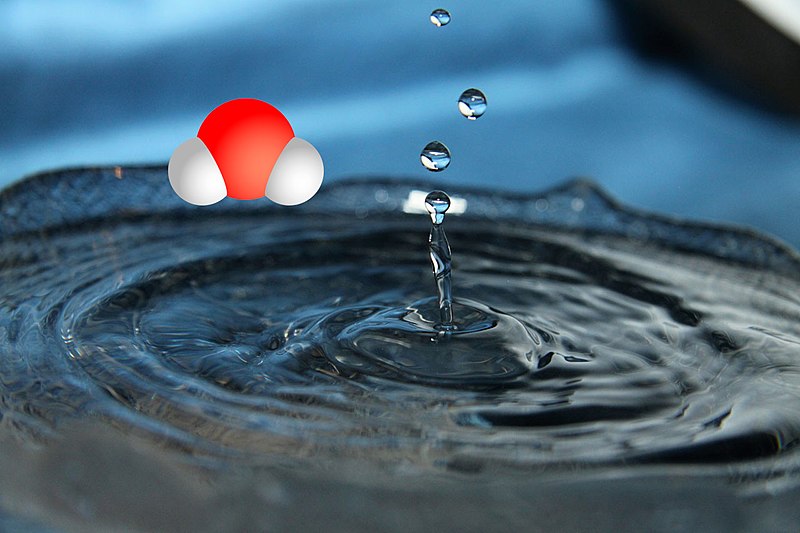
Water vapor is the most abundant and the most powerful greenhouse gas in the atmosphere and is responsible for about half of the Earth’s greenhouse effect. The amount of water vapor in the lower atmosphere is largely controlled by temperature, such that warmer air holds more moisture. Water vapor returns to the Earth’s surface usually within two weeks but only if the vapor is in the troposphere, the atmospheric layer closest to the Earth.

Water vapor in the stratosphere, the layer above the troposphere, on the other hand, can stay there for a long time due to the lack of physical mechanisms to bring it back to the surface of the Earth. MIT has estimated that a water molecule, or any atmospheric molecule, can stay in the troposphere for about 1.5 years, possibly longer, before circulating back to the troposphere or Earth’s surface.

On 15 January 2022 the South Pacific volcano, Hunga Tonga-Hunga Ha’apai, erupted sending a huge jet of water vapor into Earth’s stratosphere, estimated to have been around 40 billion gallons in volume.  This is estimated to have increased the water vapor in the stratosphere by 10% in a matter of hours or days.

For reference, the greenhouse effect for selected gases by its 20-year GWP (Greenhouse Warming Potential) value:

  1. Water Vapor = A very large value but difficult to find in print.
  2. Hydrofluorocarbons (HFCs) = 460-9100 GWP
  3. Bromides = 7140 (varies)
  4. Chlorofluorocarbons (CFCs) = 4400-6200 GWP
  5. Nitrous oxide = 280 GWP
  6. Methane = 56 GWP
  7. Carbon dioxide = 1 GWP

Source: NASA. MIT. Graphic by AGeremia, 2020, Creative Commons.