The Fall

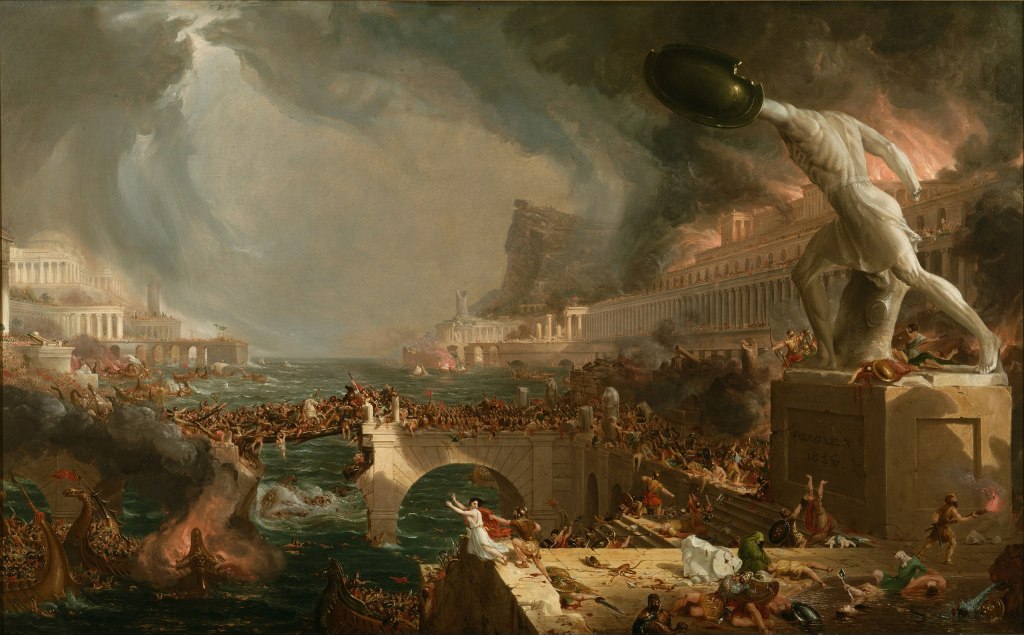
Edward Gibbons’ epilogue to his book, “The Decline and Fall of the Roman Empire”, mentions several factors that led to the collapse of the Empire:

  1. Barbarian Invasions: Incursions and settlements of Germanic tribes, Saxons, Huns, Alans, and others that overtaxed and weakened the Roman military and its infrastructure.
  2. Decline of Civic Virtue: Loss of a sense of civic duty and responsibility and the subsequent decay of public morality
  3. Christianity: Spiritual concerns took the focus away from civic duties. (Gibbons wasn’t an atheist but likely a deist or a detached Christian with a disdain for organized religion.)
  4. Economic Decay: The empire faced heavy taxation, inflation, and reliance on slave labor. Inflation was due to government corruption, excessive trade imports, military spending, and debasement of the currency.
  5. Political Corruption: A corrupt and unstable political system led to ineffective and nonsensical governance.
  6. Military Overextension: The Empire was too large to manage, resulting in an over-stretched military.

Marcus Aurelius in his book, “Meditations” also mentions the Antonine Plague years of 165-180 AD (a second outbreak occurring from 251-266 AD) as the primary cause of the Empire’s decline. The plague reduced Rome’s population, affecting its military’s ability to defend its borders, and the loss of labor to maintain its infrastructure.

Additional factors have also been mentioned by others, including: a disloyal military, civil wars, lead poisoning, and the always useful-climate change.

Source: “The Decline and Fall of the Roman Empire” by Edward Gibbons, 1776-1788. “Meditations” by Marcus Aurelius. Graphic: Destruction by Thomas Cole, 1836, from the series: The Course of Empire. New York Historical Society. Public Domain.

Amor Fati

Marcus Aurelius in “Meditations” reflects and instructs continuously on living harmoniously within the constructs of the universe, nature, and reason.

His philosophical foundation, Stoicism, meant living virtuously and rationally within a structured system that he believed was a manifestation of “Logos”, the rational principle that governs the universe. “Logos” can be understood as a divine rationality or intelligence that permeates and directs the universe.

Reason or “Logos” is the central pillar of Stoicism and is the guiding principle that governs the universe. Rational thought, rather than emotional impulse, is about seeking wisdom, demonstrating courage, seeking justice, and exercising temperance: living virtuously.

Nature means understanding that everything in life is interconnected, that all life is part of a larger, harmonious system governed by reason.

The Universe, to Stoics, is a well-ordered system where all actions happen for a reason. Stoics believed that one must live in harmony with the universe and embrace “Amor Fati”, accepting fate and focusing only on matters within one’s control.

Source: Meditations by Marcus Aurelius. Friedrich Nietzsche.

Life Goes On

Marcus Aurelius, the last Stoic, stays his fear of death by believing that life’s pauses and changes are preludes to death of which we should not fear. He stated in Book IX of his Meditations: “[as you] …pass to the ages of your life, boyhood for instance, youth, manhood, old age; for each change of these was a death; was there anything to be afraid of?”

This comes directly from Heraclitus, a Greek philosopher and influencer of the first Stoic: Zeno, stating that, “The living and the dead, the sleeper and the watcher, the young and the old are the same.

St. Augustine in Confessions rephrases Marcus and Heraclitus with the joyful question; “And lo! My infancy died long since, and I am alive… Declare to me, your suppliant, did my infancy succeed to some age of mine that is also dead?

Joseph Butler, Christian apologist and philosopher, carries the thought to its logical conclusion, writing: “We have passed undestroyed through those many and great resolutions of matter, so peculiarly appropriated to us ourselves; why should we imagine death will be so fatal to us?”

Butler’s argument is that if we’ve survived many transformations throughout our lives, there’s no reason to believe that death would be our ultimate end. His view is grounded in the belief that our continued existence after death is consistent with the enduring nature of our existence during life.

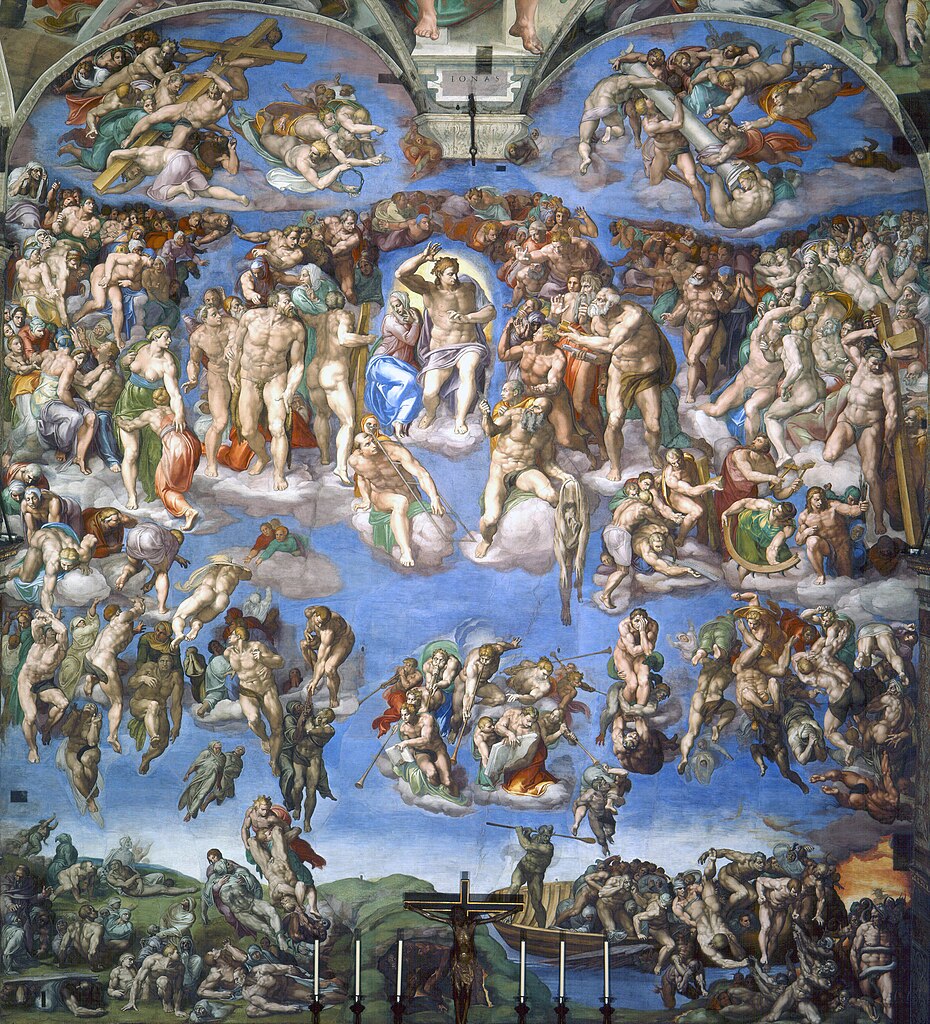
Source: Meditations by Marcus Aurelius, edited by Farquharson. Graphic: The Last Judgement by Michelangelo, Sistine Chapel. Public Domain.

The Last Stoic

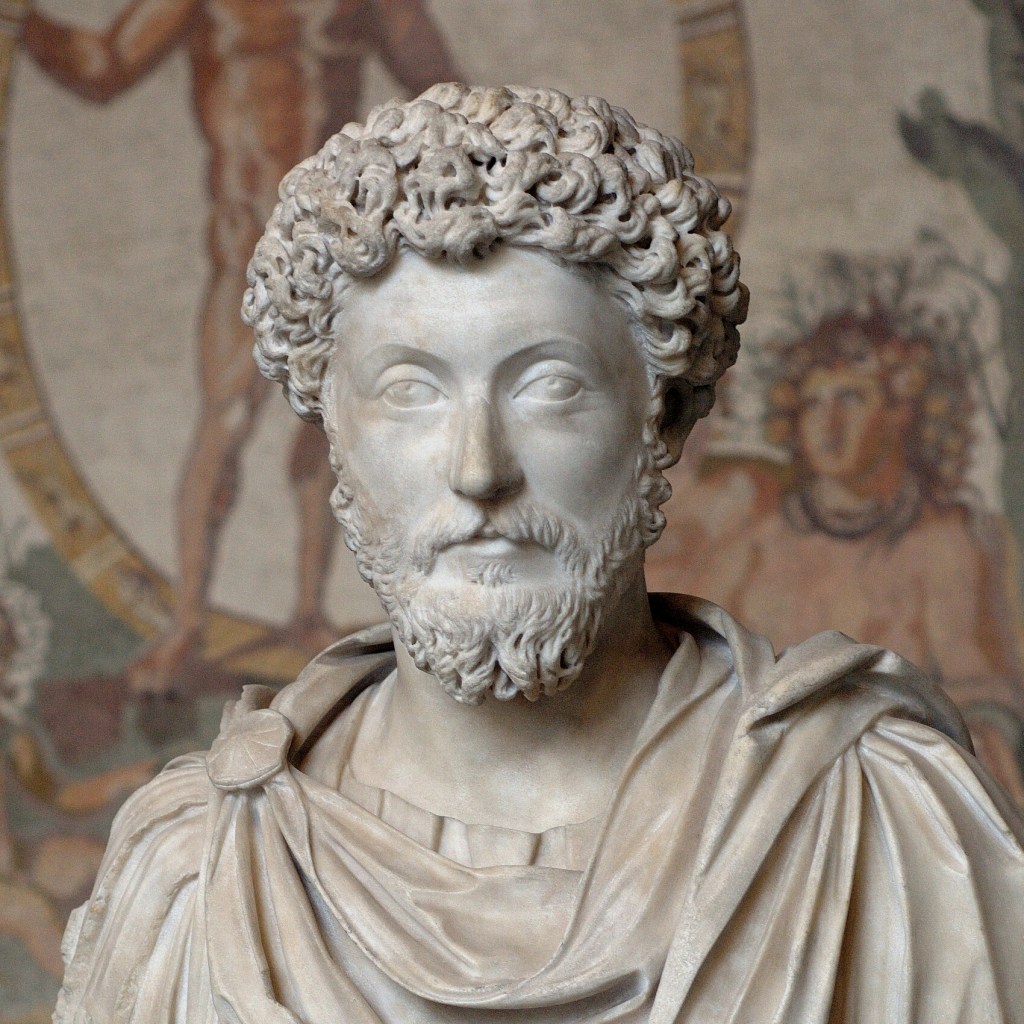
Marcus Aurelius Antoninus, Roman Emperor, soldier, stoic philosopher, stated in Book I of his Meditations that Plutarch’s nephew, Sextus taught him: “…life according to Nature, Dignity without pretense, solicitous consideration for friends, tolerance of amateurs and of those whose opinions have no ground in science.”

Marcus Aurelius, along with Alexander the Great are two rulers who came closest to Plato’s concept of a Philosopher-King. Plato believed that to rule justly and wisely required a thorough foundation in philosophical principles coupled with the skill to serve for the benefit of the state and the ruled rather than for personal gain.

Source: Meditations by Marcus Aurelius. Graphic: Bust of Aurelius extracted from Glyptothek Munich. Public Domain.