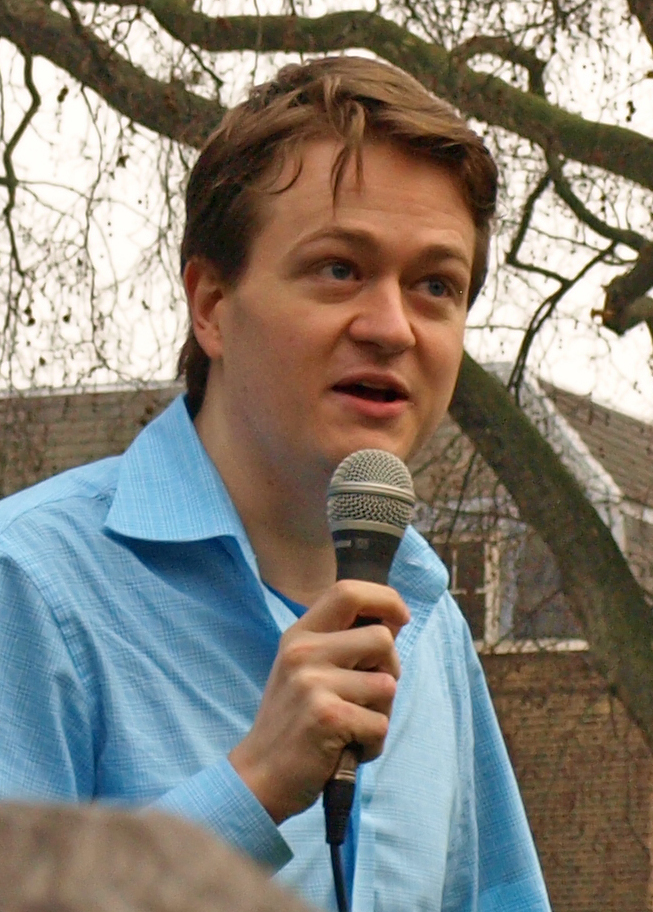
Journalism – Johann Hari

Johann Hari has been involved in significant journalistic malpractice since joining the British media in 2001, earning sneering testimonials for plagiarism, fabrication, misconduct, misrepresentation of research, malicious editing of his biography, false and defamatory articles against fellow journalists, threats of libel suits against anyone challenging his ethical failings, selective editing of interviews to alter narratives, errors in cited data, and claiming evidence without proper citations. And he’s only 45.

Hari has worked for numerous prestigious publications, including the New Statesman, The Independent, The Huffington Post, The New York Times, the Los Angeles Times, The New Republic, The Nation, Le Monde, El Pais, The Sydney Morning Herald, Haaretz, BBC, and Slate. He currently writes non-fiction books on drugs—both legal and illegal—drug culture, and the harm of social media.

Source: Forbes. Wikipedia. Graphic: Johann Hari supplied by Johann Hari, 2011, creative commons.
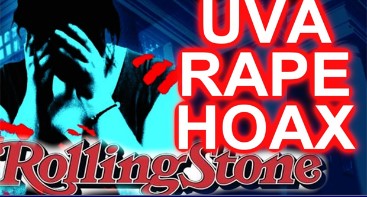
Journalism – Sabrina Erdely 2014

On 19 November 2014, Rolling Stone published “A Rape on Campus” by Sabrina Erdely, an incendiary and malicious expose of gang-rape by U of Virginia fraternity brothers. Erdely’s story centered on UVA student Jackie Coakley, only identified as Jackie in the article, who was allegedly gang-raped at a Phi Kappa Psi party by several members that fraternity in 2012.

Mainstream journalists at Worth, Slate, and the Washington Post immediately began to question the sourcing and methods that went into the story. Rolling Stone, to quell the growing roar of disbelief, commissioned the Columbia School of Journalism to investigate the story and the magazine’s journalistic methods.

Columbia School of Journalism found that the “Rolling Stone’s repudiation of the main narrative in “A Rape on Campus” is a story of journalistic failure that was avoidable. The failure encompassed reporting, editing, editorial supervision and fact-checking.”

Jonathan Taylor of Title IX for All wrote, “Virtually every claim made by “Jackie” and chronicled by Sabrina Rubin Erdely in Rolling Stone has been objectively proven false.”

Multiple lawsuits by university personal and fraternity members were filed against Erdely and Rolling Stone in 2015 and 2017. The UVA lawsuit was settled for $3 million in damages against the magazine and Erdely. The PKP fraternity lawsuit was settled for $1.65 million. A lawsuit by members of Virginia Alpha chapter of PKP was settled though the fraternity members are bound by confidentiality agreement that does not allow comment or disclosure of terms.

Source: #uvahoax – UVA Rape Hoax by Jonathan Taylor Title IX for All, 2015. Rolling Stone’s Investigation by Sheila Coronel et al, CJR, 2015. Graphic: UVA Rape Hoax, Title IX for All copyright.

Journalism – Make it Up, Get Paid

In an all too familiar case of journalistic malpractice, “Claas Relotius, a reporter and editor, [for Der Spiegel] falsified his articles on a grand scale and even invented characters, deceiving both readers and his colleagues,” wrote Germany’s Der Spiegel in 2018.

Claas Relotius, who won numerous awards for his work with Der Spiegel, falsified significant portions of articles for the news magazine. CNN reported that he admitted to ‘partial fabrications … [t]hat included making up dialogue and quotes and creating composite characters.’

This type of journalistic behavior seems to occur frequently, and it is likely more commonplace than consumers of news are led to believe. Layers and layers of fact checkers and editors never stop the flood tide of false narratives and fake news.

Source: ‘Germany’s Der Spiegel says star reporter Claas Relotius wrote fake stories…’ by Sherisse Pham, 2018, CNN. Graphic: Fake News, AI Generated.

Journalism–Christopher Newton

Christopher Newton was fired by the Associated Press in September of 2002 for creating individuals and institutions whose existence could not be verified. The A.P. could not find 45 of the journalist’s sources along with numerous institutions that he cited in his stories.

The story that brought Newton’s fabrications to light was an article on criminal justice where he postulated that a drop in crime was due to the increased incarceration of criminals. In that article he cited two individuals, Ralph Myers and Bruce Fenmore, both of whom could not be verified, and referenced an institute that was also non-existent.

In an interesting and ironic aside, his fictious creations were brought to light when a criminologist at the University of Missouri, Richard Rosenfeld, called, ironically, Fox Butterfield of the New York Times and object of ‘The Butterfield Effect’ (more on that next week) and said that he had never heard of Fenmore or Myers. Upon further inquiries Newton’s career soon came to an appropriate and ignoble end.

Source: Couldn’t Find…by Felicity Barringer, NY Times, 2002. Graphic: AI generated, 2024.

Journalism – Michael Straight

Michael Straight, New Republic publisher, editor, and writer from 1948 to 1956, was a KGB spy associated with the notorious UK Cambridge Five that passed thousands of classified documents and secrets to the KGB from the 1930s through at least the early 1950s.

He worked as a speech writer for Frankin D. Roosevelt and in that administration’s Department of State beginning in 1937. In 1940 he was employed at the Department of State covering the Near East. In 1942 he joined the Air Force and was a pilot of B-17s. After the war he left government service to help run his family’s journalism business: the New Republic. In 1963 he admitted to being a communist spy and outed Anthony Blunt, the recruiter for the Cambridge Five for which he was given immunity from prosecution and a job as Deputy Chairman of the Coordinating Committee for Cuban Affairs in the Kennedy Administration.

After the collapse of the Soviet Union and the end of the Cold War it was revealed that Straight was a much more significant KGB asset than he led the US government to believe.

Source: Historica.fandom.com. History.com. Graphic: Michael Straight at Cambridge, 1936, Public Domain.

Journalism – Patricia Smith

Patricia Smith is very good at performance poetry, like freestyle rap battles without a beat, but as a journalist she could never quite grasp that poetry was fiction and journalism wasn’t. She could write, she was good with words and phrases, talents that journalism seeks out and rewards, but she would rather write a good story, usually fiction, than hit the pavement to flesh out the truth.

Patricia Smith began her career in journalism in the late 1970s as an entry level clerk at the Chicago Daily News, first as a typist and later as a music and entertainment reviewer. When the Daily News folded in 1978, she then worked as an entertainment writer for the Chicago Sun-Times from 1978 to 1990. She left the Sun-Times after it was discovered that she had written a review of a concert that she did not attend. In 1990 she moved to the Boston Globe, beginning as an entertainment critic, and eventually was made a reporter and the paper’s metro columnist. She was fired from the Globe in 1998 for fabricating characters and events in one of her metro columns. The Globe editors, after further investigation, believed that an additional 52 columns or hers contained fictional elements.

Source: New York Times, Chicago Tribune, Media Nation. Graphic: Patricia Smith

Journalism – Stephen Glass:

Stephen Glass was an American serial fabrication specialist or as they call it in the trade, a journalist, working for The New Republic from 1995 to 1998. He was a rising star in the profession, a young Turk with a strong work ethic but he was manipulative and emotionally controlling towards his superiors. And just about everything he wrote was a lie. For his severe allergic reaction to telling truth, he was fired from The New Republic in 1998.

Buzz Bissinger in Vanity Fair wrote, “The New Republic, after an investigation involving a substantial portion of its editorial staff, would ultimately acknowledge fabrications in 27 of the 41 bylined pieces that Glass had written for the magazine in the two-and-a-half-year period between December 1995 and May 1998. In Manhattan, John F. Kennedy Jr., editor of George, [Glass contributed to other publications while working full time at The New Republic including George] would write a personal letter to Vernon Jordan apologizing for Glass’s conjuring up two sources who had made juicy and emphatic remarks about the sexual proclivities of the presidential adviser and his boss. At Harper’s, Glass would be dismissed from his contract after a story he had written about phone psychics, which contained 13 first-name sources, could not be verified.”

A 2003 critically acclaimed biographical movie covering Glass’s scandal as a journalist, Shattered Glass, explores what happens when a profession loses the public’s trust. Except it never really answers that question or even why Glass could not tell the truth. Other than that, the audiences loved it.

He currently works as a paralegal at the law firm Carpenter, Zuckerman & Rowley, serving as the director of special projects and trial-team coordinator.

Source: Michael Noer in Forbes, 2014. Buzz Bissinger in Vanity Fair, 2007. The Famous People. IMDb. Graphic from TMDB.