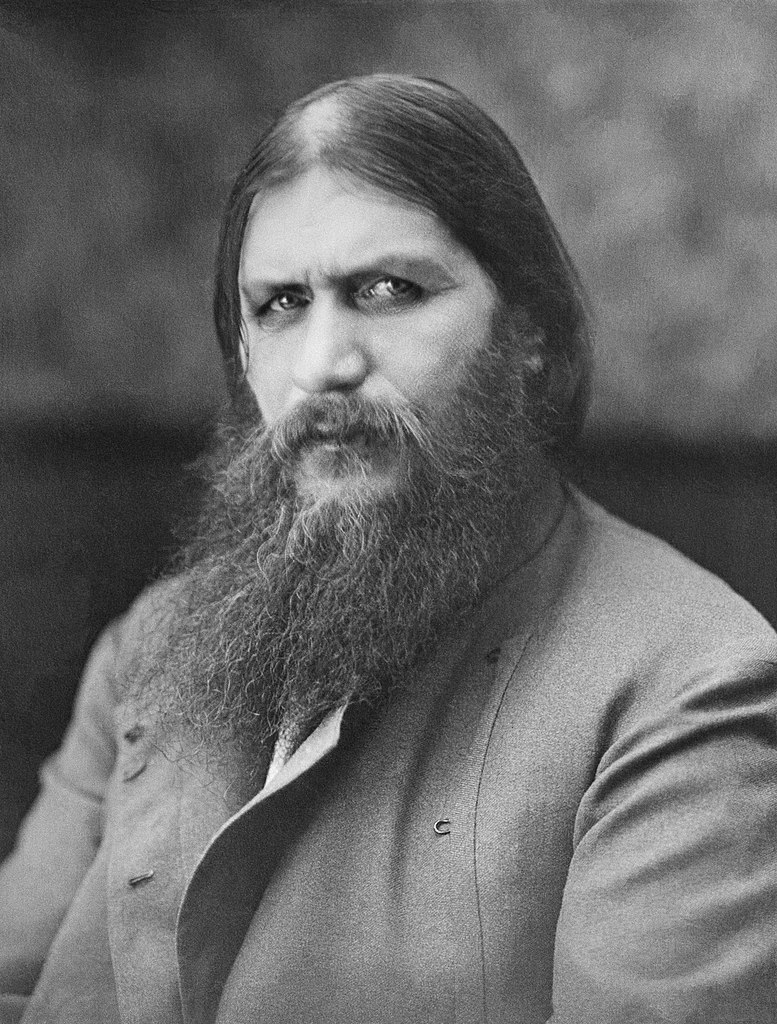
Rasputin: Dark Servant of Destiny. Grigori Rasputin, often referred to as the “Mad Monk,” was a peasant with a fondness for madeira, cheap steaks, and prostitutes. He seemingly cured the Tsar’s son, Alexei, returning him to health by a gift from God: the power of faith.
Rasputin, living by the Russian proverb “You can’t avoid that which is meant to happen,” accepted his fate and was welcomed by the Empress and her son into the royal household with open arms. However, he was later expelled from the royal household by the Tsar and his handlers for violating another Russian proverb: “Don’t bring your own rules into someone else’s monastery.”
Rasputin: Dark Servant of Destiny, a 1996 HBO TV movie seen by almost no one, is Alan Rickman’s tour de force. It provides an exquisite emotional interpretation of religious fervor and mystical power. The film brings the myth of Rasputin into the realm of authenticity and historical plausibility.
The film recreates Rasputin’s madness amidst the early 20th-century events that predated and possibly presaged the madness of events set into motion by Lenin in 1917 (Rasputin was murdered towards the end of 1916). These events led to what Orwell succinctly summarized in “Animal Farm” when the new boss replaced the old boss: “The creatures outside looked from pig to man, and from man to pig, and from pig to man again; but already it was impossible to say which was which.“
Genre: Biographical, Drama, Historical
Directed by: Uli Edel
Screenplay by: Peter Pruce
Music by: Brad Fiedel
Cast: Alan Rickman, Greta Scacchi, Ian McKellen, Freddie Finlay
Film Location: Budapest, Hungary and St. Petersburg, Russia
ElsBob: 7.0/10
IMDb: 6.9/10
Rotten Tomatoes Critics: -%
Rotten Tomatoes Popcornmeter: 79%
Metacritic Metascore: -%
Metacritic User Score: -/10
Theaters: 23 March 1996
Runtime: 135 minutes
Source: Rotten Tomatoes, IMDb. Graphic: Rasputin Movie Trailer, copyright HBO.
 elsToday