“Lots of people go mad in January. Not as many as in May, of course. Nor June. But January is your third most common month for madness.” – From Karen Joy Fowler’s 1991 novel “Sarah Canary”.
Madness—a recurring theme through the arts and sciences:
- “There is always some madness in love. But there is also always some reason in madness.“ – Friedrich Nietzsche
- “I am but mad north-north-west: when the wind is southerly, I know a hawk from a handsaw.“ – William Shakespeare, Hamlet
- “Madness, as you know, is like gravity. All it takes is a little push.” – The Joker, The Dark Knight
- “The only difference between me and a madman is that I am not mad.“ – Salvador Dalí
- “Oh, you can’t help that… We’re all mad here. I’m mad. You’re mad.” – Lewis Carroll, Alice in Wonderland, the Chesire Cat.
- “The edge…There is no honest way to explain it, because the only people who really know where it is are the ones who have gone over.” – Hunter S. Thompson
- “You must have chaos within you to give birth to a dancing star.” – Friedrich Nietzsche
- “The madman is not the man who has lost his reason. The madman is the man who has lost everything except his reason.” – G.K. Chesterton
- “Imperfection is beauty, madness is genius, and it’s better to be absolutely ridiculous than absolutely boring.” – Marilyn Monroe
- “Though this be madness, yet there is method in’t.“ – William Shakespeare, Hamlet
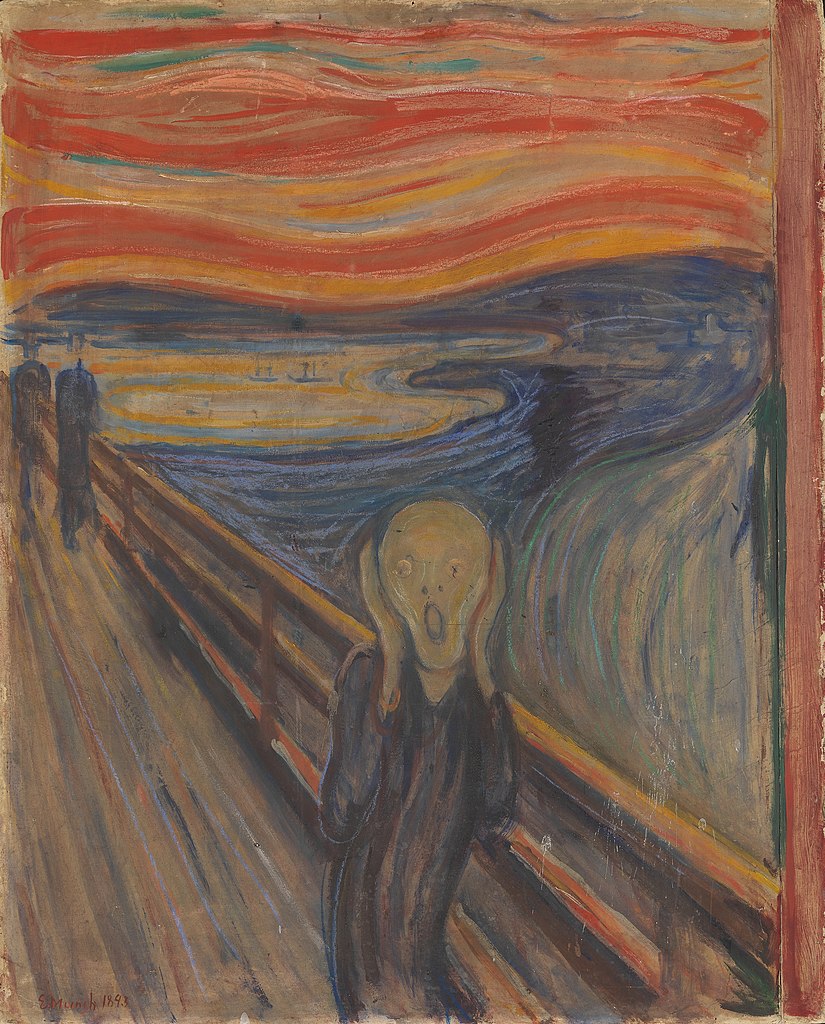
Source: Mental Health by the Numbers, NAMI. Graphic: The Scream by Edvard Munch, 1893, Munch Museum, Norway. Public Domain.

 elsToday