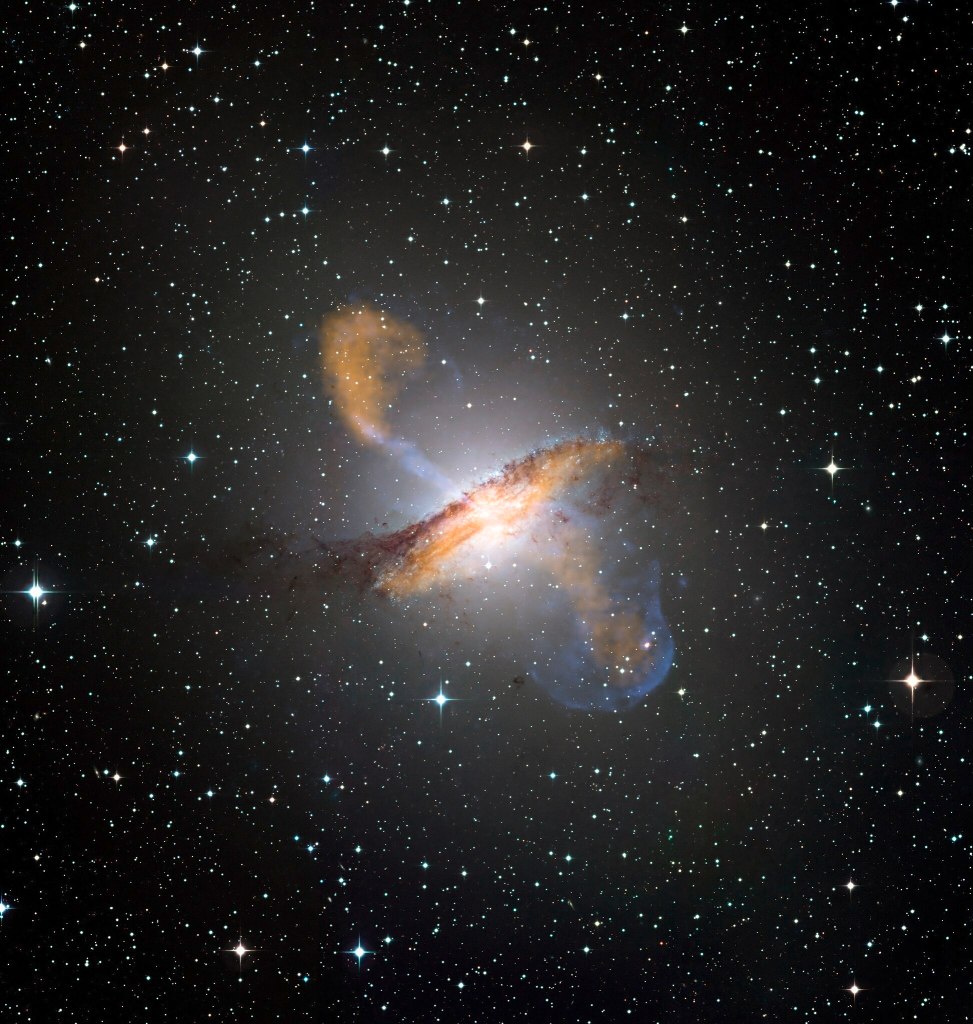
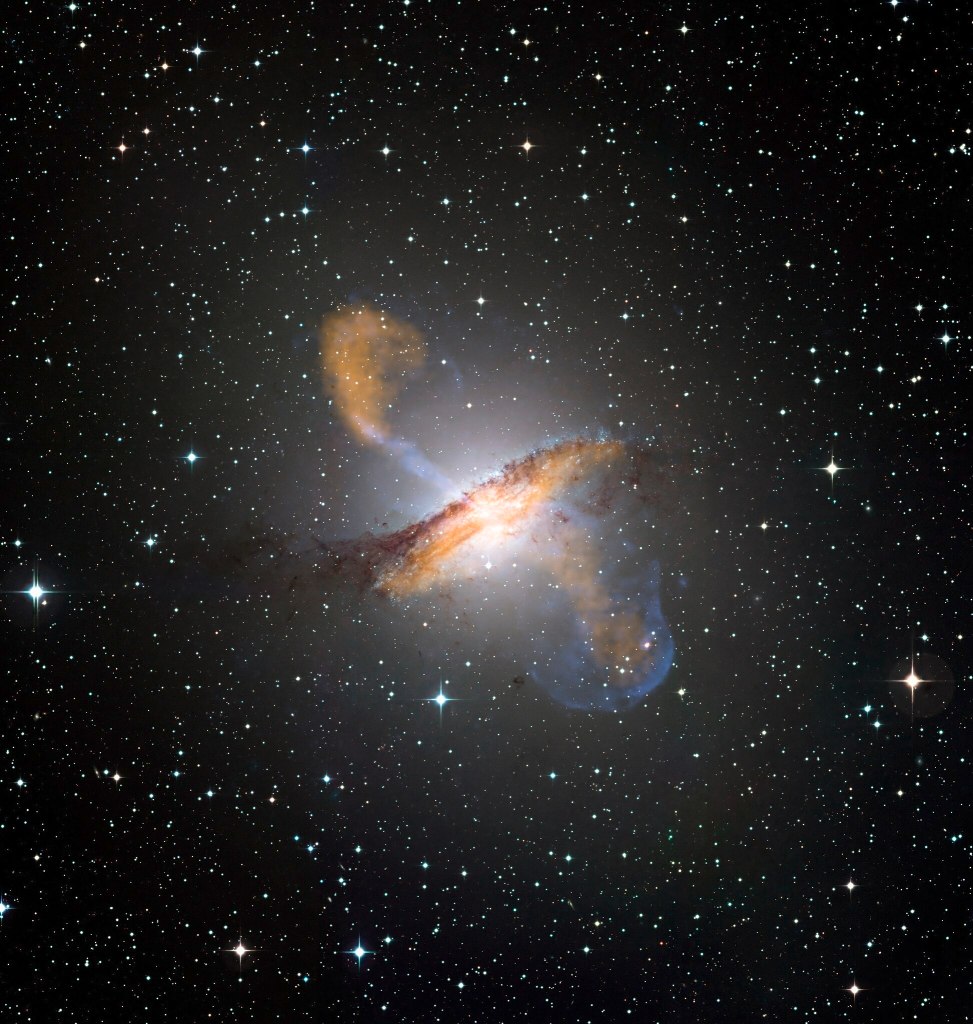
A distant galaxy at the edge of the universe and the beginning of time has revealed a remarkable discovery by Yale researchers. They have identified a variable quasar that rapidly brightens as its astrophysical jets periodically align with the position of Earth.
The researchers believe that this quasar, and others like it, played a significant role in bringing light into the early dark universe, alongside massive early stars which preceded the quasars.
Quasars are supermassive black holes at the centers of early galaxies, spinning at relativistic speeds. These early galaxies contained substantial unincorporated material, primordial gas clouds akin to present-day nebulae, which were easily captured by the black hole’s gravity. Near the event horizon of the black hole, this matter is caught in a ‘turbulent’ vortex, creating massive astrophysical jets. These jets, partially composed of ionized plasmas, are expelled at relativistic speeds, extending up to hundreds of light-years from the black hole and perpendicular to its event horizon. As the ionized hydrogen plasmas capture electrons from the neutral hydrogen in the early universe, photons are released, contributing to the illumination of the cosmos.
Thomas Connor, an astronomer at the Chandra X-Ray Center and co-corresponding author of the study, states, “[This] epoch of reionization is considered the end of the universe’s dark ages.”
Trivia: The song Put Your Lights On was written by Erik Schrody (Everlast) and performed with Santana on his 1999 album Supernatural. He wrote the song while recovering from a heart attack, pondering the hope that exists in life.
Source: This Quasar May Have Helped Turn the Lights on… by Shelton, Yale, 2025. Graphic: Black Hole Outflows from Centaurus A, ESO, 2009.
 elsToday