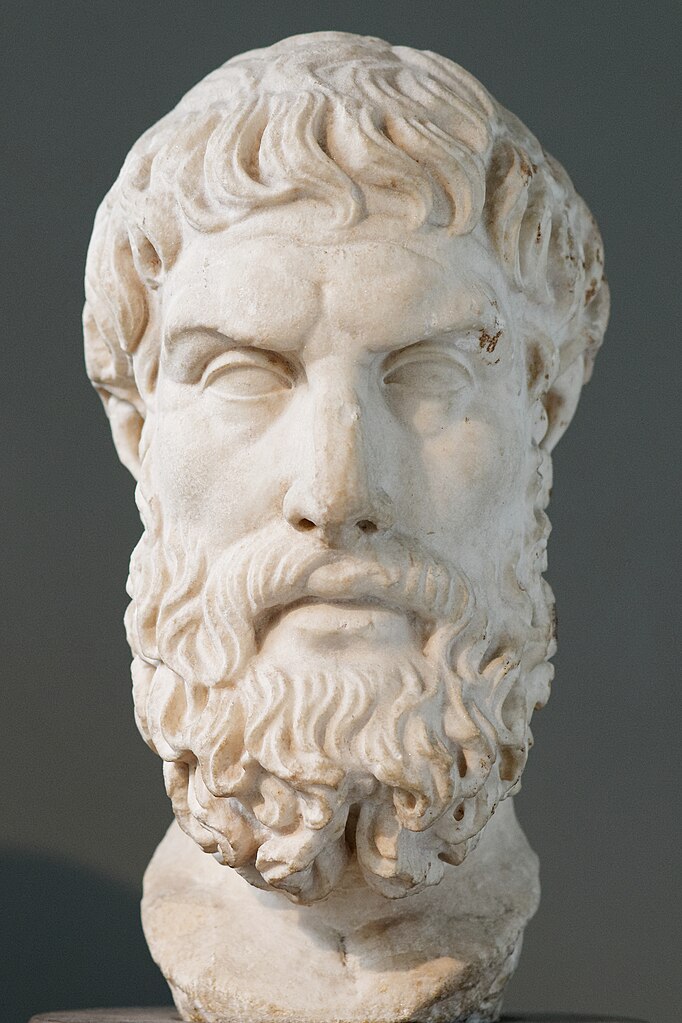
“Let no one be slow to seek wisdom when he is young nor weary in the search thereof when he is grown old. For no age is too early or too late for the health of the soul.”
So begins the third and fourth century BC Greek philosopher, Epicurus in his letter to Menoeceus, although who Menoeceus was, has been lost to the ages. Epicurus was a Greek philosopher born on the island of Samos in the Aegean Sea off the coast of Turkey. He established a school next to Plato’s in Athens and taught that one’s purpose in life was to lead a happy, tranquil, self-sufficient life, a pleasant life, and not to fear death.
Epicurus taught that after death there is nothing. Death is/was the end of the body and soul; teaching that self-guilt and shame were the only methods available to prevent the world from overflowing with psychopaths. This is not far from the current Pope’s thoughts on Hell being an empty shell, a place of nothingness. Socrates, on the other hand, taught that the soul is eternal, and one must strive to keep it bright and shiny.
Epicurus ended his letter to Menoeceus, “Meditate therefore on these things (a pleasant life) and things akin to them night and day by yourself, and with a companion like to yourself, and never shall you be disturbed waking or asleep, but you shall live like a god among men. For a man who lives among immortal blessings is not like to a mortal being.”
Sources: “Ancient Greek Philosophers”, numerous translators, published 2018 and Manchester.edu (Indiana). Photo of a bust of Epicurus by Nguyen, public domain.
 elsToday