Seeking God

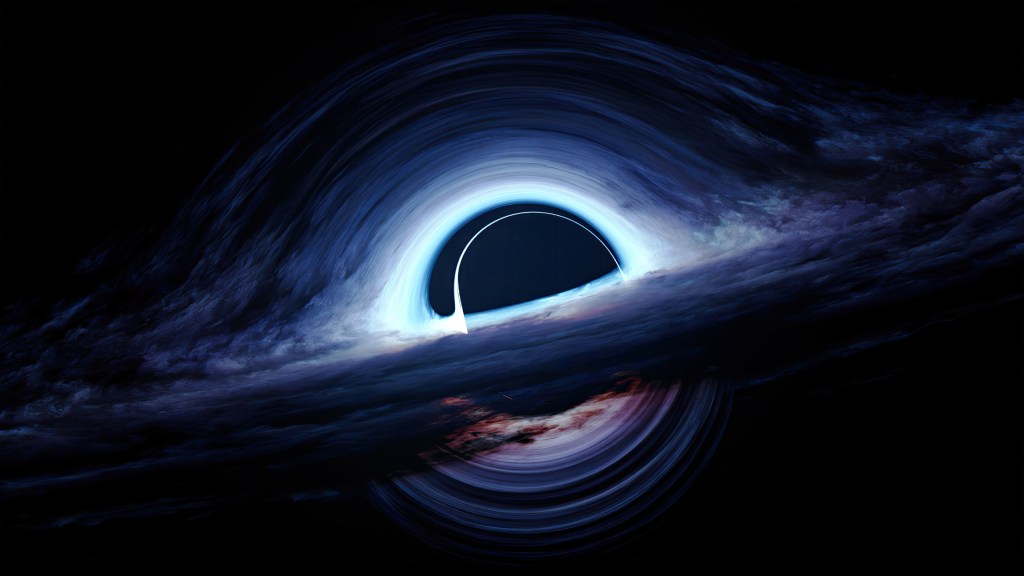
95% of the universe is a mystery. About 68% is dark energy, which is believed to drive the accelerated expansion of the universe, though its exact nature is unknown. 27% is dark matter, which holds galaxies together and is believed to consist of one or more massive, yet unknown, particles.

Science Daily reports that researchers at the University of Michigan and five other institutions “have strengthened the case that matter becomes dark energy when massive stars collapse and become black holes.” This suggests that the universe’s expansion may be partly explained by the expansion of black holes through cosmological coupling. It also implies that black holes can gain mass without consuming matter, directly challenging the Standard Model of particle physics.

This either leads to the Big Freeze—infinite expansion through not quite infinite time—or the Big Crunch, where gravity eventually says ‘Enough!’ and collapses everything back into an infinitesimal point.

To sum up, we may or may not understand 5% of the universe, while the remaining 95% aligns with Socrates’ axiom from 6th century Greece—we essentially know nothing.

Source: University of Michigan. “Evidence Mounts for Dark Energy from Black Holes.” Science Daily. 2024. Graphic: Black Hole.

Runaway Black Hole

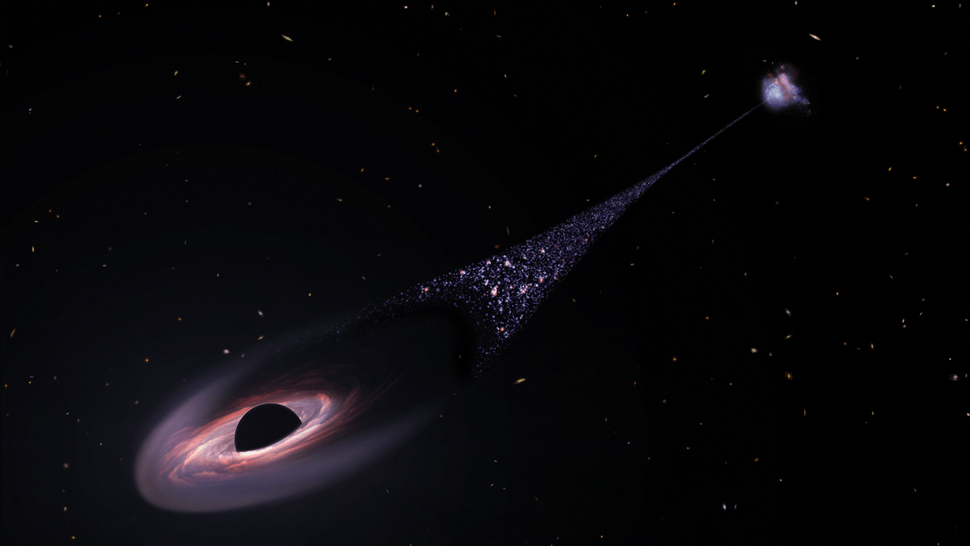
Brandon Specktor with LiveScience reports that ‘in 2023 astronomers reported the detection of something never seen before: a “runaway” black hole…’

The observed black hole with a mass of 20 million suns, is not gravitationally locked to any galaxy. It was spotted streaking darkly through space at more than 3 million miles per hour, or approximately 0.5% the speed of light, dragging a 200,000 light year long string of stars behind it like Christmas lights tied behind Santa’s sleigh.

Possible scenarios that may have sent the black hole on its merry way include various interactions with other massive objects, such as galactic collisions or gravitational recoil of merging black holes.

Source: 5 Space Discoveries that Scientists are Struggling to Explain by Brandon Specktor, LiveScience, 2024.  Graphic: NASA, ESA, Leah Hustak (STScl)

Sino Burn

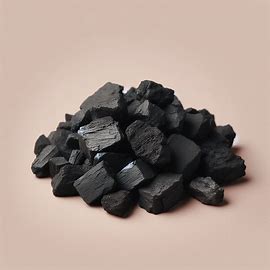
China burns more coal than the rest of world combined, equivalent to almost 92 exajoules of energy in 2023 compared to 72 exajoules for the rest of planet.

For a sense of scale 92 exajoules would power 2.4 billion average U.S. homes for a year. In 2021 it was estimated that there are 2.3 billion homes in the world.

Producing 92 exajoules from coal requires the burning of 4.38 billion metric tons of the sooty stuff. This produces a little more than 9 billion metric tons of CO2, close to 25% of all anthropogenic CO2 produced in the world in 2023.

Source: Statistica. Visual Capitalist. MIT. EPA. Architecture and Design. Graphic: Coal, AI generated.

Bad Gas, Happy Drinks

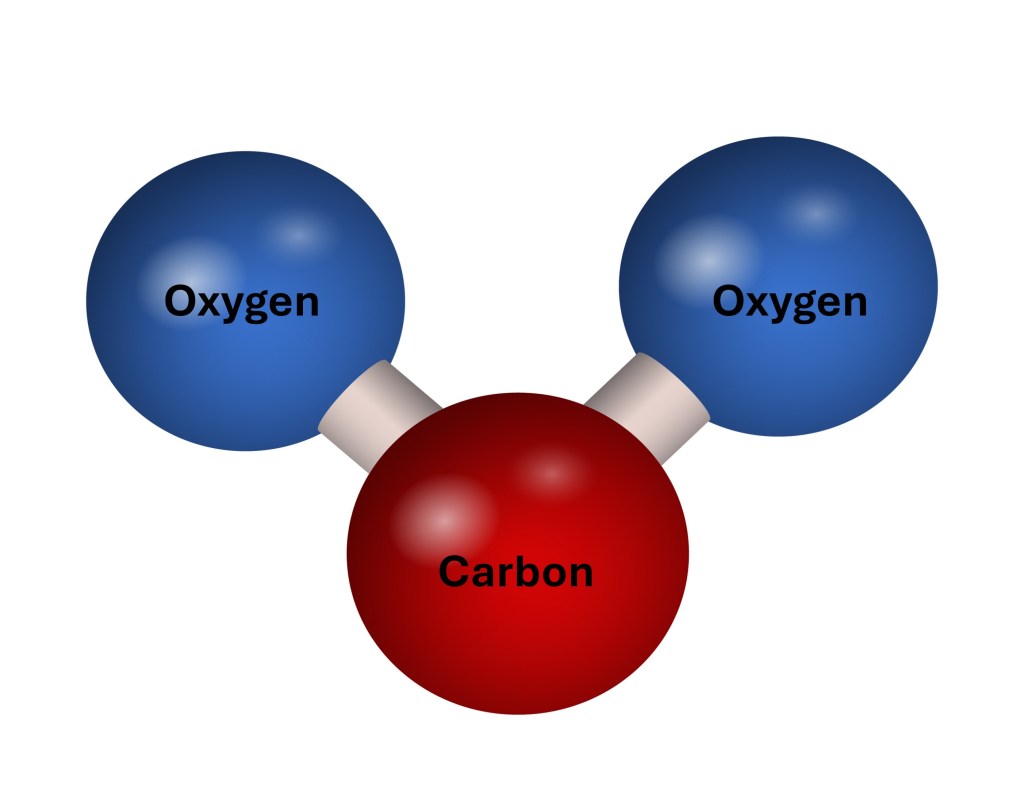
Researchers at the Fritz Haber Institute in Berlin, Germany have developed an experimental process to convert the green-house gas, carbon dioxide, CO2, into ethanol, aka C2H5OH. This is done by introducing copper and zinc oxide catalysts to reduce carbon dioxide into ethanol.

Outside of alcoholic beverages, ethanol is used as an additive in gasoline to produce gasohol. The conversion of CO2 to ethanol directly would help solve two problems at once.

One it would possibly help reduce the atmospheric concentration of CO2, and secondly, it may put an end to the idiotic practice of putting food into the gas tanks of cars and trucks.

Trivia: Alcohol or ethanol is second only to caffeine as the most consumed drug on the planet. Stimulants vs. depressants. We can’t make up our minds, so to speak.

Source: Fritz Haber Institute of the Max Planck Society. Graphic: A carbon dioxide molecule.