Journalism–Christopher Newton

Christopher Newton was fired by the Associated Press in September of 2002 for creating individuals and institutions whose existence could not be verified. The A.P. could not find 45 of the journalist’s sources along with numerous institutions that he cited in his stories.

The story that brought Newton’s fabrications to light was an article on criminal justice where he postulated that a drop in crime was due to the increased incarceration of criminals. In that article he cited two individuals, Ralph Myers and Bruce Fenmore, both of whom could not be verified, and referenced an institute that was also non-existent.

In an interesting and ironic aside, his fictious creations were brought to light when a criminologist at the University of Missouri, Richard Rosenfeld, called, ironically, Fox Butterfield of the New York Times and object of ‘The Butterfield Effect’ (more on that next week) and said that he had never heard of Fenmore or Myers. Upon further inquiries Newton’s career soon came to an appropriate and ignoble end.

Source: Couldn’t Find…by Felicity Barringer, NY Times, 2002. Graphic: AI generated, 2024.

Journalism – Tom Kummer

Swiss journalist Tom Kummer published fabricated interviews from the rich and famous from 1995-1999. The subjects of the interviews included the personalities Tom Hanks, Bruce Willis, Ivana Trump, and many others; none of which he had actually met much less interviewed. All the interviews were conversations with himself in the privacy of his own apartment. He labeled his style as borderline journalism which some call by the oxymoronic phrase: interpretative journalism.

Mandy De Waal in a story about Kummer for the Daily Maverick states, ‘Kummer’s face-to-face interviews with mega-stars like Sharon Stone, Sean Penn, Kim Basinger and Christina Ricci were revelatory to the point of being almost too good to be true. When Tyson told Kummer he had eaten cockroaches in prison as a source of protein it was beyond sensational – it was unbelievable. That was because Kummer had made that all up… Kummer’s celebrity interviews were nothing more than the product of his imagination and he was nothing more than a lying fake who had never even met any of those celebrities.’

Source:  Tom Kummer by Mandy De Waal 2011, Daily Maverick. Graphic: Photo of Tom Kummer by Christian Werner, 2021.

Journalism – Scott Thomas Beauchamp

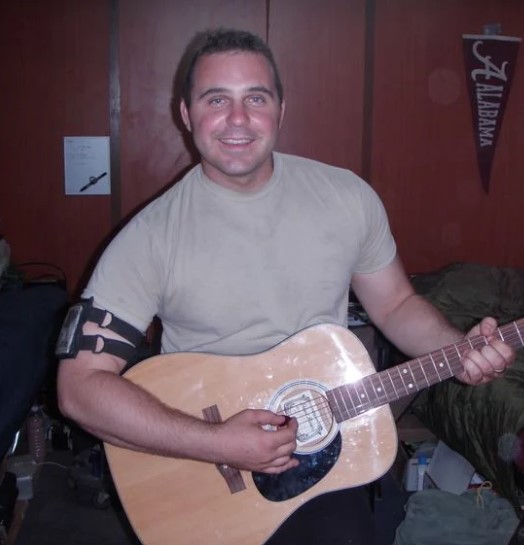
In 2007 The New Republic published three articles by an American Army private, Scott Thomas Beauchamp serving in Iraq titled “Shock Troops”, detailing misdeeds and possible war crimes occurring in and near his forward operating base, Falcon, in Bagdad. The articles were, in part, fact checked by The New Republic Fact-Checker Elspeth Reeve who was also Private Beauchamp’s wife.

Beauchamp claimed that army personnel found mass graves that contained children, and targeted wild dogs for fun, and Beauchamp horribly insulted a woman disfigured by an IED.

The US Army and other news outlets could find no collaboration or substantiation for the events described by Beauchamp. In late 2007 The New Republic stated that they could no longer stand by Beauchamp’s stories.

Reeve is currently a correspondent for CNN. There is no information on the current activities or whereabouts of Beauchamp.

Source:  Fog of War, The New Republic.  Alchetron, 2024. Graphic: Beauchamp by Alchetron, copyright unknown.

Journalism — Ruth Shalit Barrett

Ruth Shalit Barrett, American writer and journalist, resigned from The New Republic in 1999 for alleged instances of plagiarism and inaccurate reporting for stories written in 1994 and 1995. The Atlantic in 2020 retracted a freelance story by her for inventing sources and having lied to the editors and fact-checkers about details in her reporting.

In 2022 Shalit Barrett sued the Atlantic for $1 million claiming that the magazine “smeared” her reputation. The Atlantic says her lawsuit is without merit. The lawsuit is unresolved as of mid-2024.

Source: The Atlantic Issues Scathing Correction by Blake Montgomery, Daily Beast, 2020. Barrett Sues the Atlantic by Howie and Gerstein, Political, 2022.  Graphic: Shalit Barrett, The Wrap, 2020.

Journalism-Louis Seibold

Louis Seibold was a newspaper journalist working mostly for New York World from 1894 to possibly1931. In 1921 he won a Pulitzer Prize for an interview he conducted with President Woodrow Wilson in 1920.

At the time of the supposed interview the President was incapacitated due to a stroke and unable to provide answers or comments in any form to Seibold. It came out later that the interview was faked and was conducted through written correspondence with the President’s chief of staff and personal secretary Joseph Tumulty along with the President’s second wife Edith Wilson. The Pulitzer wasn’t returned.

New York World was owned by the Pulitzers, founders of the Pulitzer Prizes and was, at the time, the leading media voice for the Democratic Party. Pure speculation, but the Pulitzers awarded themselves their own prize for an interview that they surely knew never took place. The newspaper under the Pulitzers was known for left wing reporting, sensationalism, and yellow journalism.

Source: Politico, Prabook, Pulitzer.org., Wikipedia, Wikisource.org. Graphic: Louis Seibold, public domain.

Journalism – Patricia Smith

Patricia Smith is very good at performance poetry, like freestyle rap battles without a beat, but as a journalist she could never quite grasp that poetry was fiction and journalism wasn’t. She could write, she was good with words and phrases, talents that journalism seeks out and rewards, but she would rather write a good story, usually fiction, than hit the pavement to flesh out the truth.

Patricia Smith began her career in journalism in the late 1970s as an entry level clerk at the Chicago Daily News, first as a typist and later as a music and entertainment reviewer. When the Daily News folded in 1978, she then worked as an entertainment writer for the Chicago Sun-Times from 1978 to 1990. She left the Sun-Times after it was discovered that she had written a review of a concert that she did not attend. In 1990 she moved to the Boston Globe, beginning as an entertainment critic, and eventually was made a reporter and the paper’s metro columnist. She was fired from the Globe in 1998 for fabricating characters and events in one of her metro columns. The Globe editors, after further investigation, believed that an additional 52 columns or hers contained fictional elements.

Source: New York Times, Chicago Tribune, Media Nation. Graphic: Patricia Smith

Journalism – Stephen Glass:

Stephen Glass was an American serial fabrication specialist or as they call it in the trade, a journalist, working for The New Republic from 1995 to 1998. He was a rising star in the profession, a young Turk with a strong work ethic but he was manipulative and emotionally controlling towards his superiors. And just about everything he wrote was a lie. For his severe allergic reaction to telling truth, he was fired from The New Republic in 1998.

Buzz Bissinger in Vanity Fair wrote, “The New Republic, after an investigation involving a substantial portion of its editorial staff, would ultimately acknowledge fabrications in 27 of the 41 bylined pieces that Glass had written for the magazine in the two-and-a-half-year period between December 1995 and May 1998. In Manhattan, John F. Kennedy Jr., editor of George, [Glass contributed to other publications while working full time at The New Republic including George] would write a personal letter to Vernon Jordan apologizing for Glass’s conjuring up two sources who had made juicy and emphatic remarks about the sexual proclivities of the presidential adviser and his boss. At Harper’s, Glass would be dismissed from his contract after a story he had written about phone psychics, which contained 13 first-name sources, could not be verified.”

A 2003 critically acclaimed biographical movie covering Glass’s scandal as a journalist, Shattered Glass, explores what happens when a profession loses the public’s trust. Except it never really answers that question or even why Glass could not tell the truth. Other than that, the audiences loved it.

He currently works as a paralegal at the law firm Carpenter, Zuckerman & Rowley, serving as the director of special projects and trial-team coordinator.

Source: Michael Noer in Forbes, 2014. Buzz Bissinger in Vanity Fair, 2007. The Famous People. IMDb. Graphic from TMDB.