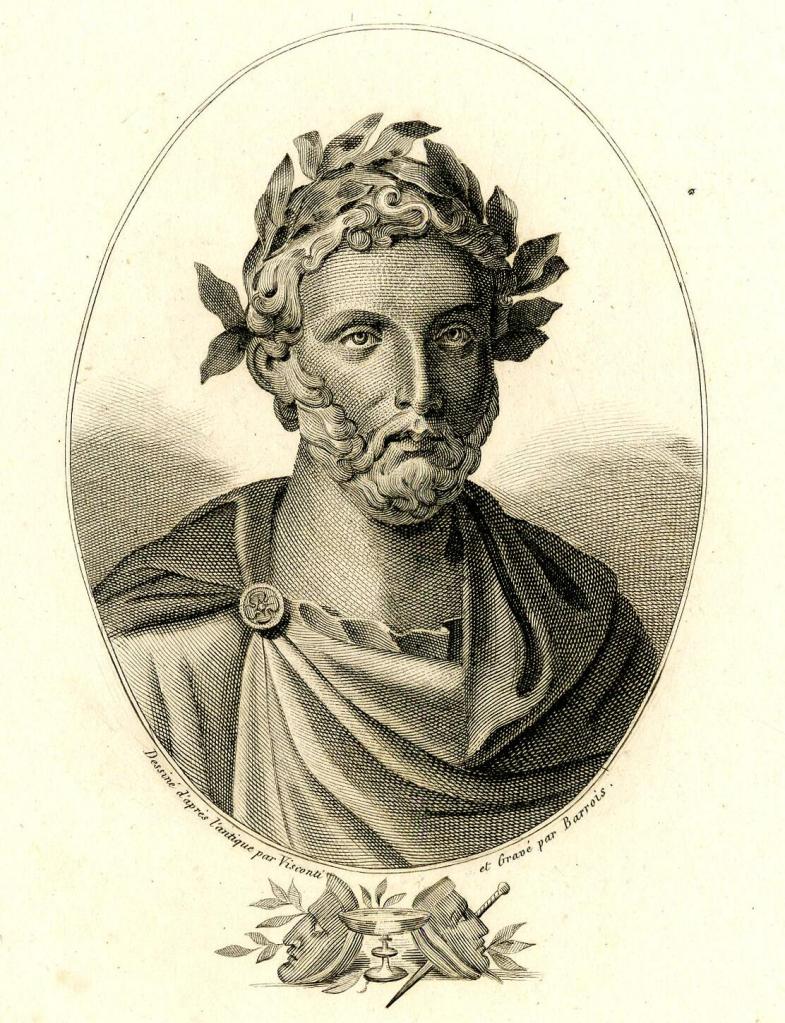
Titus Maccius Plautus was a 2nd century BC Roman playwright known for his loose translations of Greek comedies. It is known that he developed an early attachment to the theater, beginning as a stage carpenter and scene shifter, eventually progressing into acting. During this time, he adopted the nom de plume “Maccius Plautus.” “Maccius” refers to a type of clown, and “Plautus” means flat-footed or bare-footed, thus his name loosely translates to “Titus the Flat-Footed Clown.”
After making some money in the theater, Plautus left the profession, only to lose all his money, forcing him to seek employment in a grain mill. Mill work in ancient Rome was usually reserved for slaves and mules, making it a humiliating job for a free person. However, the drudgery likely provided the motivation for his translation and repurposing of Greek comedies for the Roman audience.
The grind of mill work finds a voice in his plays. Wolfgang De Milo, the current editor and translator of Plautus’s plays for the Loeb Classical Library, states that his plays “…abound in young men doing business abroad and slaves being threatened with being sent to the mill.” While his plays were not strictly original, Plautus incorporated his Italian heritage and customs into his translations of Greek plays, thus making them his own.
Plautus borrowed Greek themes and infused them with his witty take on gods, family, love, money, and immorality. Like the old comedy Greek playwrights, he mocked everything for laughs and urged people to lighten up. His enduring popularity shows that his humor remains timeless and relevant.
Source: Plautus I edited and translated by Wolfgang De Milo, 2011. Graphic: Plautus engraving by Pierre Barrois, 1770, Public Domain
Irish playwright George Bernard Shaw finished writing his best loved play, Pygmalion, a story of English societal class stratification and transformation, in 1912 and it premiered in Germany, of all places, in October of 1913.
The play was inspired by the Greek myth where Pygmalion, a sculptor, fell in love with his ivory creation which was later recounted in Ovid’s Metamorphosis.
The play has been adapted to film and stage in various forms including Shaw’s 1938 film, Pygmalion. The film was then adapted as a Broadway hit musical in the 1956 My Fair Lady by Lerner and Loewe starring Julie Andrews and Rex Harrison, which was then recreated into the 1964 Academy Award winning, blockbuster film of the same name starring Audrey Hepburn and Rex Harrison.
A truly timeless story.
Source: Pygmalion by George Bernard Shaw, 1912. Myths Encyclopedia. Metamorphoses by Ovid, c. 8 AD. Classics.mit.edu/Ovid. Graphic: Mrs. Patrick Campbell as Eliza Doolittle, 1913, Public Domain.
Mark Anthony opens his famous, but fictional, eulogy to Julius Caesar with 7 words of endearment and authority; Aristotelian pathos and ethos, that have become as familiar as blue sky to fans of Shakespeare and English lit students everywhere: “Friends, Romans, countrymen lend me your ears”.
Julius Caesar, a tragedy by Shakespeare, written around 1599, was based on Caesar’s life and death as documented in Plutarch’s Parallel Lives.
With pathos, logos and a chariot laden with irony, Anthony turns initial honor for Brutus and Caesar’s ambition inside out. He brings honor to Caesar and lays ambition on Brutus, along with Cassius. He brings condemnation to the conspirators and love for Caesar.
The first few lines of Anthony’s Eulogy:
Friends, Romans, countrymen, lend me your ears; I come to bury Caesar, not to praise him. The evil that men do lives after them; The good is oft interred with their bones; So let it be with Caesar. The noble Brutus Hath told you Caesar was ambitious: If it were so, it was a grievous fault, And grievously hath Caesar answer’d it. Here, under leave of Brutus and the rest– For Brutus is an honourable man; So are they all, all honourable men– Come I to speak in Caesar’s funeral. He was my friend, faithful and just to me: But Brutus says he was ambitious; And Brutus is an honourable man. He hath brought many captives home to Rome Whose ransoms did the general coffers fill: Did this in Caesar seem ambitious? When that the poor have cried, Caesar hath wept: Ambition should be made of sterner stuff: Yet Brutus says he was ambitious; And Brutus is an honourable man. You all did see that on the Lupercal I thrice presented him a kingly crown, Which he did thrice refuse: was this ambition? Yet Brutus says he was ambitious; And, sure, he is an honourable man. I speak not to disprove what Brutus spoke, But here I am to speak what I do know. You all did love him once, not without cause: What cause withholds you then, to mourn for him? O judgment! thou art fled to brutish beasts, And men have lost their reason. Bear with me; My heart is in the coffin there with Caesar, And I must pause till it come back to me.
Source: “Julius Caesar” by William Shakespeare, Act 3, Scene II. Plutarch’s Parallel Lives. Graphic: Marlon Brando as Mark Antony in the 1953 film “Julius Caesar”
a child surreptitiously or unintentionally substituted for another. (dictionary.com)
a child who is suspected not be a couple’s real child. (vocabulary.com)
(in folklore) an ugly, stupid, or strange child left by fairies in place of a pretty, charming child. (dictionary.com)
a human-like creature found in folklore throughout Europe. A changeling was believed to be a fairy that had been left in place of a human (typically a child) stolen by other fairies. (wikipedia.com)
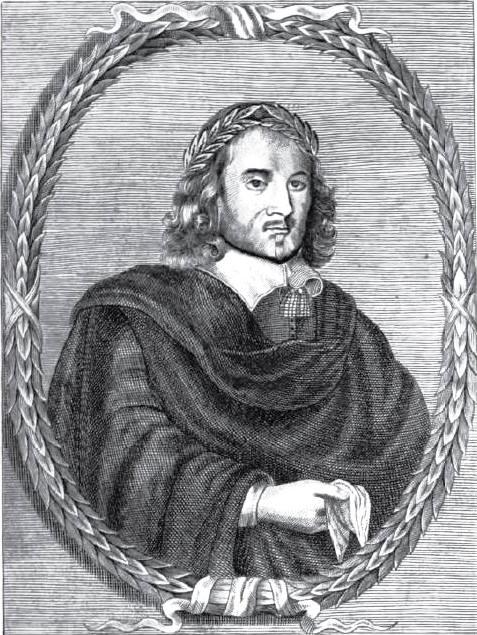
Thomas Middleton, born in London in 1580 living for 47 years, was a famous and prolific Jacobean playwright and poet. He wrote about 27 plays, 18 alone and the remainder with other English playwrights including, William Shakespeare (Women of Timons), Thomas Dekker (The Roaring Girl, et al), John Fletcher (Nice Valour, et al) and of course William Rowley. Middleton’s plays raised him to the loftiest heights of seventeenth century theater, with his fame only eclipsed by Shakespeare and possibly Ben Jonson (Volphone) and John Webster (The White Devil).
His oeuvre included comedy, tragedy, satire, and masque. His greatest play was his great tragedy, The Changeling, which combined violence, intrigue, and a modicum of comedy to produce one of literature’s most intriguing characters: Beatrice-Joanna, a psychopath only surpassed by Patricia Highsmith’s twentieth century protagonist and rogue Mr. Ripley.
(Masque plays were performances that included music, dance, poetry, elaborate sets, and costly costumes which included the wearing of masks. These plays were immensely popular in London theaters and in the courts of nobility such as the English queen Anne of Denmark and Louise the XIV of France. Masque plays can be traced, in various forms, from Greek theater during the Golden Age of Athens to present day Broadway in New York.)
Rowley Biography:
FootnoteD
William Rowley, born in London(?) in 1585, living until the age of 39, is best known for works written in collaboration with other contemporary playwrights. Today he would be categorized as a freelance writer, an independent that works for a set fee. His work is easy to identify as his unexceptional verse stands in stark contrast to the often-polished language of his co-writer(s).
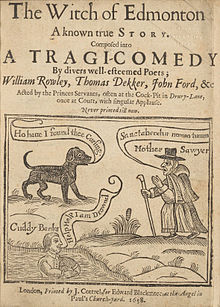
Plays written solely by Rowley are rare and generally of contested authorship. The fact that he co-authored so many plays with the greatest playwrights of his time suggests they saw something in him that critics of today do not. His name lives on though, mainly because of his collaboration with Middleton on ‘The Changeling‘.
The Changeling:
In an attempt to ascertain who wrote what in this play, Pauline Wiggin’s writing style studies in 1897 along with David Lake in 1975 parsed the authorship in the following manner: Middleton likely wrote Act II; Act III, scenes i, ii, and iv; Act IV, scenes i and ii; Act V, scenes i and ii while Rowley likely wrote Act I; Act III, scene iii; Act IV, scene iii; Act V, scene iii. This division of labor credits Middleton for the main plot and Rowley wrote the subplot along with the opening and closing scenes. The main plot of ‘The Changeling‘ is taken from John Reynolds’ 1621 stories.
The main plot revolves around Beatrice-Joanna and her betrothed, Alonzo, along with the one she genuinely loves: Alsemero. To clear the way for her to marry Alsemero she persuades De Flores, her father’s ugly servant, and one who also secretly loves her, to murder Alonzo. Thus, tragedy ensues. The sub-plot occurs in a nearby madhouse run by a Dr. Alibius who is jealous of and afraid that his young wife Isabella will not be loyal to him because he cannot satisfy her. Lollio, the doctor’s servant who also loves Isabella is entrusted by Alibius to make sure she is kept safe from any unwanted romantic advances. Lollio assures him that no madmen will bother her in his house. Franciscus and Antonio, the changeling, are also in love with Isabella. They pretend to be a madman and a fool, respectively, to get committed to the doctor’s care so they can be with her. A sub-plot of comedy wrapped around a main plot of tragedy.
Literary Criticism:
A play of intrigue, treachery, murder, adultery, and death. A play displaying human failings without remorse. Love and treachery in one house, madness in another. But which is which. A morality play for the ages which hasn’t lost its sheen or relevancy in four hundred years.
FootnoteA: It is common today to find William Rowley’s name not listed on the cover of reprints for ‘The Changeling‘. I’m not sure there is any meaning in the omission other than the publishers didn’t do their homework. Amazon picture
FootnoteB: A scene from “The Legend of St. Stephen” by Martino di Bartolomeo, in which the devil steals a baby and leaves a changeling in its place. Wikimedia Commons
FootnoteC: Thomas Middleton. Wikimedia Commons
FootnoteD: The Witch of Edmonton: by William Rowley, Thomas Dekker, John Ford, &c. Printed in London by J. Cottrel, 1658. One of the few plays showing Rowley’s name. Wikimedia commons


 elsToday