It was the year without summer. During the year 1816, temperatures in Europe were the coldest of any recorded between 1766 and 2000. Across the pond in New England frost occurred every month of the year and six inches of snow fell in June. Crops failed, food was scarce, and people died unpleasantly premature.
There was no summer that year because in 1815 the Indonesian volcano, Mount Tambora, had a fit and blew its top, more or less straight up into the stratosphere. The amount of material injected into the upper atmosphere blocked the sunlight and caused global cooling.
Meanwhile, not to let bad weather forestall important matters, Lord Bryon while vacationing in Geneva, challenged his two companions, Percy Shelly, and Mary Godwin, the soon to be Mary Shelly, to a contest of who could write the best ghost story. Lord Bryon and Percy soon abandoned the project, but Mary persevered and published her Frankenstein two years later, giving birth to the monster with no name, countless movies, myths, legends, and frightful nights for children everywhere.
In the tenth chapter of her epistolary novel, Frankenstein, or The Modern Prometheus, we finally meet her fictional monster to learn not only that it lives, but it also speaks grammatically correct King’s English. Shelly cast her monster as Lucifer from the pages of Milton’s Paradise Lost. The monster, addressing its creator, Victor Frankenstein, speaks of profound loneliness, “The fallen angel becomes a malignant devil. Yet even that enemy of God and man had friends and associates in his desolation; I am alone.”
In the end the monster wishes to die but the author leaves those matters in the reader’s hands.
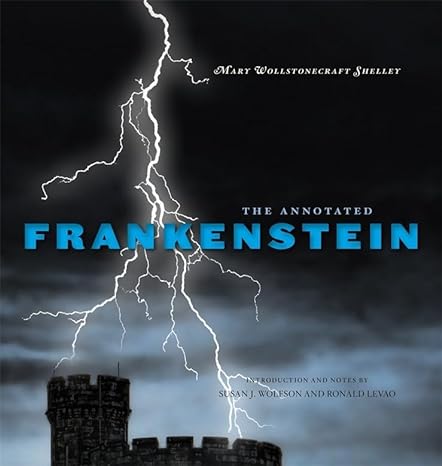
Sources Frankenstein by Mary Shelly. First published in 1818. The 100 Greatest Literary Characters by Plath et al, published 2019. Cover from a 2012 edition of Frankenstein shown below.
Vincent Di Fate, born 1945 in Yonkers, is a New Yorker and American artist known for his depictions of science fiction, fantasy, and realistic space art. He has an MA from Syracuse University.
People Magazine noted the Di Fate is, “one of the top illustrators of science fiction…” His specialty is imaging technologies and environments in the nether regions of space and the universe. His clients include NASA, IBM, Scientific American, and The National Geographic Society. James Lizowski, Omni Magazine critic, noted that Di Fate, “combines the skills of a masterful painter with the fierce demand of an uncompromising artist to create visions of the future that are precise, powerful, and dazzling to the eye“.
His numerous awards include the: Hugo, Sklark, Lensman, Chesley, and Rondo Awards, among others for illustration of science fiction and fantasy subjects. He was inducted into the Science Fiction Hall of Fame in 2011 and the Illustrator’s Hall of Fame in 2019. He has consulted for MCA/Universal, 20th Century Fox, Walt Disney, MGM/United Artists.
Di Fate has also written three books and is currently working on his fourth. His second book Infinite Worlds was the first comprehensive history of science fiction art in America. Listed below are some of the books of fiction he has illustrated. Additionally, he has illustrated hundreds of sci-fi and fantasy book covers in his four decades as an artist.
Di Fate Book Illustrations (Partial):
2001: A Space Odyssey by Arthur C. Clarke
Prelude to Foundation by Isaac Asimov
The Demolished Man by Alfred Bester
The Fabulous Riverboat by Philip José Farmer
The Dark Design by Philip José Farmer
The Magic Labyrinth by Philip José Farmer
The World of Null-A by A.E. van Vogt
Rules of Engagement by Elizabeth Moon
The Time Traders by Andre Norton
The Godmakers by Frank Herbert
Di Fate Bibliography:
Di Fate’s Catalog of Science Fiction Hardware 1980
Infinite Worlds: The Fantastic Visions of Science Fiction Art 1997
The Science Fiction Art of Vincent Di Fate 2002
Clement Biography:
“Human beings are prone to believe the things they wish were true.” – Hal Clement
Hal Clement, born in 1922, in Massachusetts, passing away in 2003, was an American science fiction writer and a leader of the hard science fiction subgenre. Hard science, as it was defined in 1957 by P. Schuyler Miller, is characterized by scientific accuracy and logic. Hard science fiction is strongly rooted to known physical laws in the natural universe. In an interview with “The Science Fiction Radio Show” in the early 1980s Clement said that he had “…trouble writing something unless, I can, more or less convince myself it might happen.” In the old days before computers, he was known to whip out his slide rule and run through the calculations to make sure his stories passed the law of physics test.
FootNoteB
Clement received a degree in astronomy from Harvard University in 1943, an M.Ed. from Boston University in 1946, and eventually an M.S. in chemistry from Simmons College in 1963. He was a B-24 Liberator, a heavy bomber, pilot during WWII, flying combat missions over Europe, finishing his Air Force career after the war in the Air Force Reserve, retiring as a colonel. He taught astronomy and chemistry at the high school level in Massachusetts.
Clement while working towards his B.S. at Harvard wrote and published his first piece of science fiction, a short story called “Proof“. The story first appeared in a 1942 issue of Astounding Science edited by his mentor John W. Campbell. Campbell was known as the leader of the hard science wing of the science fiction genre which Clement admits affected his writing standards. Clement’s first three novels were Astounding Science serials under Campbell: Needle in 1950, Iceworld in 1953, and Mission of Gravity, his best-known novel, in 1954. Clement followed up Needle and Mission of Gravity with the sequels: Through the Eye of a Needle in 1978 and Star Light in 1971, respectively. He also wrote two additional short story sequels for Mission of Gravity: Lecture Demonstration in 1973 and Under in 2000.
In addition to his writing, Clement also painted astronomically oriented artworks under the name George Richard. In 1998, he was inducted into the Science Fiction and Fantasy Hall of Fame and was named the 17th SFWA Grand Master by the Science Fiction and Fantasy Writers of America in 1999.
Hal Clement wrote over 120 novels, novellas, short stories, and collections. Below is a listing of just his novels.
Clement Bibliography (Novels Only, Shorter Fiction not Listed):
Needle 1950
Iceworld 1953
Mission of Gravity 1954
The Ranger Boys in Space 1956
Cycle of Fire 1957
Close to Critical 1958
Natives of Space 1965
Star Light 1971
Left of Africa 1976
Through the Eye of a Needle 1978
The Nitrogen Fix 1980
Intuit 1987
Still River 1987
Fossil 1993
Half Life 1999
The Essential Hal Clement, Volume 1: Trio for Slide Rule and Typewriter 2007
The Essential Hal Clement, Volume 3: Variations on a Theme by Sir Isaac Newton 2007
Heavy Planet 2002
Noise 2003
Hal Clement SF Gateway Omnibus 2014
Mission of Gravity:
Mission of Gravity was first published in serialized form in The Astounding Science Fiction Anthology of 1953 with the hardcover coming out in 1954 followed by the paperback in 1958.
The story takes place on the planet Mesklin, an object thought to be in the 61 Cygni system, eleven light years from Earth. Mesklin is a super-giant bowl-shaped planet, flattened at the poles, an oblate spheroid, with an extreme rotation that allows for 18-minute days or approximately 9 minutes of daylight. The high spin rate creates gravity that equals about 3g at the equator and 700g at the poles. Clement eventually re-calculated the gravity over the planet and changed the polar regions to 200g. For comparison purposes the Sun has a gravity of 28g or 28 times that of Earth.
Earth has sent a probe to Mesklin to study its extreme gravity and other matters of value, but it became stranded in the high gravity areas of a pole ruling out a rescue by a human team. Earth wants to recover the probe at all costs to learn what secrets it contains.
The planet is populated by an intelligent species of centipedes that come in assorted sizes, but the ones be-friended by the Earth visitors are about three feet long. An Earth spacemen, Charles Lackland travels to the equator of the planet where he can just manage the 3g environment and meets Barlennan a captain of a sailing raft named the Bree. The Bree and its crew are on a trading voyage in the equatorial areas making a profit by bartering goods from isolated populations all over the planet. After Barlennan learns English, a deal is arranged for him and his crew to retrieve the probe at the poles and return it to the equator where the humans can pick it up. So begins the centipedes’ journey to the pole.
Literary Criticism:
As with all science fiction, Mission of Gravity suffers from futuristic technology that outdates itself in a few years. A quaint process in mapping the surface of Mesklin involves taking a series of high altitude photographs, displaying them of photo paper and trying to put them all together like a giant jig-saw puzzle. No GPS coordinates, no digital, just 1950 Earth tech and methodology. Leaving that aside though, the story is well worth reading. The science as presented is sound, mostly, the story telling and plot is a page turner, and the characterization of the alien’s life-forms is plausible and interesting. It will be worth your time and at 223 pages a quick read.
Oh, when I look back now
That summer seemed to last forever
And if I had the choice
Yeah, I'd always wanna be there
Those were the best days of my life

Song written by Bryan Adams/Jim Vallance - Summer of 69 - Reckless album - Released 1985
BradburyBiography:
“All education is self-discovery.” Bradbury
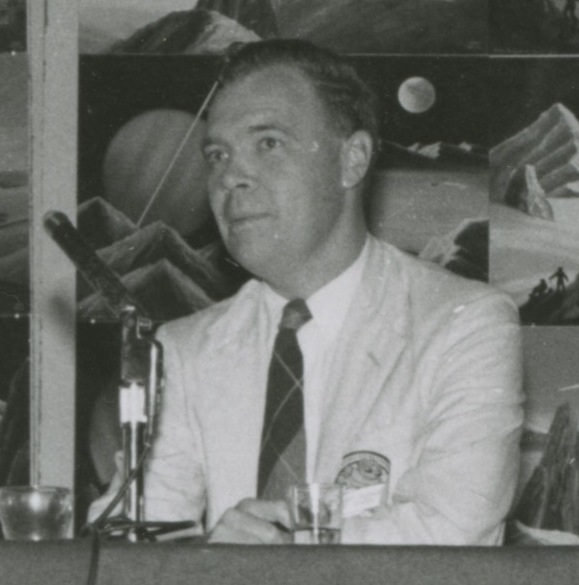
Ray Bradbury, 1920-2012, was an American treasure, an exceptionally talented and prolific writer in multiple genres that included science fiction, horror, and mystery but his passion lay in the field of fantasy. He felt that fantasy, by his definition, was “a depiction of the unreal“. He took inspiration and pleasure from the fantastical works of Poe, Wells, and Verne and spent a lifetime mining his imagination for the unreal. Fantasy was where he could not only “create myths for the future” but warn society of the dangers of technology and conformity. In his words: “to prevent the future.”
FootnoteA
Bradbury was born in Waukegan, Illinois, a small town of 20-30 thousand people, at the time, north of Chicago, and came of age there during the Great Depression. It was a time when the future was murky, and he said he needed his imagination to see through the gloom. That imagination was fruitful and varied.
His writing was packed full of social commentary, especially Fahrenheit 451, but more on that in a bit. He wrote about the unreal side of the present but with an eye to the future. His prescient vision alerted us 75 years ago about the evils that will come from a monoculture dispensed from the organs of mass media and technology. He was afraid that it would keep society passive and ignorant. And ignorance has come to pass.
Bradbury never drove a car, but he did ride in them, he did not board a plane, heights bothered him, until he was in his sixties, and he never used a computer. He thought the internet was useless, perfectly encapsulating a flaw, maybe the major flaw in science fiction: predicting the future is hard and mostly wrong. Machines didn’t interest him but when he wrote about them, he just made it up as he went.
He initially corrected people when questioned about his “science fiction” writing, “I don’t write science fiction” he insisted. “I write fantasy. Fantasy is a depiction of the unreal.” In later interviews when referred to as a science fiction writer he just graciously accepted it and moved on. Science fiction he also said was “a depiction of the unreal but with an attempt to be faithful to reality.” He didn’t want to be faithful to reality. He stated that of all the stories he wrote, and it’s believed that there were more than a thousand of them, no one seems to be able to add them all up, Fahrenheit 451 is the only true science fiction he ever wrote. It not only has withstood the test of time as a classic piece of sci-fi literature, but it also was rendered into two motion pictures in 1966 and 2018. The former was only marginally bad with the latter being just flat out bad, proving the point that low budget sci-fi does not win any awards in Hollywood or with audiences.
FootnoteB
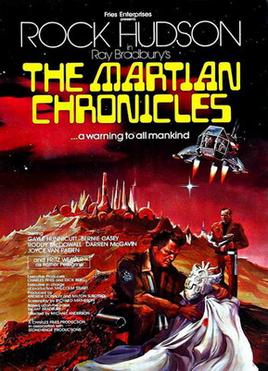
Bradbury made his mark in the literary world with The Martian Chronicles, a collection of loosely connected short stories released in 1950. The book chronicles the settlement of Mars, the home of Martians by Americans fleeing an Earth falling into a hellish abyss.
During the height of the second Red Scare beginning in 1947, Bradbury warned of government censorship with his fourth and possibly his greatest novel, Fahrenheit 451. The story initially appeared in book format in 1953 and was reprinted in the nascent publication Playboy in 1954. Fahrenheit 451 is the story of firemen not putting out fires but starting them. They burn books, and buildings with books to keep people ignorant and thus obedient. An obedient population was not a threat to the government.
Dandelion Wine:
FootnoteC
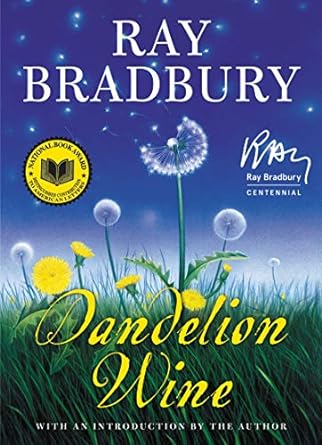
Dandelion Wine is Bradbury’s fifth novel and his most intimate creation. It is a loose collection of forty-nine semi-autobiographical short stories detailing a 12-year-old boy, Douglas Spaulding and his 10-year-old brother Tom, trying to stretch out the summer of 1928 into a never-ending triumph of pubescence experience in small town America.
In a 1974 introduction to Dandelion Wine, titled Just This Side of Byzantium…, Bradbury writes: “…Waukegan was Green Town was Byzantium with all the happiness that that means, with all the sadness that these names imply. The people there were gods and midgets and knew themselves mortal and so the midgets walked tall so as not to embarrass the gods and the gods crouched so as to make the small ones feel at home…Here is my (Bradbury’s) celebration,then, of death as well as life, dark as well as light, old as well as young, smart and dumb combined, sheer joy as well complete terror written by a boy who once hung upside down in trees, dressed in his bat costume with candy fangs in his mouth, who finally fell out of the trees when he was twelve and went and found a toy-dial typewriter and wrote his first ‘novel’.”
FootnoteD
About half of the chapters in the book were initially published, starting in 1946, as short stories in magazines such as Weird Tales (The Night), Charm (The Green Machine), and The Saturday Evening Post (The Happiness Machine). In 1957 all the stories were brought together into the book, Dandelion Wine. The title refers to Douglas’s grandfather making wine every summer from the petals of dandelions. Bradbury used the title as a metaphor for cramming all the joys and happenings of summer into one bottle. Or one book.
As a testament to the lasting appeal of the book, the 1971 crew of Apollo 15 named a lunar crater Dandelion. In 1986, as a testament to Bradbury’s lasting appeal as a writer, an asteroid was named after him called 9766 Bradbury.
And finally, in a 2010 interview with Universe Today a few years before his death, in reference to being buried on Mars, he said: “I don’t want to be the first live person to arrive there,” he said. “It’ll be too late. But I want to be the first dead person that gets there. I want to arrive in a Campbell’s soup can. Bury me on Mars in (a) thing called the Bradbury Abyss. They gotta name a place on Mars for me, and I will welcome that.” Maybe Elon Musk can help with this.
FootnoteE
Literary Criticism:
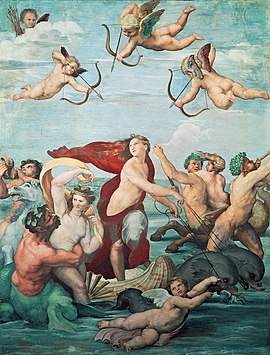
Ray Bradbury writes poetry as prose. Natural and chatty prose. Prose rich in explanation, metaphor, and image. Prose that is a joy to read, planting scenes in your mind that grow into a picture worthy of Raphael’s Triumph of Galatea.
Dandelion Wine is the extraordinary time in a boy’s life where innocence, friendship, and happiness occur without the weight of the substantial and ponderous adult years.
Read the snippet below from chapter 29 of Dandelion Wine, Summer’s Ice House and tell me you do not feel the chill.
Deep in winter they had looked for bits and pieces of summer and found it in furnace cellars or in bonfires on the edge of frozen skating ponds at night. Now, in summer, they went searching for some little bit, some piece of the forgotten winter...Summer’s Icehouse on a summer day! They said the words, laughing, and moved to peer into that tremendous cavern where in fifty, one-hundred, and two-hundred-pound chunks, the glaciers, the icebergs, the fallen but not forgotten snows of January…
Dandelion Wine is a masterpiece of prose, of imagination, and fantasy.
Bradbury Literary Awards:
World Fantasy Award for Life Achievement 1977
Prometheus Award for Fahrenheit 451 1984
Bram Stoker Award for Lifetime Achievement 1989
P.V. Helmerich Distinguished author Award 1994
Emmy Award for The Halloween Tree 1994
First Fandom Hall of Fame Award 1996
Science Fiction and Fantasy Hall of Fame Inductee 1999
Medal for Distinguished Contribution to American Letters 2000
“Since we don’t know where we’re going, we have to stick together in case someone gets there.” Kesey
FootnoteA
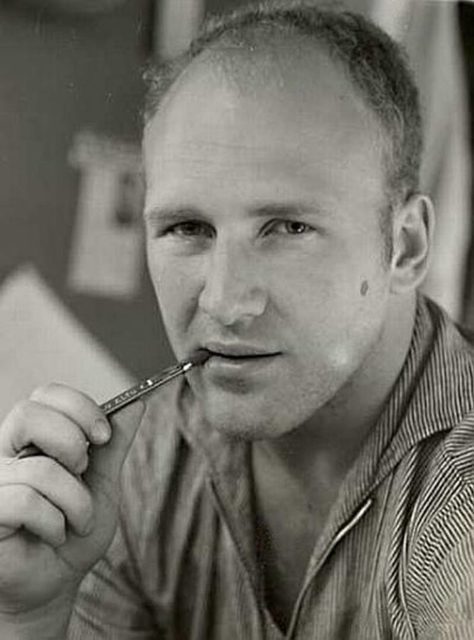
Ken Kesey, who died at the age of sixty-six in 2001, was a novelist, hippie, and beatnik, tuning into the counterculture movement of the sixties that renounced materialism, institutions, and the middle-class, while embracing LSD, free-sex, and carrots. Kesey, I believe, just embraced LSD, grass, and laughs.
After finishing college at the University of Oregon–go Ducks–he moved to California and enrolled in Stanford–go Tree??–to study creative writing from 1958 to 1961 while simultaneously settling into the counterculture lifestyle gripping the area and the nation.
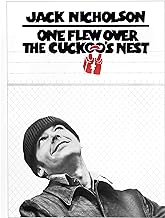
In 1959 he volunteered for the CIA’s LSD mind experiments being run under the code name MKUltra. These experiments were conducted at a VA hospital in Menlo Park, just northwest of Stanford. At the same time in 1959 he accepted a position as an attendant in the hospital’s psych ward, working there while tripping on LSD. He began writing One Flew Over the Cuckoo’s Nest in 1959 or 60 (various sources give different dates). In 1962 Kesey published his masterpiece. The rest is history.
FootnoteB
Later, in 1964 Kesey and his band of Merry Pranksters, a group he and others formed in the late fifties, bought an old school bus, repainted it in the pop art and comic book style of Andy Warhol and Roy Lichtenstein respectively, and took off to survey and crash the Beatnik scene in New York City. While on the road to New York they handed out LSD in various forms, it wasn’t illegal until 1966, and held street party theater for the locals. The whole experience was recorded with microphones and cameras along with several books being written afterwards about the experience.
After returning to California in 1965 Kesey was arrested for marijuana possession. Fearing prison, he faked his suicide which didn’t really fool the police and escaped to Mexico. A few months later in 1966 he was captured and sent to an honor prison camp in Redwood City, California for six months where he cleared brush and kept a diary of his experience later publishing it as Kesey’s Jail Journal: Cut the M*********** Loose.
Upon release from prison, he gave up the bohemian lifestyle, returned to Oregon, and settled down to the life of a respectable middle-aged citizen with a little acid and weed still making recreational appearances.
FootnoteC
Defending his drug use he made the point, in an interview with Charley Rose in 1992, that doing drugs was a personal decision and if your neighbor incurred no harm, then no one need be concerned. A thoroughly libertarian position not terribly different than William Buckley’s view on pot. He also denied being a mindless drug addict stating in an interview with Terry Gross, “I’ve always been a reliable, straight-up-the-middle-of-the-road citizen that just happens to be an acidhead.”
One Flew Over the Cuckoo’s Nest:
The story’s narrator, Chief Bromden, a 6’6″ tall member of a Columbia River Indian tribe, is a schizophrenic patient in an Oregon psychiatric hospital, passing himself off as a deaf, mute with an agreeable disposition. Bromden forms a bond of friendship with Randle McMurphy, a new psych patient who, rather than put in a few months in at a prison work farm, convinces his jailers that he is insane so he can get transferred to a no work sanitorium with better meals. McMurphy initially finds his situation much improved and installs himself as head crazy but quickly butts heads with Nurse Ratched the chief administrator for his floor. Nurse Ratched is a humorless soul sucking battle axe who quickly realizes that she is in a clash of Titans and wits with McMurphy where the winner takes all. As in Macbeth only one king, or Queen, shall live or as Shakespeare states, “if the assassination / Could trammel up the consequence”. In today’s vernacular, the Machiavellian “when you set out to kill the king, you must kill him” and damn the repercussions is more succinct.
Literary Criticism:
One Flew Over the Cuckoo’s Nest is one of the best American novels written in the latter half of the twentieth century easily standing with Steinbeck’s East of Eden and Of Mice and Men, Hemingway’s The Old Man and the Sea, Lee’s To Kill a Mockingbird, and Bradbury’s Fahrenheit 451. Except for Hemingway’s novella they all explore good and evil within the context of human nature and its effect on one’s soul. Kesey’s book pokes and prods the reader with almost farcical battles of weak minds against strong minds. Wills of strength versus the will of the state. Occasional good against consistent evil.
Every literary device and human character flaw known has been applied to this novel, simile, metaphor, personification, action, protagonist, antagonist, conflict, allusion, imagery, climax, male chauvinism, misogynism, sexuality, sexual repression, fear, hate, violence, intimidation, dominance; it is all here, a masterpiece of storytelling that maybe only Dickens was capable of duplicating.
In Aristophanes’ play The Birds he invented the term “cloud cuckoo land” as the name for his bird utopia but in reality, it was the home for the absurd. Whether Kesey intended to imitate Aristophanes social criticism and sarcasm inherent in The Birds is not known but they both found their subject matter bizarre and ridiculous.
Mental Health and the Cuckoo’s Nest:
One Flew Over the Cuckoo’s Nest, the book, the play, the movie, likely accelerated the deinstitutionalization of mental patients in the U.S. and the world. It was a process that had already begun in the mid-fifties with the introduction of the antipsychotic drug, chlorpromazine, allowing mental illness to be treated outside of a hospital setting. In the sixties and seventies President Kennedy and California Governor Reagan were champions of providing mental health services without walls. In hindsight it should have been easily anticipated the inevitable negative consequences of such policies. Homelessness and incarceration, rampant use of illicit drugs and crime, the general breakdown of societal norms when the mentally ill were allowed to take charge of their own care without supervision. Assuming logical outcomes from illogical inputs is well–illogical.
In Virgil’s Aeneid he wrote, “facilis descensus Averno (the descent to hell is easy)” or as Samuel Johnson updated the proverb by stating, “…hell is paved with good intentions”. Today we just say the “Road to hell is paved with good intentions” and hell is a dystopian wasteland.
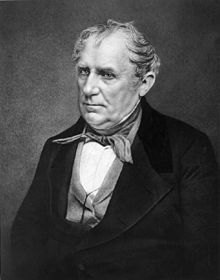
James Fenimore Cooper died in 1851 at the age of 61 in Cooperstown, New York, a small town founded by his father, William Cooper in 1785. The city is located on the southern edge of Otsego Lake which means ‘Place of the Rock’ in the Mohawk language and Glimmerglass in his novel ‘The Deerslayer‘.
Cooper, the eleventh of twelve children, after his first birthday spent his pre-teen years in Cooperstown. He was enrolled at Yale University when he was thirteen and expelled for dangerous mischief at 16 without obtaining a degree. He crewed a merchant ship at the age of seventeen and sailed across the Atlantic to London and down along the Spanish coast into the Mediterranean. In 1808 he joined the U.S. Navy and spent the next two years serving aboard inland lake gunboats and preforming recruiting duties. He resigned his commission in the navy in 1810 for the lack of excitement. (In life where timing is everything, the British naval blockade of American trade during the war of 1812 may have provided Cooper with some needed excitement.) In 1811 he married a wealthy heiress, Susan Augusta de Lancey and settled down to life of leisure for the next decade.
In 1820, after ten years of dabbling in various occupations, more as hobbies rather than employment, he decided to take up writing, producing his first novel, a poor imitation of Jane Austin novels, ‘Precaution’ in the same year. His second novel ‘The Spy‘ was more successful and gave him a measure of fame and wealth, enough to encourage him to continue his pursuit as a novelist and writer.
His first ‘Leatherstocking’ novel. ‘The Pioneers‘ appeared in 1823 followed by the second ‘Leatherstocking’ novel, ‘The Last of the Mohicans‘ in 1826. ‘The Last of the Mohicans‘ is considered his greatest triumph as an author from the time it was written to the present day and has been adapted to film many times over the last one hundred years.
As a testament to his success as a writer, after two centuries almost all his fictional novels are still in print.
The Deerslayer:
‘The Deerslayer‘, first published in 1841, was the fifth and final volume of the ‘Leatherstocking‘ historical romantic novels by Cooper. In ‘The Deerslayer‘ the author brings the protagonist of the ‘Leatherstocking‘ series, Natty Bumppo, back from the future as a prequel to the first four novels. Running in the background to the story is the French and Indian Wars, setting the stage and providing context for the action and dialogue occurring on and around Otsego Lake known as Glimmerglass in the novel.
Natty, referred to by his nicknames Deerslayer and Hawkeye, is a young 17th century moralistic American frontiersman living and traveling among the Iroquoian Mohawks, in what is now known as central upstate New York. Deerslayer has a strong innate sense of right and wrong from a civilized Christian perspective which he continually attempts to square and bridge with the less polished cultural tenets of his Indian brothers. To avoid moral conflicts with his adopted tribal brothers he focuses on the good in the red and, with a nod to cultural sensitivity, he internally closets any interpretive bad in the red as inconsequential. Deerslayer though, takes a less compromising position with his white brethren; admonishing them for traits and behaviors that diverge from his Christian grounding in what is right.
Cooper reinforces the inherent conflicts between good and bad by creating good Indians, Mohawks, and bad Indians, Mingos. The noble, liberated savage versus the evil, fearsome savage. In the end the white and red dissipate and all that is left is the perpetual struggle between good and evil.
Layered on top of Deerslayer’s sententious inclinations is a romance played out between Natty and the beautiful daughter of his traveling companion’s friend: Judith. Judith is slowly drawn to Deerslayer’s inherent goodness while Natty remains committed to his frontiersman bachelor ways. Another gap for the Deerslayer to bridge but in this instance, fails.
Literary Criticism:
‘The Deerslayer‘ received much critical praise from the time of publication onward into the 20th century. Author D.H. Lawrence found the book “one of most beautiful and perfect books…” Critic Carl Van Doren called novel “as a whole absorbing.” Wilkie Collins, author, said “Cooper is the greatest artist in the domain of romantic fiction yet produced in America.” Critic Lounsbury proclaimed that ‘The Pathfinder‘ and ‘The Deerslayer‘ “were pure works of art.”
Not all criticism was positive. Mark Twain supposedly found it dreadful and wrote ten pages explaining his thesis in the aptly titled: ‘Fenimore Cooper’s Literary Offenses‘. As is his want and style, Twain’s account of Cooper’s offenses was exceptionally funny though I’m less than sure if he was serious in his criticisms or if he just saw an opening to throw a few well-constructed barbs to help pay the bills and meet contractual obligations. An excerpt from the opening to ‘Fenimore Cooper’s Literary Offenses‘:
“Cooper’s art has some defects. In one place in ‘Deerslayer‘, and in the restricted space of two-thirds of a page, Cooper has scored 114 offences against literary art out of a possible 115. It breaks a record.
There are nineteen rules governing literary art in the domain of romantic fiction–some say twenty-two. In ‘Deerslayer‘ Cooper violated eighteen of them….”
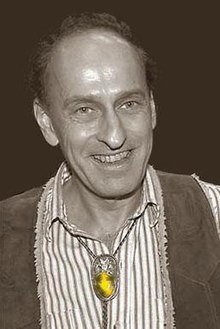
Roger Zelazny was a giant of science fiction and fantasy from the mid-1960s till his death in 1995 at the age of 58. For 42 years, beginning slow, learning to crawl in 1953, sprinting from the mid-60s onward, his prodigious writing produced 46 novels and novellas, more than 140 short stories, and plethora of poems, chapbooks, anthologies, and collections which earned him six Hugos and three Nebula Awards.
Zelazny’s prolific output flowed from an inventive mind wrapped around the mythology and literary fiction of the distant past. Homer to Shakespeare, Greek gods to Norse myths — Zelazny’s fictional future was filled with characters reprising roles from civilization’s long-gone coterie of rogues and heroes, some real, most not.
His greatest commercial achievement, the ten novels of Amber weave through the book’s fictional universe’s two true worlds: Amber, an Arthurian legend with Shakespearean Histories and Chaos, Greek myth at the edge of the abyss with all else in between being nothing but shadow of no real substance. Zelazny credits Farmer’s World of Tiers and French legend including the Song of Roland for inspiration in writing Amber with allusion to much that is Shakespeare: Hamlet, As You Like It, Julius Ceasar, and many of the other Histories and Romances. With an M.A. in Jacobean literature and a love of poetry it takes little imagination to suspect the shadows of Amber may also have a connection to Shakespeare’s Sonnet 53:
What is your substance, whereof are you made, That millions of strange shadows on you tend? Since every one hath, every one, one shade, And you but one, can every shadow lend. …
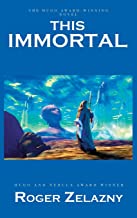
This Immortal or …And Call Me Conrad is a story of Greek myth meeting nuclear Armageddon of Earth. With the remaining population of a couple million living in the few places left on Earth that aren’t toxic, the galactic future appears to belong to the Vegans. The Vegans, from the star system of Vega, who may incidentally have been herbivores, were blue skinned aliens preferring humans as a source of cheap labor and prostitution and not much else. A Vegan author has come to Earth to write a book on the remaining locations of civilizational wonder left on the planet. He has requested that Conrad serve as his tour guide.
Conrad or Konstatin Nomikos, a young man, a rather ugly young man of innumerable years bearing a mysterious past would rather not. Would rather not serve as a tour guide. Would rather not serve as protector of a blue alien that Conrad’s former freedom party wishes to kill. But he does because he is curious, and it may be important.
With promises to protect and to serve Conrad, the blue alien, a few old acquaintances from his old freedom party and a hired assassin set off to survey the Earth’s past glories.
The story plays out as a film noir in words. A detective novel solving mysteries that may or may not be crimes. A cynical protagonist questioning motivations of all. A page-turner of mutant battles, robot wrestling, life squabbles, and glib dialogue. A piece-by-piece narrative of what Conrad wants and who he is. All brought to you through the lens of ancient Greek gods, myth, and literature.
MajorAwards:
1966 Hugo Novel Award for: …And Call Me Conrad (published in book form as This Immortal)
1966 Nebula Novelette Award: The Doors of His Face, the Lamps of His Mouth
1966 Nebula Novella Award: He Who Shapes
1968 Hugo Novel Award: Lord of Light
1976 Hugo and Nebula Novella Award: Home Is the Hangman
1984 Hugo Novelette Award: Unicorn Variation
1986 Hugo Novella Award: 24 Views of Mt. Fuji, by Hokusai
1987 Hugo Novelette Award: Permafrost
Bibliography:
Novels and Novellas:
1965…And Call Me Conrad
1966 This Immortal (book form of the serialized …And Call Me Conrad)
1966 The Dream Master
1967 Lord of Light
1969 Creatures of Light and Darkness
1969 Isle of the Dead (Francis Sandow)
1969 Damnation Alley
1970 Nine Princes in Amber (Chronicles of Amber)
1971 Jack of Shadows
1972 The Guns of Avalon (Chronicles of Amber)
1973 Today We Choose Faces
1973 To Die in Italbar (Francis Sandow)
1975 Sign of the Unicorn (Chronicles of Amber)
1976 Deus Irae (co-authored with Philip K. Dick)
1976 Home is the Hangman
1976 Doorways in the Sand
1976 Bridge of Ashes
1976 The Hand of Oberon (Chronicles of Amber)
1978 The Courts of Chaos (Chronicles of Amber)
1979 Roadmarks
1980 Changeling (Wizard World)
1981 Madwand (Wizard World)
1981 The Changing Land
1982 Coils (co-authored with Fred Saberhagen)
1982 Dilvish, the Damned
1982 Eye of Cat
1985 Trumps of Doom (Chronicles of Amber)
1986 Blood of Amber (Chronicles of Amber)
1987 Sign of Chaos (Chronicles of Amber)
1987 A Dark Traveling
1989 Knight of Shadows (Chronicles of Amber)
1989 Wizard World (omnibus)
1990 The Mask of Loki (co-authored with Thomas T. Thomas)
1990 The Black Throne (co-authored with Fred Saberhagen)
1991 Bring Me the Head of Prince Charming (The Millennial Contest co-authored with Robert Sheckley)
1991 Prince of Chaos (Chronicles of Amber)
1992 Flare (1992) (co-authored with Thomas T. Thomas)
1992 Here There Be Dragons (written 1968/69)
1992 Way Up High (written 1968/69)
1993 If at Faust You Don’t Succeed (The Millennial Contest co-authored with Robert Sheckley)
1993 A Night in the Lonesome October
1994 Wilderness (1994) (co-authored with Gerald Hausman)
1995 A Farce to Be Reckoned With (The Millennial Contest co-authored with Robert Sheckley)
1998 Psychoshop (co-authored with Alfred Bester)
1997 Donnerjack (posthumous collaboration with Jane Lindskold)
1999 Lord Demon (posthumous collaboration with Jane Lindskold)
2009 The Dead Man’s Brother (written in 1971)
Short Stories:
1953 Conditional Benefit
1954 And the Darkness is Harsh
1954 Mr. Fuller’s Revolt
1955 Youth Eternal
1958 The Outward Sign
1962 Horseman!
1962 Passion Play
1962 The Teachers Rode a Wheel of Fire
1962 Moonless in Byzantium
1963 On the Road to Splenoba
1963 Final Dining
1963 The Borgia Hand
1963 A Thing of Terrible Beauty
1963 Circle has Her Problems
1963 The Malatesta Collection
1963 The Stainless Steel Leech
1963 Monologue for Two
1963 Threshold of the Prophet
1963 A Museum Piece
1963 Mine is the Kingdom
1963 King Solomon’s Ring
1963 The Misfit
1963 A Rose for Ecclesiastes
1963 The Great Slow Kings
1964 Lucifer
1964 The Salvation of Faust
1964 The New Pleasure
1964 The Monster and the Maiden
1965 But Not the Herald
1965 He Who Shapes (shorter version of The Dream Master)
1965 The Doors of His Face, the Lamps of His Mouth
1965 Passage to Dilfar (Dilvish)
1965 Of Time and Yan
1965 The Furies
1965 The Drawing
1965 Thelinde’s Song (Dilvish)
1965 Devil Car (Sam Murdock)
1966 Synopsis of Part One…And Call Me Conrad (became This Immortal)
1966 Comes Now the Power
1966 Love is an Imaginary Number
1966 Divine Madness (republished by Lightspeed Magazine 2018)
1966 For a Breath I Tarry
1966 The Bells of Shoredan (Dilvish)
1966 Late, Late Show
1966 This Moment of the Storm
1966 The House of the Hanged Man
1967 The Knight for Merytha (Dilvish)
1967 Dawn (Lord of Light)
1967 The Man Who Loved the Faioli
1967 In the House of the Dead (excerpt from Creatures of Light and Darkness)
1967 Angel, Dark Angel
1967 Damnation Alley
1967 The Last Inn on the Road (with Dannie Plachta)
1967 A Hand Across the Galaxy
1967 Death of the Executioner (Lord of Light)
1968 Dismal Light (Francis Sandow)
1968 Heritage
1968 Stowaway
1968 Corrida
1968 He That Moves
1968 Song of the Blue Baboon
1968 Creatures of Light
1969 The Eve of RUMOKO (Nemo)
1969 The Steel General
1969 Creatures of Darkness
1969 Come to Me Not in Winter’s White (with Harlan Ellison)
1969 The Year of the Good Seed (with Dannie Plachta)
1970 The Man at the Corner of Now and Forever
1970 My Lady of the Diodes
1970 Alas! Alas! This Woeful Fate
1971 Sun’s Trophy Stirring
1971 Add Infinite Item
1973 ‘Kjwalll’kje’k’koothaïlll’kje’k (Nemo)
1974 The Engine at Heartspring’s Center
1975 Home is the Hangman (Nemo)
1975 The Game of Blood and Dust
1976 TheForce That Through the Circuit Drives the Current
1977 No Award
1977 Is There a Demon Lover in the House?
1978 Shadowjack (Jack of Shadows)
1978 Stand Pat, Ruby Stone
1979 Halfjack
1979 Go Starless in the Night
1979 A Very Good Year …
1979 Garden of Blood (Dilvish)
1979 The White Beast (Dilvish)
1980 The Places of Aache (Dilvish)
1980 Exeunt Omnes
1980 Fire and/or Ice
1980 The George Business
1981 The Changing Land (Dilvish)
1981 Tower of Ice (Dilvish)
1981 Last of the Wild Ones (Sam Murdock)
1981 Recital
1981 Walpurgisnacht
1981 Unicorn Variation
1981 And I Only Am Escaped to Tell Thee
1981 The Naked Matador
1981 The Horses of Lir
1981 Madwand (excerpt)
1982 A City Divided (Dilvish)
1982 Devil and the Dancer (Dilvish)
1982 Eye of Cat (excerpt)
1983 Shadowjack (character Outline)
1983 Mana from Heaven (Magic Goes Away)
1984 Itself Surprised (Berserker with Fred Saberhagen)
1984 LOKI 7281
1985 Dayblood
1985 A Mars rózsája
1985 Dreadsong
1985 24 Views of Mt. Fuji, by Hokusai (Cthulhu Mythos)
1985 Prolog to Trumps of Doom (Amber)
1986 The Bands of Titan
1986 Permafrost
1986 Night Kings
1987 The Sleeper (Wild Cards-Croyd Crenson)
1987 Quest’s End
1987 Ashes to Ashes (Wild Cards-Croyd Crenson)
1988 Concerto for Siren and Serotonin I-VIII (Wild Cards)
1988 Deadboy Donner and the Filstone Cup
1988 Concerto for Siren and Serotonin (Wild Cards-Croyd Crenson)
1989 Kalifriki of the Thread
1990 The Deadliest Game
1992 Flare (excerpt with Thomas T. Thomas)
1992 Way Up High
1992 Come Back to the Killing Ground, Alice, My Love (Kalifriki)
1993 The Long Sleep (Wild Card-Croyd Crenson)
1993 Prince of the Powers of This World
1994 The Salesman’s Tale (Amber)
1994 Tunnel Vision
1994 Godson
1994 The Shroudling and The Guisel (Amber)
1995 Blue Horse, Dancing Mountains (Amber)
1995 Coming to a Cord (Amber)
1995 Epithalamium
1995 The Long Crawl of Hugh Glass
1995 The Three Descents of Jeremy Baker
1995 Lady of Steel
1995 Postlude (Forever After)
1995 Prelude the First (Forever After)
1995 Prelude the Second (Forever After)
1995 Prelude the Fourth (Forever After)
1995 Prelude the Third (Forever After)
1996 Hall of Mirrors (Amber)
2000 Lord Demon (excerpt with Jane Lindskold)
2005 A Secret of Amber (Amber. Co-authored with Ed Greenwood between 1977 and 1992)
2009 Sandow’s Shadow (Francis Sandow outline)
2009 Shadowland (Jack of Shadows outline)
2009 The Sleeper (Wild Cards-Croyd Crenson outline)
2009 Hand of the Master
2009 Studies in Saviory
2009 The Great Selchie of San Francisco Bay
2009 The Juan’s Thousandth
2009 There Shall Be No Moon!
2009 Through a Glass, Greenly
2009 Time of Night in the 7th Room
2009 Bridge of Ashes (outline)
2009 Doorways in the Sand (summary)
2009 Guns of Avalon: Deleted Sex Scene
2009 The Hounds of Sorrow
2009 The Insider
2009 The Window Washer
2009 Alien Speedway (outline)
2009 Changeling (film outline)
2009 Coils (outline)
2009 Donnerjack, of Virtù: A Fable for the Machine Age (outline)
2009 Dysonized Biologicals (outline)
2009 Godson: A Play in Three Acts
2009 Head Count
2009 The Ahriman Factor (outline)
2019 Seven Tales of Amber (Amber)
Poetry:
1974 Poems
1980 When Pussywillows Last in the Catyard Bloomed
1981 To Spin Is Miracle Cat
1996 Hymn to the Sun: An Imitation
2011 Collected Stories (poetry and unpublished works)
Snippets and Chapbooks:
1974 Poems
1979 The Bells of Shoredan
1980 For a Breath I Tarry
1980 The Last Defender of Camelot
1981 A Rhapsody in Amber
1986 The Bands of Titan / A Freas Sampler / A Dream of Passion
1991 The Doors of His Face, the Lamps of His Mouth
1992 Here There Be Dragons
1992 Way Up High
1996 Home is the Hangman
1994 And the Darkness is Harsh
2003 The Last Defender of Camelot
Collections:
1967 Four for Tomorrow
1969 Three for Tomorrow
1971 The Doors of His Face, The Lamps of His Mouth, and Other Stories
1976 My Name Is Legion (Nemo)
1978 The Illustrated Roger Zelazny
1980 When Pussywillows Last in the Catyard Bloomed
1980 The Last Defender of Camelot (Pocket Books and SFBC)
1981 The Last Defender of Camelot (Underwood-Miller)
1981 Today We Choose Faces / Bridge of Ashes (omnibus)
1981 A Rhapsody in Amber
1981 To Spin is Miracle Cat
1981 Alternities #6
1982 Dilvish, the Damned
1983 Unicorn Variations
1989 Frost & Fire (1989)
1991 Gone to Earth
1992 The Graveyard Heart/Elegy for Angels and Dogs
1992 Gone to Earth / Author’s Choice Monthly #27 (Pulphouse)
1996 Hymn to the Sun: An Imitation
2001 Isle of the Dead / Eye of the Cat (omnibus)
2002 The Last Defender of Camelot (ibooks)
2003 Manna from Heaven
2003 To Die in Italbar / A Dark Traveling (omnibus)
2005 The Doors of His Face, The Lamps of His Mouth, and Other Stories
2009 The Collected Stories of Roger Zelazny
Volume 1: Threshold
Volume 2: Power & Light
Volume 3: This Mortal Mountain
Volume 4: Last Exit to Babylon
Volume 5: Nine Black Doves
Volume 6: The Road to Amber
2018 The Magic – October 1961-October 1967
2022 The Scarlet Lady
2022 Kalifrike
Anthologies:
1953 Thurban 1 #3
1955 Senior Scandals
1964 The Graveyard Heart (Party Set)
1968 Nebula Award Stories Three
1968 Nozdrovia #1
1989 He Who Shapes / The Infinity Box (with Kate Wilhelm)
1990 Elegy for Angels and Dogs / The Graveyard Heart (Party Set with Walter Jon Williams)
1990 Home is the Hangman / We, in Some Strange Power’s Employ, Move on a Rigorous Line (with Samuel R. Delany)
1995 Forever After
1995 Warriors of Blood and Dream (with Martin H. Greenberg)
1995 Wheel of Fortune
1996 The Williamson Effect
2017 Shadows and Reflections: Stories from the Worlds of Roger Zelazny
2022 The Night Kings and the Heirs
Non-Fiction:
1988 Roger Zelazny’s Visual Guide to Castle Amber (with Neil Randall)
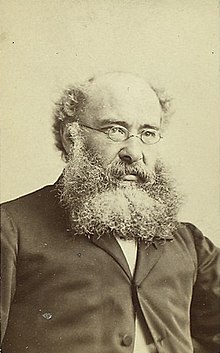
Anthony Trollop was a successful English Victorian novelist with a bibliography that stretches to almost ninety novels and short stories plus numerous articles, letters, and a couple of plays. Before he obtained fame as a writer, he was unsuccessful in about everything else including politics, prostrating himself for a seat in the House of Commons in which he came in fourth in a field of, well, four.
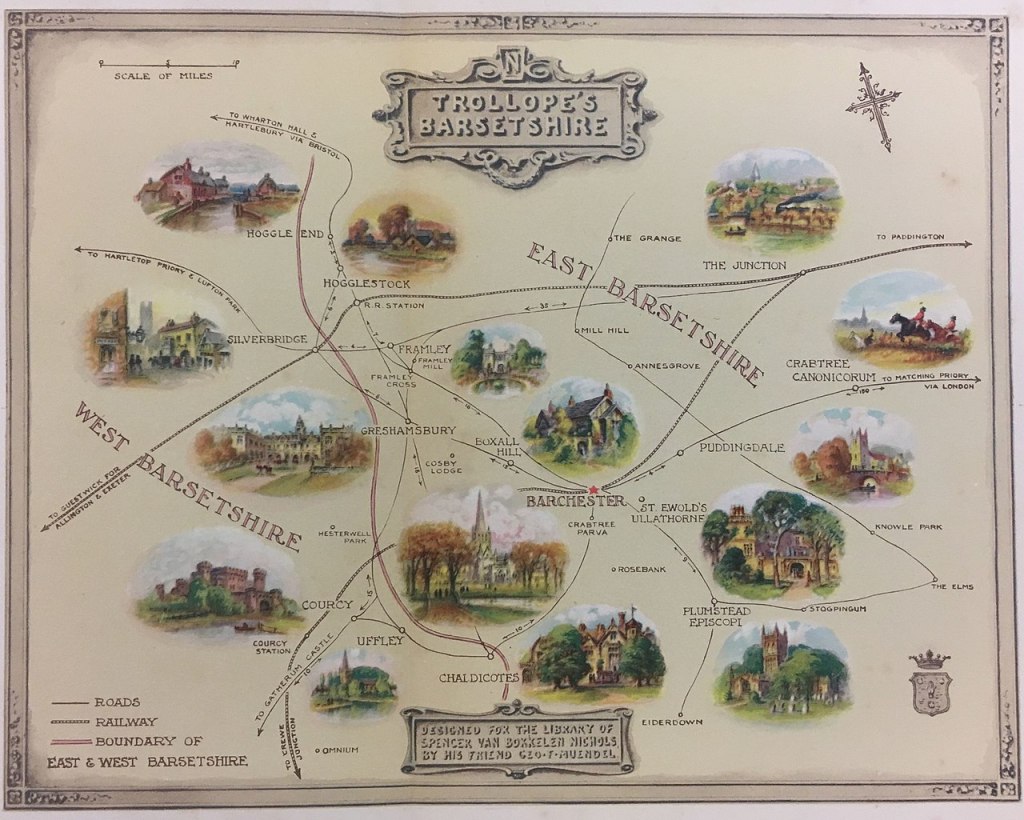
His first major success as a writer came with his fourth novel in 1855, ‘The Warden’, the first book in the Barsetshire series, a collection of novels that made him famous and what he is most remembered for 125 years later. The series, which are loosely connected and can be read in any order, consist of six novels set in the fictional English county of Barsetshire. The county was a fictional composite recollection of his travels into the English countryside observing the bucolic, but poor life of the peasants juxtaposed with the landed gentry and nobility of 19th century England. The Chronicles of Barsetshire as the series came to be known deals almost exclusively with the Church of England clergy and landed gentry with peasantry narratives sporadically thrown in for local color. The gentry were a class below the British peerage but due to ownership of land were occasionally above them in wealth if not status.
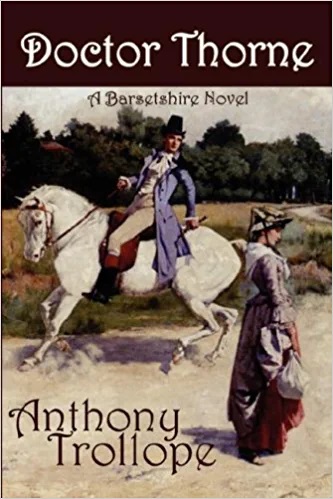
Doctor Thorne is the third novel in the Barsetshire series and is considered the best of the six. The novel revolves around the lives of Squire John Gresham’s of Greshamsbury family and their physician, Doctor Thorne, and his niece Mary. Gresham is slowly selling off his estate to pay debts, leaving little for his oldest son Frank to inherit in the years to come or for the family to live on in months to come. The only solution is for Frank to marry money. Frank loves Mary but Mary has no title or money. The story progresses as expected but the read is a romp anyway.
A fictional Map of Barsetshire – After Trollop – drawn by Spencer Van Bokkelen Nichols in 1925, painted by George Frederick Muendel.
Graham Greene traveled to the back water, impoverished central Mexican states of Tabasco and Chiapas in 1937 to research religious, anti-Catholic persecution by the country’s political rulers, army, and police. Repellent politics and dysentery almost sent him packing for his native England, but a tawdry, although meritorious, liable suit being litigated in the British courts between the then precocious child star, Shirley Temple, and Greene over his ill-advised movie review of the star, promised him plenty of scorn, justified mockery, and a room at a London gaol if he went back home. He chose to keep digging for local color and background in Mexico over the less inflammatory subject of religious bigotry.
Since the days of Mexican independence in 1810, anti-clericalism, anti-Catholicism has lurked around every bell tower and dusty church courtyard in the country. Challenges to the Church’s authority became constant as time progressed. Politicians with few opportunities to fleece the ubiquitous poor were envious of its land holdings and material wealth. And predictably the Church could be counted on to be its own worst enemy.
In 1913, Victoriano Huerta seized the presidency in a bloody coup that deepened the ongoing revolution and rebellion led by Emilio Zapata. Huerta’s ruthless tactics in suppressing Zapata’s rebellion were not popular and he had few friends within or outside of Mexico, but the Catholic Church supported him. In 1914 Huerta through the loss of support fled the country and died in an U.S. Army jail in 1916.
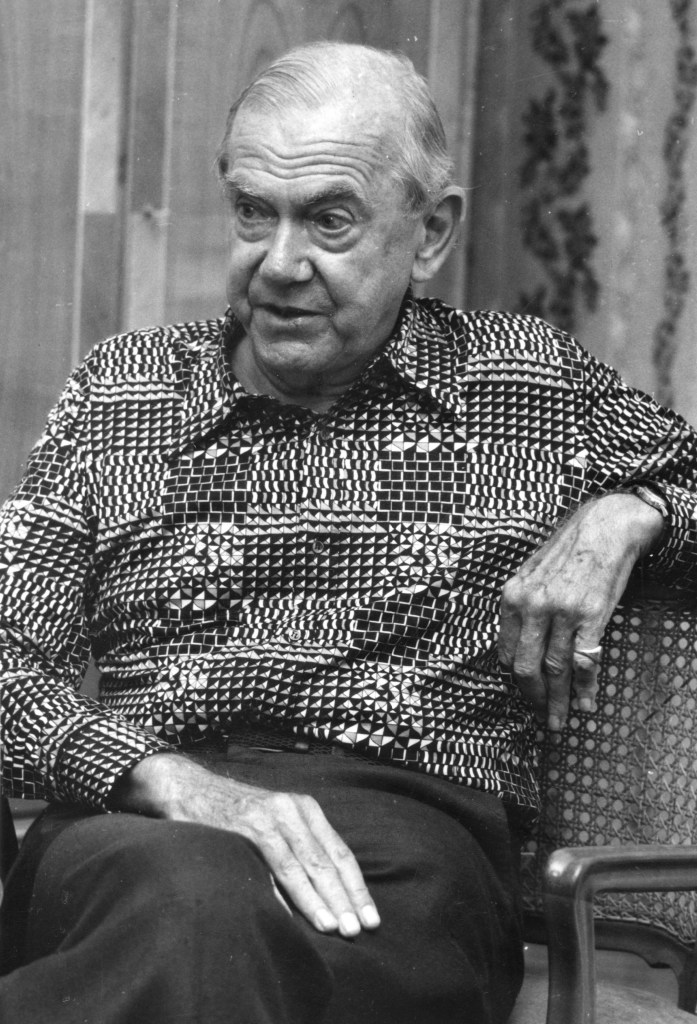
Graham Green in 1975
After the revolution, a new Mexican constitution was approved in 1917 that included the anti-Catholic Article 130 which codified that the church, and the state were to remain separate. It obligated state registration of all churches and religious groupings along with restrictions on all priests and ministers. The restrictions prohibited priests and ministers from holding public office, campaigning on the behalf of political parties or candidates, and they could not criticize government officials.
A few years later in 1924 a new president of Mexico, Plutarco Elias Calles, sanctioned through executive decree strict and absolute enforcement of Article 130 which became known as Calles’ Law in 1926 or the “Law for Reforming the Penal Code”. Calles’ Law provided specific penalties for priests who violated Article 130. A priest wearing clerical dress outside of a church was to be fined five hundred pesos, a huge sum that a priest was unlikely to have the means to pay. Criticizing a government official was penalized with a 5-year prison term. Most states chose not to see the priests’ transgressions, and the citizens chose not to speak of priestly trespasses of Calles’ Law. The state of Tabasco though chose law, and lucre, over morality, enforcing the decree with a lustful zeal, adding further insult by requiring priests to marry.
Calles’ Law initiated almost immediately the Cristero War, hostilities starting in 1926 and ending in 1929 with an U.S. brokered peace between the Mexican government and the Catholic Church, although the government continued to prosecute the war well into the 1930s, murdering an additional 5-6000 Cristero soldiers and leaders after the official end of hostilities. The law and the war reduced the number of practicing priests by over 90 percent with only 335 priests, forty believed to have been killed, remaining to administer to fifteen million people, with more than 70 percent being Catholic. It is believed that 5 percent of the population fled to the United States, during and immediately following the war.
Sinners abound in “The Power and the Glory”. The protagonist and anti-hero, an unnamed whiskey priest sinner looking for redemption. An antagonist and foil, a policeman sinner seeking social justice where the ends justify the means. A contagonist, a half-Indian peasant sinner seeking acceptance and awards. Numerous sidekicks who are all sinners, venial sinners but still sinners, all seeking a life that is less hard, less exhausting.
A temptress and confidant who is not a sinner, but the protagonist’s conscience and salvation. A temptress and confidant guiding the whiskey priest, forgiving him his follies, moving him slowly to accept his fate, his calling, to be a man of God for God.
Graham Green was a nominal Catholic, an agnostic Catholic was his term, when he set out to write this book, but his interactions with the simple and God loving peasants of Tabasco brought him to an understanding with Christianity. An understanding towards a belief and faith in someone more powerful and glorified than oneself.
Arthur Evelyn St. John Waugh was selected by Time magazine, in 2016, as 97th most read female writer on college campuses. Number 1 is a non-fiction manual on writing, well, non-fiction. So much for layers and layers of fact checkers and editors not to mention the gross ineptitude of today’s journalists. Waugh’s fifth novel ‘Scoop‘, a farcical and possibly autobiographical look at newsrooms and their paid occupants, should be required reading for our exalted modern journalists if for no other reason than to familiarize themselves with one of the 20th century’s best writers–and humor. The less than flattering reviews by journalists of the book ‘Scoop’ suggests that as a profession, journalists are incapable of recognizing or appreciating sarcasm and irony, much in a similar vein of reasoning that has reporters fact checking the Babylon Bee or the Onion.
Leaving the critique of Time magazine’s prowess to others, Evelyn Waugh authored 13 novels or 10 novels and 1 trilogy from 1928 through 1961 plus numerous short stories, letters, travel logs, essays, articles, reviews, diaries and an autobiography. By the numbers a productive life of writing, which after publication of the novel ‘Brideshead Revisited‘ also made him a wealthy man.
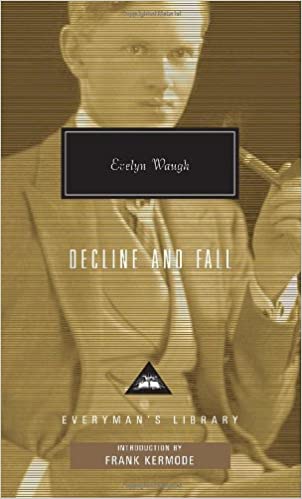
Waugh’s ‘Decline and Fall’ is also a partially autobiographical farce chasing early 20th century English society down the rabbit hole with relish and ridicule. For some reason Waugh had to tell his readers that the book was meant to be funny, and it is, very. Maybe journalists are not the only ones having difficulty with recognizing humor.
Paul Pennyfeather, ‘Decline and Fall’s’ luckless, not really a hero, protagonist, plays it straight for a large cast of stooges, miscreants, and demented characters bent on bringing him down to their level, whether deliberately is not necessarily pertinent to this story. Philbrick, a butler, living more biographies in his head than a school library. Mr. Grimes, a peg-legged opportunist taking the profession of teaching to lengths not attainable by those who went before him. Pendergast, synonymous with a bad toupee, finds his doubts about scripture inimical with his chosen profession as man of the cloth. Pennyfeather joins them all, without censure, in their world much below where he would rather be.










 elsToday