Cupid and Psyche

Cupid and Psyche is the timeless tale of love’s conquering power, overcoming all obstacles in its path. It symbolizes the union of the soul with desire, transcending to a love that goes beyond the physical and the mortal.

The only extant writings of Cupid and Psyche is known from Apuleius’s romance “The Golden Ass,” composed in the 2nd century AD. The tale is likely to have been known as early as the 4th century BC, and Cupid is known as far back as the 8th century BC from Hesiod’s “Theogony.”

In the myth of Cupid and Psyche, with Cupid’s mother Venus as the antagonist, the characters metaphorically act out various emotions and experiences, both mortal and immortal.

Psyche,a mortal more beautiful than the goddess Venus, represents the soul (in Greek, Psyche means soul) and its journey from the tragedy of human life to the transformative power of love for everlasting spiritual fulfillment.

Cupid, tasked by his mother Venus to destroy Psyche for possessing beauty beyond that of a mortal, instead falls in love with her. Cupid embodies love and desire, and the emotional power and unpredictability that it brings to a relationship.

Venus, the goddess of love and beauty, represents jealousy and the obstacles that Psyche battles to realize the completion of her quest for emotional and spiritual fulfillment. Her trials for Psyche reflect the ever-present barriers to true love.

Cupid and Psyche is a story of transcendent transformation over the physical to the triumph of love and the immortality of the soul.

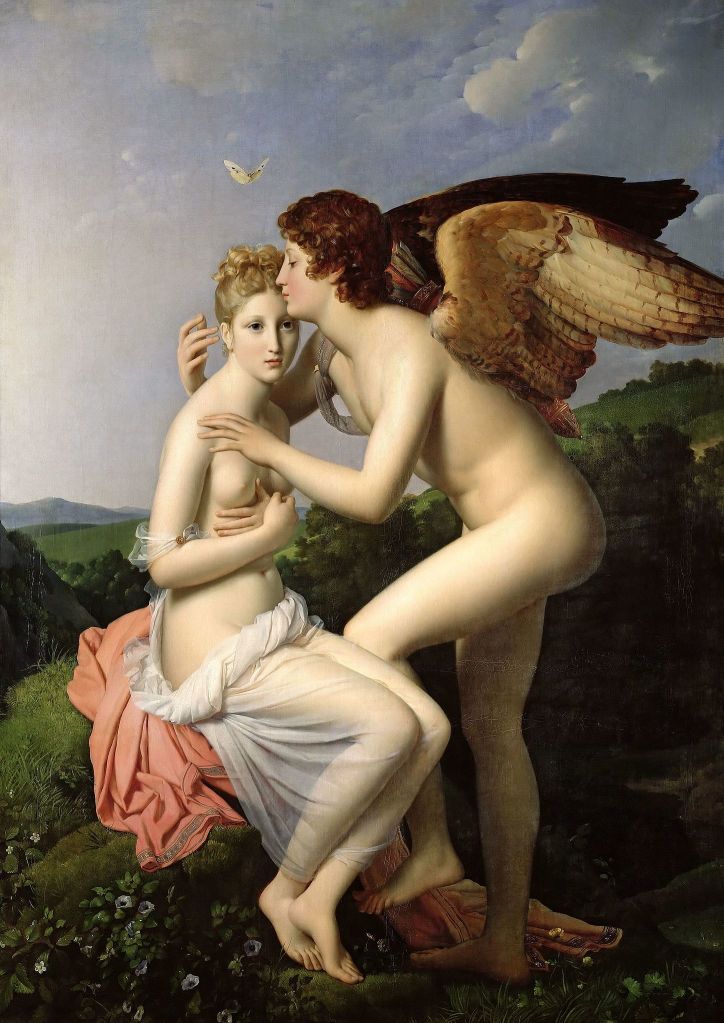
Trivia: In the painting by Gerard, the butterfly floating above Psyche’s head represents, rather redundantly, the soul.

Source: The Golden Ass by Apuleius. The Evolution of Cupid, Erlang Shen, Fatelines, 2022. Graphic: Cupid and Psyche by Francois Gerard, 1798, The Louvre, Public Domain.

Sticks His Nose In

Lucius, the protagonist of the 2nd century AD Latin novel The Golden Ass, cannot suppress his curiosity nor stop meddling in the dark arts of spells and magic. Attempting to flee from the troubles resulting from his inquisitiveness, he accidentally uses the wrong ointment and turns himself into a donkey rather than a bird. This error leads to a series of comical and mostly bawdy misadventures as a beast of burden, who is thoroughly abused and misused due to his intemperate habit of sticking his nose in.

The story, written by the Roman author and philosopher Lucius Apuleius, who hailed from a Roman province in what is now modern-day Algeria, is characterized as a romance—not in the modern Harlequin sense, but in the Greek meaning of a Milesian tale. A Milesian tale consists of a series of adventurous stories, usually short, humorous, and erotic—a romantic narrative for the ancients.

The translator of The Golden Ass, Joel C. Relihan, takes the meaning of a Milesian romance a step further into what Northrop Frye described as secular scripture. Relihan states that the romance in The Golden Ass is: “A survivor’s tale of descent into a nightmare world of loss and eventual recovery of identity.”

Lucius loses his identity, becoming ludicrous and expendable. But in the end, he prays for salvation, which he receives from the goddess Isis. Ultimately, he is initiated into the secrets of the gods. His transformation from misfortune to enlightenment and spiritual fulfillment is, in the end, the ultimate story of a lived life—a maturing into old age with illuminated and learned experience leading to peace and grace.

Trivia: The Golden Ass has been known by various names, including the author’s title, Metamorphoses, Asinus Aureus (a Latin name which translates to “Golden Ass”), The Metamorphosis of Lucius, and the modern title: The Golden Ass or A Book of Changes.

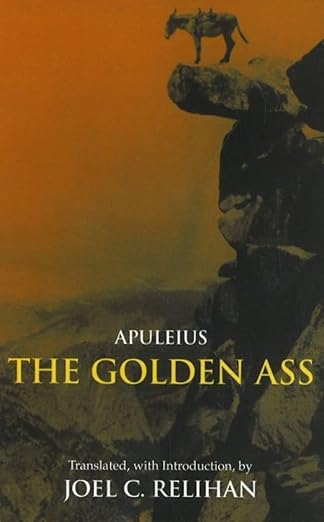
Source: The Golden Ass by Apuleius. Oxford Bibliographies. Graphic: The Golden Ass Book Cover, Hackett Publishing, 2007.

Love and Happiness

The opening line to Tolstoy’s “Anna Karenina”, “All happy families are alike; each unhappy family is unhappy in its own way,” is frequently misunderstood to mean that all unhappy families are sadly similar in that negative dynamics are always present.

What Tolstoy and the original French proverb convey is that unhappy families suffer from unique dysfunctions, such as violence, substance abuse, or incest, while happy families have avoided these destructive traits.

In statistics, this concept is known as the ‘Anna Karenina Principle‘. It states that for an endeavor to be successful, every possible deficiency must be avoided, whereas for it to be unsuccessful, only one negative factor needs to be present.

A similar proverb from 16th or 17th-century Europe, “One bad apple spoils the whole barrel,” began as practical advice to apple farmers and evolved to describe how one negative influence can affect an entire group or family.

Russian authors like Tolstoy and Dostoevsky tend not to write about happy families because, in their view, there is no story, no moral, and no psychological depth without pain and suffering.

English author W. Somerset Maugham brought this idea back into the limelight with a twist when he wrote: “They say that happy people have no history, and certainly a happy love has none. They did nothing all day long and yet the days seemed all too short.”

There is no shame in happiness; life does not need drama or conflict to be meaningful.

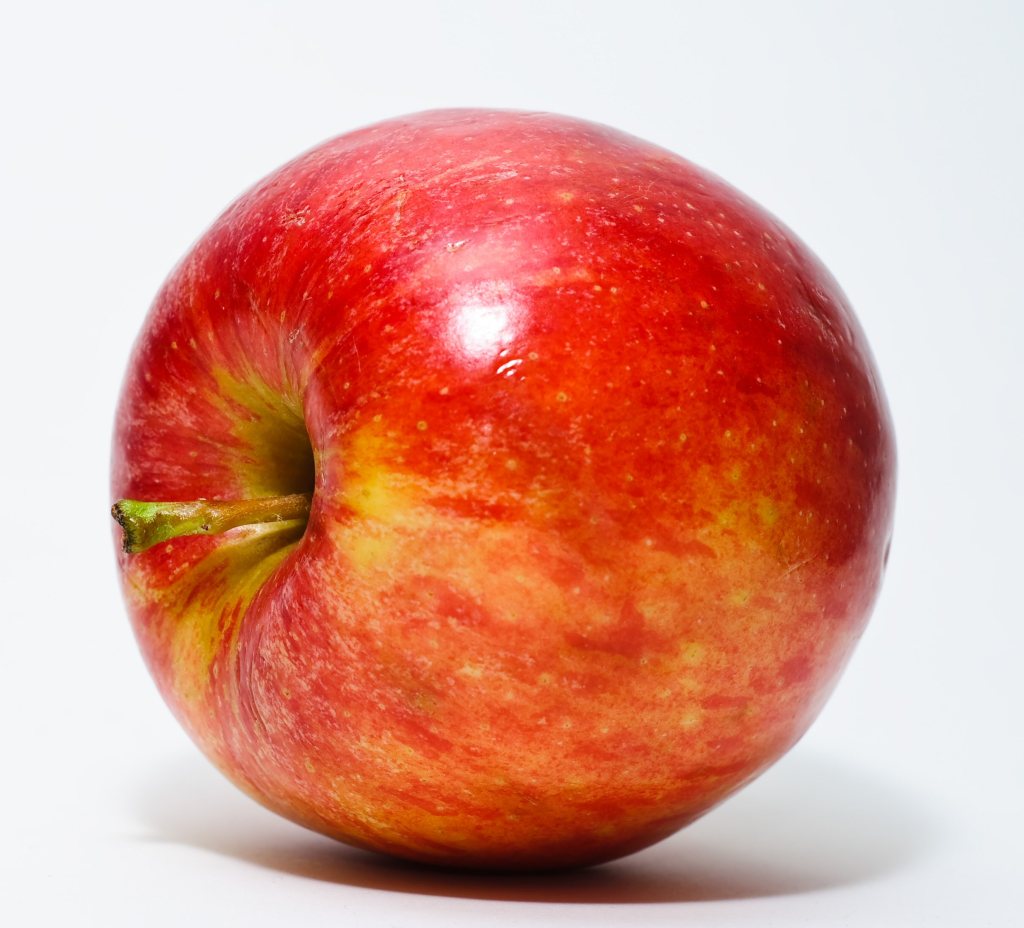
Source: Anna Karenina by Tolstoy. Rain and Other South Sea Stories by W. S. Maugham. Graphic: Apple by Tembhekar. Public Domain.

Break Their Hearts

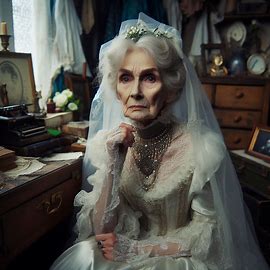
The spinster Miss Havisham (have-a-shame) in Dickens’, Great Expectations, is rejected at the altar, spending her remaining days alone in a decaying mansion wearing her wedding dress. She exists only to hate with a future reserved only for vengeance.

She adopts a girl, Estella, and raises her to emotionally cripple all interested men that may approach.  Miss Havisham whispers her prime dictate into Estella’s ear as the young lady entertains her hopeless – helpless suitor, Pip, ‘Break their hearts, my pride and hope, break their hearts and have no mercy!’

Trivia: Miss Havisham states to Pip towards the end of the book: ‘Ask me no questions and I’ll tell you no lies.’ This line is attributed to Irish playwright, Oliver Goldsmith who used it in his delightful 1773 play She Stoops to Conquer.

Source: Great Expectations by Charles Dickens, 1861. Graphic: Miss Havisham, AI generated.

Dog Days of Summer

Now came the dog days—day after day of hot, still summer, when for hours at a time light seemed the only thing that moved…’ A narrative of peace from Richard Adams’ 1972 novel: ‘Watership Down’ during the interval when Hazel and his fellow rabbits were settling into their new home.

Some Greeks believed that the dog days of summer began when the Dog Star Sirius, thus the name, popped into the night sky on the 19th of July each year. Homer grimly stated that the appearance of the star ‘brought evil portent, …heat and fevers.’

The Old Farmer’s Almanac places the dog days from 3 July through August 11. Others put them from 23 July through 23 August.

Source: Watership Down by Richard Adams, 1972. Iliad by Homer. The Old Farmer’s Almanac. Graphic: Dog Days, AI generated, 2024.

Dracula Lives

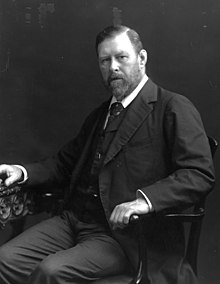
Irish author Bram Stoker wrote the quintessential horror story, Dracula during the early to mid-1890s, publishing it in 1897–except Stoker didn’t write it “as fiction but as a warning of a very real evil” according to J.D. Barker’s history of the book.

Many events in the book were not fiction. The ship Dmitri (Demeter in the book) did run aground in Whitby Harbor, and it was carrying crates of dirt that had originated from the European port of Varna. Mr. and Mrs. Jonathan Harker and Dr. Seward were friends of Stoker who supposedly supplied first person accounts of the tale to the author.

Stoker’s publisher, finding the book too frightening for the public, only agreed to publish the book if the first 101 pages were left out along with extensive revisions to the story which took a very clear story of vampires in our mist to one of fictional horror. In the 1980s the original manuscript showed up in rural Pennsylvania with the first 101 pages still missing and was purchased by Paul Allen of Microsoft fame.

Source: Dracula by Bram Stoker. J.D. Barker, Bram Stocker published by Time.com. Graphic: Bram Stoker, circa 1906, Public Domain.

The Big Sleep

She came over near me and smiled with her mouth and she had little sharp predatory teeth, as white as orange pith and shiny as porcelain. They glistened between her thin too taut lips. Her face lacked color and didn’t look too healthy.

“Tall, aren’t you?” she said.

“I didn’t mean to be.” (said Marlow)

Her eyes rounded. She was puzzled. She was thinking. I could see, even on that short acquaintance, that thinking was always going to be a bother to her.

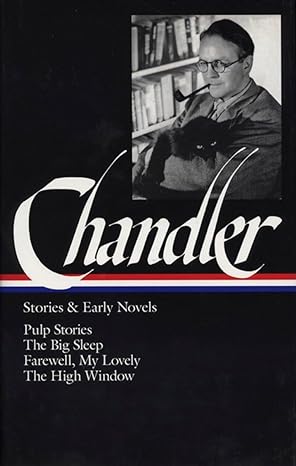
The above excerpt is from Raymond Chandler’s first Philip Marlowe novel: “The Big Sleep”, published in 1939. Marlowe is a hard, introspective private eye dreamed into existence from Chandler’s cynical but playful mind, creating the quintessential detective and crime novel of the 20th century.  “The Big Sleep” has been ranked as one of the best 20th century novels by The Guardian, Time Magazine, Le Mond, and at least 20 other current best book lists.

The 1946 movie adaptation of the book starring Humphrey Bogart and Lauren Bacall with the screenplay by William Faulkner achieved a Metascore of 86 and a user score of 8.0. The Telegraph, critiquing the movie, in 2004 stated that “The Big Sleep is the best scripted, best directed, best acted, and least comprehensible film noir ever made.”

Chandler was 44 years old, an out of work alcoholic, before he wrote his first piece, a short story, “Blackmailers Don’t Shoot”.  “Blackmailers” was the warm-up private eye mystery that would evolve, over the course of the next six years, into his first Philip Marlowe novel: “The Big Sleep”.

Source. Chandler: Stories and Early Novels published by Library of America, 1995. The 100 Greatest Literary Characters by Plath et al published by Rowman and Littlefield, 2019. Graphics: Warner Bros’ 1946. “The Big Sleep” and book cover.

Space Elevators

Arthur C. Clarke in his 1979 sci-fi novel, The Fountains of Paradise, builds a space elevator on Earth as a solution to the monetary and technical expense of Earth-based rockets.

A space elevator is a conceptual solution for a low-cost, low energy planet-to-space transportation system. The challenge to building the elevator is finding a material strong enough to withstand the immense compressional and tensional forces that with a counterweight balance, would be 44,490 miles long (71,600 km). Carbon nanotubes offer a possible solution but currently they are only strong enough to work on Mars or the moon.

This is not Clarke’s best novel, but he thoroughly explains the concept of a space elevator and a lot of the engineering problems that would need to be solved to build one. The solutions to all the problems are solved by the book’s protagonist, Dr. Vannevar Morgan, a thinly veiled character that likely refers to himself as Arthur C. Clarke when he is among friends.

As an aside, both within the book and as a reader, he spends 5-6 pages harping on his belief there is no God. Why he does so is a mystery since it adds nothing to his story and in the end, it is a pointless, garrulous, one-sided debate.

Anna Karenina

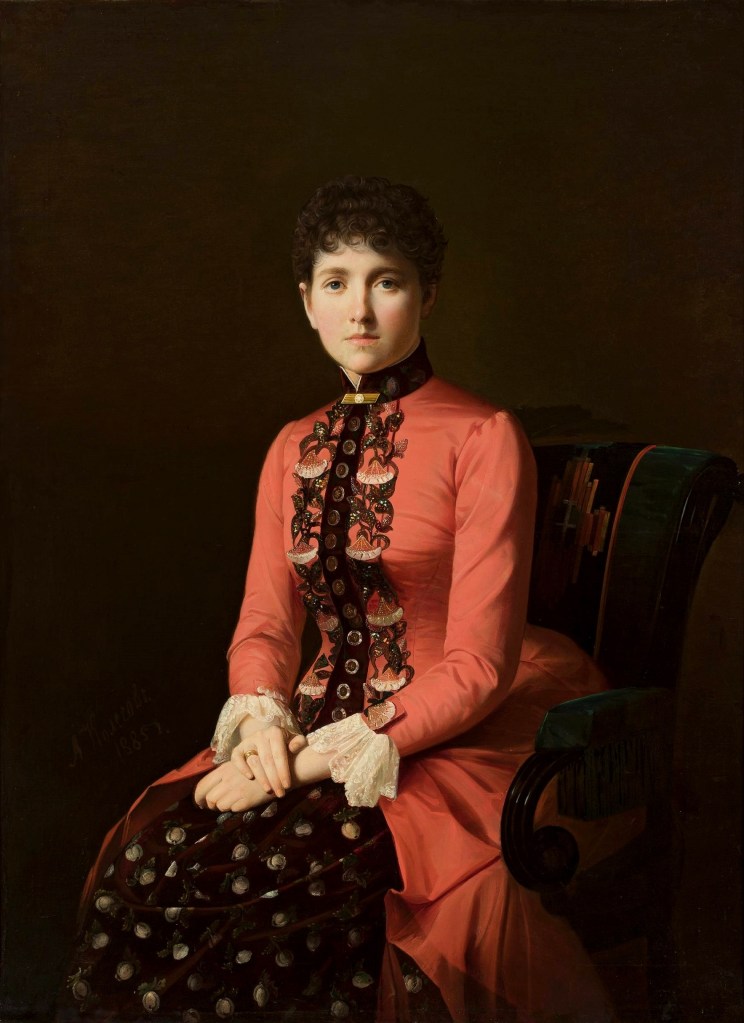
Happy families are all alike; every unhappy family is unhappy in its own way.” So begins Leo Tolstoy’s epic 19th century Russian novel, Anna Karenina. A beginning line that is not only one of literature’s great openings, but it indubitably stages an existential story that transcends time, culture, and humanity: a diegesis of love and misery.

Love and misery where mental and societal control is lost to emotional need. When Anna’s lover, Vronsky, pleads with her to respect her mother’s needs and his duty, she snaps, “Respect was invented to cover the empty place where love should be. And if you don’t love me anymore, it would be better and more honest to say so.” (chapter 24)

Anna Karenina through time has consistently ranked as one of the greatest novels ever written. Encyclopaedia Britannica lists it as the number one novel of all time.

Sources: Leo Tolstoy, Anna Karenina, serialized in 1875, published in book form in 1878. Plath et al, The 100 Greatest Literary Characters, published in 2019. Enclyclopaedia Britannica, 12 Novels Considered the “Greatest Book Ever Written”, by Jonathan Hogeback.

Aleksey Kolesov, “Portrait of a Young Woman” (Anna Karenina), 1885. Public domain, via Wikimedia Commons

Frankenstein, or The Modern Prometheus

It was the year without summer. During the year 1816, temperatures in Europe were the coldest of any recorded between 1766 and 2000. Across the pond in New England frost occurred every month of the year and six inches of snow fell in June. Crops failed, food was scarce, and people died unpleasantly premature.

There was no summer that year because in 1815 the Indonesian volcano, Mount Tambora, had a fit and blew its top, more or less straight up into the stratosphere. The amount of material injected into the upper atmosphere blocked the sunlight and caused global cooling.

Meanwhile, not to let bad weather forestall important matters, Lord Bryon while vacationing in Geneva, challenged his two companions, Percy Shelly, and Mary Godwin, the soon to be Mary Shelly, to a contest of who could write the best ghost story. Lord Bryon and Percy soon abandoned the project, but Mary persevered and published her Frankenstein two years later, giving birth to the monster with no name, countless movies, myths, legends, and frightful nights for children everywhere.

In the tenth chapter of her epistolary novel, Frankenstein, or The Modern Prometheus, we finally meet her fictional monster to learn not only that it lives, but it also speaks grammatically correct King’s English. Shelly cast her monster as Lucifer from the pages of Milton’s Paradise Lost. The monster, addressing its creator, Victor Frankenstein, speaks of profound loneliness, “The fallen angel becomes a malignant devil. Yet even that enemy of God and man had friends and associates in his desolation; I am alone.”

In the end the monster wishes to die but the author leaves those matters in the reader’s hands.

Sources Frankenstein by Mary Shelly. First published in 1818. The 100 Greatest Literary Characters by Plath et al, published 2019. Cover from a 2012 edition of Frankenstein shown below.