Americana

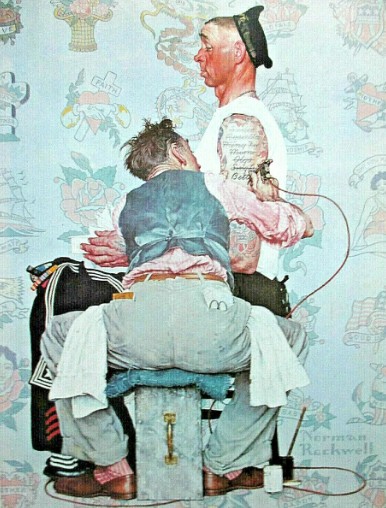
Norman Rockwell, a name synonymous with American Realism, was a master of meticulous detail, yet he never failed to brush a thread of whimsy and rustic existence onto the canvases of his iconic paintings.

Norman Rockwell, an iconic painter of American life, was born on 3 February 1894 into a comfortable New York City family. His father, a lover of Charles Dickens, often sketched illustrations from books, planting early seeds of creativity in young Norman. His mother, overprotective yet proud of her English heritage, spoke often of her artistic but unsuccessful father, whose unrealized dreams seemed to echo in the household. Art wasn’t just a pastime for Rockwell; it pulsed through him, and by age 12, he had resolved to draw for a living, though painting would come later in his journey as an artist.

As a teenager, Rockwell pursued artistic training at the National Academy of Design and later at the Art Students League, where he studied under the influence of Howard Pyle, the renowned illustrator of boys’ adventure tales. Pyle, who had founded the school’s philosophy through his own teachings and legacy, left an indelible mark on Rockwell, shaping his lifelong passion for weaving narrative into art. Before he turned 16, Rockwell landed his first commission—four Christmas cards—a modest start for a boy already dreaming big. By 18, he was painting professionally full-time, his talent unfolding with the quiet determination of youth finding its purpose.

In 1916, Rockwell began his legendary run with The Saturday Evening Post, creating covers that would grace the magazine for the next 47 years. Over that span, 322 of his paintings became what the Post proudly dubbed “the greatest show window in America.” Through these works, Rockwell offered a mirror to the nation—sometimes nostalgic, often tender, always human—reflecting everyday moments that resonated deeply with millions.

While his career soared with the Post, city life never suited him. In 1939, he traded New York’s clamor for the rolling hills of Vermont, and later, in 1953, settled in Massachusetts. These rural landscapes became his muse, dominating his canvases for the first three decades of his career. Rockwell was no haphazard artist; he was methodical, even obsessive, following a rigorous six-step process to bring his visions to life: brainstorming ideas, sketching rough outlines, photographing staged scenes with real people, crafting detailed drawings, experimenting with color studies, and only then committing paint to canvas. Each step was a labor of love, a tip of the hat to the America he loved.

At the heart of his art was a simple, profound drive. As Rockwell himself put it, “Without thinking too much about it in specific terms, I was showing the America I knew and observed to others who might not have noticed.” His paintings weren’t just pictures, they were invitations to see the beauty in the ordinary, the dignity in the overlooked; we see not just an artist, but a storyteller who believed in the quiet goodness of people, brushstroke by brushstroke.

Source: The Norman Rockwell Treasury by Thomas S. Buechner, 1979. Norman Rockwell Museum. Graphic: The Tattooist by Norman Rockwell, 1944, The Brooklyn Museum.
Engraver of Wood:

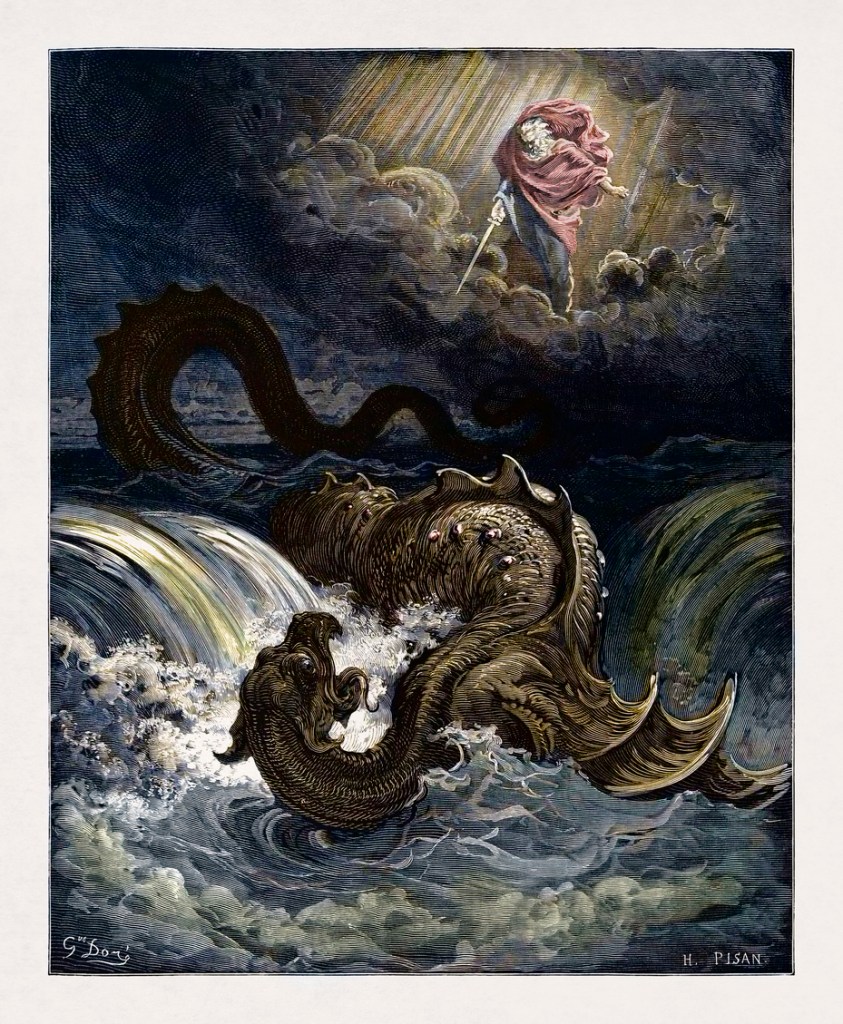
Gustave Doré, widely regarded as the greatest illustrator of the 19th century, produced meticulous and exquisite works that continue to captivate audiences today, particularly his illustrations for the Bible and Dante’s Divine Comedy. Born, raised, and deceased in France, Doré began his artistic pursuits at the age of six and started illustrating classic literature at twelve using lithography. By nineteen, he embarked on his lifelong mission to illustrate the world’s greatest books, transitioning to woodblock engravings. It is estimated that he created over 10,000 engravings during his lifetime.

Among his most celebrated works are the engravings for the Vulgate Bible, also known as La Grande Bible de Tours. This collection includes 139 plates depicting scenes from the Old Testament and 81 plates from the New Testament. Featured in the attached graphic is his illustration of Isaiah 27, portraying God (often interpreted as Jesus in Christian theology) slaying Leviathan, symbolizing the ultimate triumph of good over evil.

Source: Gustave Doré Engravings by Alpine Fine Arts, 1995. Graphic: Destruction of Leviathan (Isaiah 27, colorized) by Gustave Doré, 1866, licensed by Gwengoat.

Michelangelo, Medici, and Florence

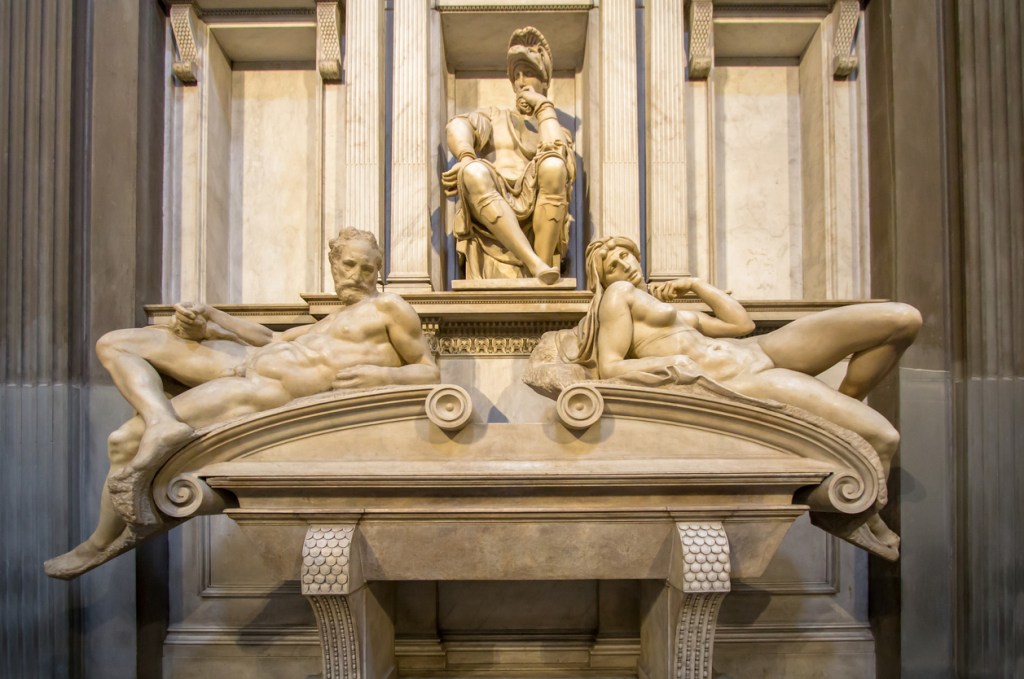
Tomb of Lorenzo II de Medici and below lying on the sarcophagus two sculptures ‘Dawn and Dusk’ in Medici Chapel, Florence, Italy

Florence, the Medici family, and the Renaissance are inextricably linked, forming a vibrant nexus of world-shaping brilliance and energy. After Lorenzo the Magnificent’s death in 1492, Michelangelo emerged as the towering figure of art and beauty during the High Renaissance, spanning the late 15th and early 16th centuries.

Michelangelo’s unparalleled artistic mastery endured for nearly fifty years beyond his death in 1564, yet with the passing of Ferdinando I de’ Medici in 1609, Baroque masters like Caravaggio and Bernini ascended as Europe’s preeminent talents.

Michelangelo navigated a delicate balance with the shifting demands of his Medici patrons, fiercely defending his artistic vision while securing payment, often with friction. The expectations of the Medici popes, Leo X (1513–1521) and Clement VII (1523–1534), frequently clashed—both in timing and creative intent—with his ambitions. This tension, happily, fueled his masterpieces, including the Sistine Chapel ceiling (1508–1512) and the Last Judgment (1536–1541).

The image depicts the Tomb of Lorenzo II de’ Medici, a work Michelangelo sculpted between 1524 and 1531.

Source: The Medici, Michaelangelo…Florence, Essays by Acidini…2002. Graphic: Tomb of Lorenzo II de Medici, Michelangelo, 1524-1531. CAHJKT iStock Photo Licensed.

Painter of the Real

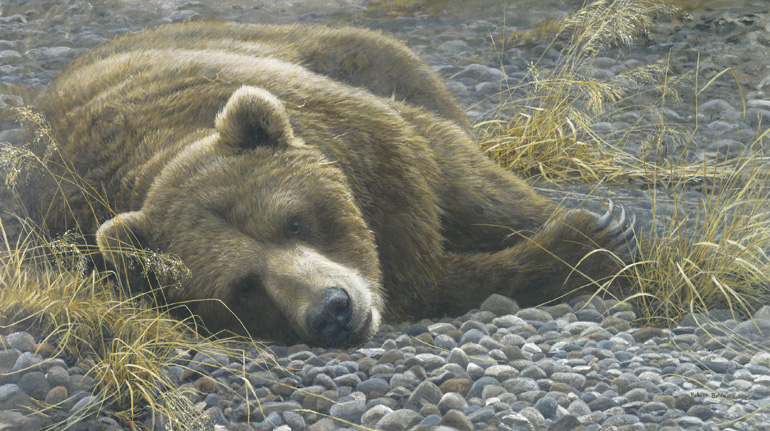
Robert Bateman, a Canadian artist from the school of Realism, paints wildlife with the precision of a photographer, leaving the viewer to ponder reality as it is rather than relying on the interpretation of the man with a brush. Bateman, explaining his motives, says, “I try to portray an animal living its own life independent of man.”

His paintings often place the subject tangentially, guiding the line of sight from the center to an edge where the action occurs. This composition suggests a reality beyond all living things, implying that we are all bit players, regardless of our size.

Bateman’s style is reminiscent of fellow Realist Andrew Wyeth, whom he acknowledges as a significant influence. However, Wyeth never entirely let go of his early impressionistic impulses. Roger Tory Peterson noted that while Wyeth froze his subjects in the moment, Bateman’s “subjects are ready to go somewhere else, to fly away,” allowing the reality of the moment to transition to another point in time, to a different reality.

Edgar Degas, an Impressionist Realist who combined realistic details of life with the softening blur of Impressionism, commented that one of the past masters of Realism, Jean-François Millet, painted so realistically that his work almost destroyed the profession. Wallace Stevens, a 20th-century modernist poet, took a different and somewhat counterintuitive view, stating that Realism is a corruption of reality. He believed that Realism reduced the complexity and beauty of the universe to the literal, leaving no room for the experience of humanity.

Both criticize Realism for its lack of emotion and interpretation, failing to observe that a gift from God is perfect as presented.

Source: The Art of Robert Bateman by Ramsay Derry 1981. Graphic: Grizzly at Rest by Robert Bateman, 2006.

Cupid and Psyche

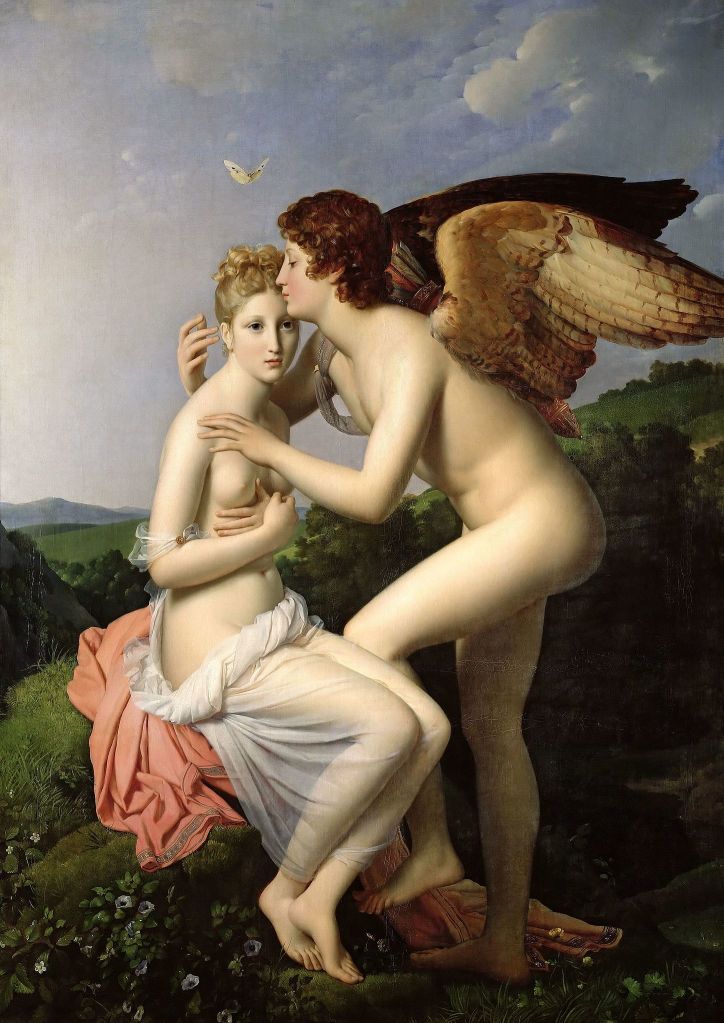
Cupid and Psyche is the timeless tale of love’s conquering power, overcoming all obstacles in its path. It symbolizes the union of the soul with desire, transcending to a love that goes beyond the physical and the mortal.

The only extant writings of Cupid and Psyche is known from Apuleius’s romance “The Golden Ass,” composed in the 2nd century AD. The tale is likely to have been known as early as the 4th century BC, and Cupid is known as far back as the 8th century BC from Hesiod’s “Theogony.”

In the myth of Cupid and Psyche, with Cupid’s mother Venus as the antagonist, the characters metaphorically act out various emotions and experiences, both mortal and immortal.

Psyche,a mortal more beautiful than the goddess Venus, represents the soul (in Greek, Psyche means soul) and its journey from the tragedy of human life to the transformative power of love for everlasting spiritual fulfillment.

Cupid, tasked by his mother Venus to destroy Psyche for possessing beauty beyond that of a mortal, instead falls in love with her. Cupid embodies love and desire, and the emotional power and unpredictability that it brings to a relationship.

Venus, the goddess of love and beauty, represents jealousy and the obstacles that Psyche battles to realize the completion of her quest for emotional and spiritual fulfillment. Her trials for Psyche reflect the ever-present barriers to true love.

Cupid and Psyche is a story of transcendent transformation over the physical to the triumph of love and the immortality of the soul.

Trivia: In the painting by Gerard, the butterfly floating above Psyche’s head represents, rather redundantly, the soul.

Source: The Golden Ass by Apuleius. The Evolution of Cupid, Erlang Shen, Fatelines, 2022. Graphic: Cupid and Psyche by Francois Gerard, 1798, The Louvre, Public Domain.

Friends

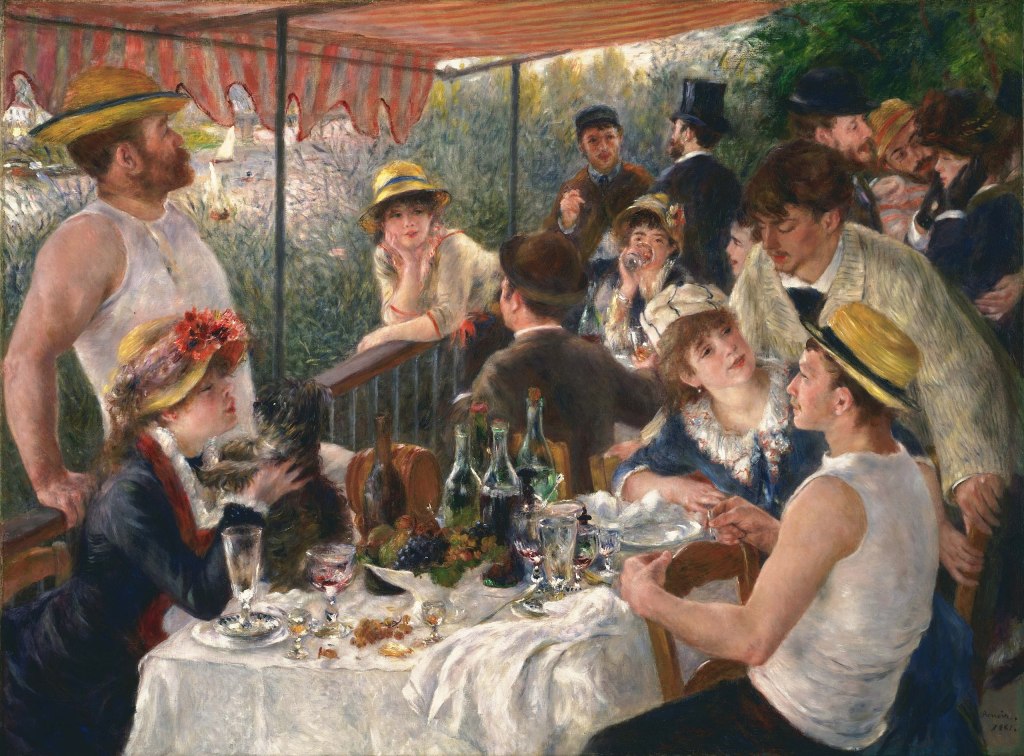
On a fine, lazy summer day along the banks of the Seine in 1880, possibly 1881, Pierre-Auguste Renoir began sketching and painting his most celebrated structured composition, “Luncheon of the Boating Party”.

The luncheon party takes place on the balcony of the Maison Fournaise restaurant and includes 14 friends and acquaintances of the painter, 13 of whom have been identified.

The Phillips Collection, where the painting resides, comments that, Renoir has immortalized his friends to such a degree that the image is “not anectdotal [sic] but monumental.” …Renoir’s magnus opus is a very tightly composed work, uniting within one image the time-honored compositional traditions of figure painting, still life, and landscape.

Edward G. Robinson, American actor and art collector, in “All My Yesterdays: An Autobiography” amusingly remarks, “For over thirty years I made periodic visits to Renoir’s Luncheon of the Boating Party in a Washington museum, and stood before that magnificent masterpiece hour after hour, day after day, plotting ways to steal it.

Source: The Phillips Collection, Washington D.C. All My Yesterdays by Robinson. Graphic: Luncheon of the Boating Party by Pierre-Auguste Renoir, 1881. Public Domain.