Cactus: Temple of Blues—Influences & Friends

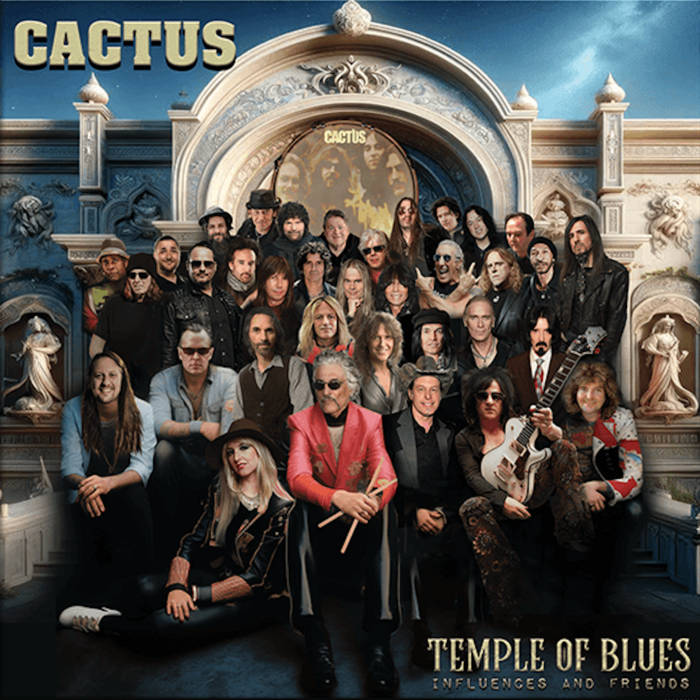
Carmine Appice, rock drummer extraordinaire, in an unguarded moment of over-exuberance has expanded his Cactus band to proportions that could be considered ‘just right’, producing a re-imagined compilation of previously recorded Cactus songs that may be simply stated as full throttle blues, boogie and rock sensations.

Released on disc and vinyl by Cleopatra Records on 7 June 2024, Cactus’ ‘Temple of Blues: Influences and Friends’ showcases 14 of the band’s greatest songs from their first 3 albums that they recorded in the early 1970s.

Appice brings in a who’s who of past and present marquee rockers, including Joe Bonamassa, Ted Nugent, Billy Sheehan, Dee Snider, Pat Travers, Warren Hayes, and many others to compliment the bands songs along with a few blues standards such as Willie Dixon’s ‘Evil’.

Carmine Appice, ranked the 28th Greatest Drummer of All Time’ by the Rolling Stone in 2016, formed and played not only for Cactus but also was an original member of the 60s psychedelic band: Vanilla Fudge, the power rock trio Beck, Bogert, & Appice and was part of Rod Stewart’s backing band.

In the trivia department the ‘Temple of Blues’ cover shows a picture of the original Cactus lineup in the background arch of the temple (from left Bogert, Day, McCarty, and Appice) which comes from a trade ad that ran in a 1970 Billboard issue.

Source: Cleopatra Records. Graphic: Cactus Album Cover, Cleopatra Records copyright.
Burial of the Count of Orgaz

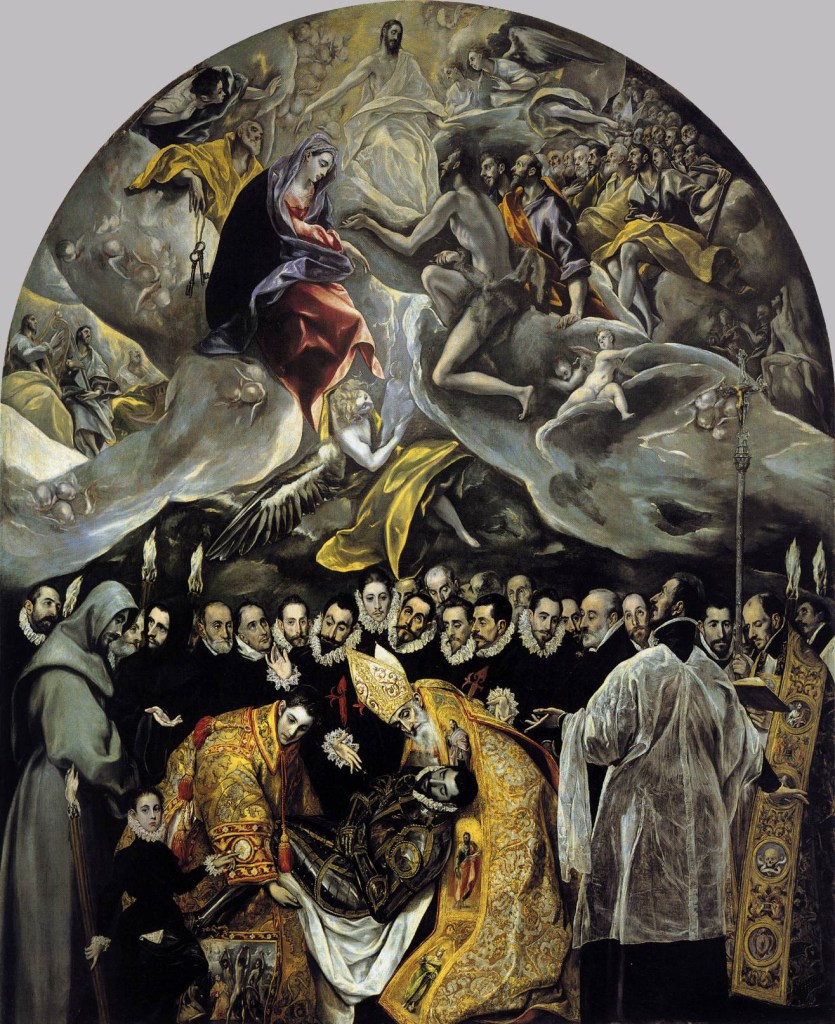
The 1586 painting, Burial of the Count of Orgaz is considered El Greco’s greatest work, which he created during his later mannerist phase of the High Renaissance. Mannerist paintings are known for their exaggerated proportions of figures and structures and the use of very intense colors.

The painting is large, almost 16’ by 12’, oil on canvas divided into two halves with the Count being buried by Saints Stephan and Augustine, per local legend, in the lower half and in the upper half his soul, depicted as a child, is transported to heaven.

The painting was commissioned by El Greco’s parish priest, Andres Nunez de Madrid, to remind Orgaz’s relatives that they were obligated by the Count’s will to provide a yearly donation to his church in Toledo, Spain.

Source: El Greco by Michael Scholz-Hansel, 2016, Taschen. Graphic: Burial of the Count of Orgaz by El Greco, Public Domain

Journalism–Christopher Newton

Christopher Newton was fired by the Associated Press in September of 2002 for creating individuals and institutions whose existence could not be verified. The A.P. could not find 45 of the journalist’s sources along with numerous institutions that he cited in his stories.

The story that brought Newton’s fabrications to light was an article on criminal justice where he postulated that a drop in crime was due to the increased incarceration of criminals. In that article he cited two individuals, Ralph Myers and Bruce Fenmore, both of whom could not be verified, and referenced an institute that was also non-existent.

In an interesting and ironic aside, his fictious creations were brought to light when a criminologist at the University of Missouri, Richard Rosenfeld, called, ironically, Fox Butterfield of the New York Times and object of ‘The Butterfield Effect’ (more on that next week) and said that he had never heard of Fenmore or Myers. Upon further inquiries Newton’s career soon came to an appropriate and ignoble end.

Source: Couldn’t Find…by Felicity Barringer, NY Times, 2002. Graphic: AI generated, 2024.

Nitrogen and Climate:

In a new Nature paper by Gong et al suggest that anthropogenic reactive nitrogen has a net cooling effect on atmospheric temperatures. Their findings imply that reactive nitrogen cools the Earth’s atmosphere by -0.34 watts per square meter. It is estimated that in the last 275 years CO2 added to the atmosphere has warmed the atmosphere by an additional 2.17 watts per square meter. Gong’s et al paper did not specify over what time period their cooling effect occurred.

Along the same lines of inquiry, in a 2009 study University of Nevada Kurt Pregitzer found that the addition of nitrogen fertilizer increased carbon capture in forest soils.

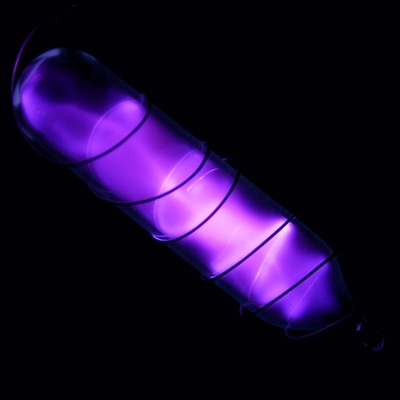
Source: Gong et al, Global Net Climate Effects of Anthropogenic Reactive Nitrogen, Nature 2024. McGlashen, Can Nitrogen Be Used to Combat Climate Change, 2009 SciAm. Graphic: Vial of glowing Nitrogen. Licensed under Wiki Creative Commons.

The Great Fire of Constantinople:

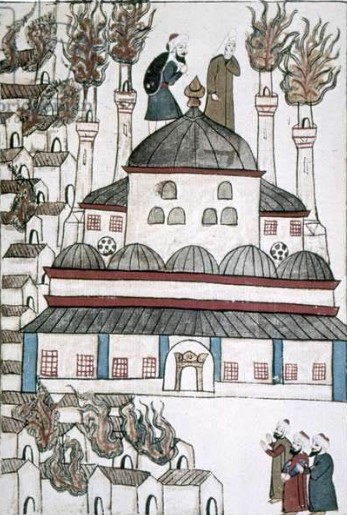
On 25 July 1660 a fire in Constantinople, now Istanbul, consumed two thirds of the city, burning down more than a quarter million homes and killing upwards to 40,000 people.

Professor Marc Baer of Tulane University wrote ‘that the fire began in a store that sold straw products outside the appropriately named Firewood Gate…The strong winds of Istanbul caused the fire to spread violently in all directions.

Nasuh Pagazade Omer Bey stated in February of 1663, ‘Thousands of homes and households burned with fire. And in accordance with God’s eternal will, God changed the distinguishing marks of night and day by making the very dark night luminous with flames bearing sparks, and darkening the light-filled day with black smoke and soot.’

Source: The Great Fire…by Marc David Baer, Int. J. Middle East Studies, 2004. Graphic: The Great Fire of Constantinople, artist unknown.

Furiosa: A Mad Max Saga

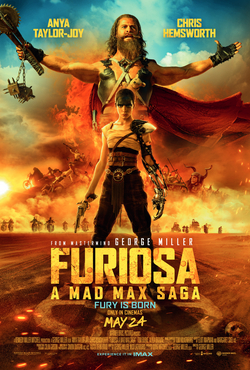
Furiosa, prequel to Mad Max: Fury Road, documents the psychological development of Furiosa (Taylor-Joy) as she channels her hate and vengeance towards Dementus (Hemsworth), destroyer of her mother in a post-apocalyptic, dystopian tale of fiefdoms and control.

Furiosa finds peak vengeance against her antagonist around the 2 hour and 15-minute mark of the movie when Dementus, somewhat incidentally, asks her if she was able to ‘make it epic’. The question really is posed to you the viewer and the short answer would be no. The long answer is the movie is needlessly long but not as long as it seemed.

Genre:  Action – Adventure – Drama — Sci-Fi

Directed by: George Miller

Screenplay by: George Miller, Nico Lathouris

Music by:  Tom Holkenborg

Cast: Anya Taylor-Joy, Chris Hemsworth, Tom Burke

Film Locations:  Australia, USA

ElsBob:  5.5-6.0/10

IMDb:  7.7/10

Rotten Tomatoes Critics:  90/100

Rotten Tomatoes Audience:  89/100

Metacritic Metascore:  79/100

Metacritic User Score:  7.3/10

Theaters: 23-24 May 2024

Streaming: 16 September 2022

Runtime: 148 minutes

Budget: $168 million

Box Office: $172.8 million

Source: IMDb. MetaCritic. Rotten Tomatoes. Graphic Furiosa: A Mad Max Saga movie poster, 2024, Copyright Warner Brothers.

Torrebruna Sangiovese 2019

Sangiovese from Tuscany, Italy

Purchase Price: $11.99

Wilford Wong 90, Elsbob 91-92

ABV 13.5%

A ruby red to garnet color, aromas of darker fruits and cherries, medium to full bodied, more smooth than tannic, mostly dry with a tiny touch of sweetness, with a medium acidity. A versatile wine that will pair well with almost anything, but you will not go wrong with Italian pasta dishes.

Definitely let this wine breath for at least ½ hour to tone down its wild side.

Sangiovese, Italy’s most planted grape, translates to English as ‘the blood of Jove’ (aka Jupiter).

An excellent table wine at a very affordable price. Wines in this rating range have a medium price range of $25-35.

Twisters: The Album

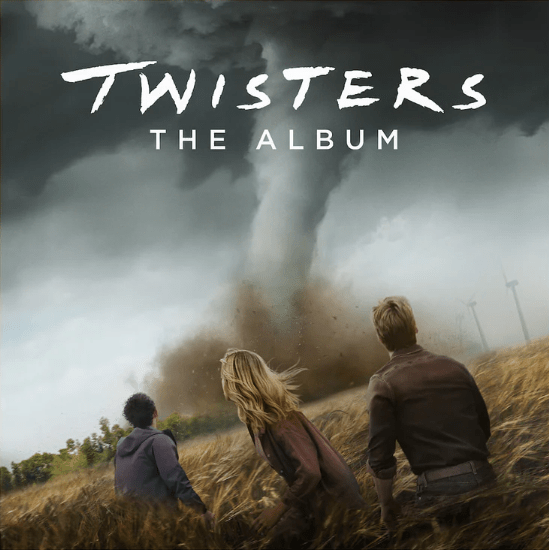
Twisters: The Album’ was released on 19 July 2024, the same day as the movie premiered in the theaters. ‘The Album’ contains 29 high stepping and slow rolling country music tracks befitting a movie set in Oklahoma. This is the best original artist’s country soundtrack since the 1980 ‘Urban Cowboy’ which wasn’t exactly 100% country but close enough to make the point that it has been a long time since the genre has played front and center in a big budget movie.

Luke Combs’ song, ‘Ain’t No Love in Oklahoma’, first track on the album, was released as a single in May of 2024 prior to the release of the album and topped out on the US Hot Country charts at no. 4 and no. 23 on Billboard Hot 100.  The album contains additional singles from Miranda Lambert, Tucker Wetmore, Megan Moroney, and many, many more artists.

‘Twisters: The Album’ is an authentic ‘Feeling Country’.

Source: Apple Music.  Graphic: Album cover, Atlantic copyright.

The Divine Comedy:

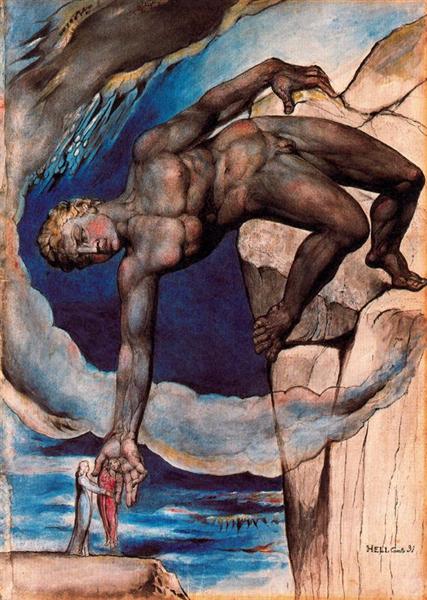
William Blake (1757-1827), in the final years of his life created 102 watercolors and 7 copper plates, most unfinished, for Dante’s ‘The Divine Comedy’. One of the more profound and captivating of these paintings is ‘Antaeus Setting Virgil and Dante into the Ninth Circle of Hell’.

The giant Antaeus, son of Neptune and Gaia, was invincible as long as he remained attached to his mother. Hercules, for his 11th task, had to defeat Antaeus but couldn’t if he touched the Earth, so he lifted him off the ground and strangled him to death.

The Ninth Circle is reserved for the treacherous and is subdivided into 4 rings. The first part is reserved for familial traitors and is named Caina as in Cain and Abel. The second ring, Antenora for Antenora of Troy is for national traitors. Ptolomaea for Ptolemy is the third ring for those who betray their guests. Finally, the inner ring is called Judecca for Judas Iscariot betrayer of Christ and is for the worst traitors: those who turn on their masters. At the center of the Ninth Circle resides Satan.

Finally, as an aside, Dante’s ‘The Divine Comedy’ shouldn’t be interpreted as The Divine Humor, but as The Divine Outcome. The author meant that comedy was the opposite of tragedy. Tragedies begin well and end badly, but Dante’s Comedy begins badly, in Hell, and ends well with Dante reaching his desired destination: Heaven.

Source: Will Blake, The Divine Comedy by David Bindman, 2000. The Divine Comedy by Dante Alighieri, circa 1321. Bulfinch’s Mythology, 1867. Graphic: Antaeus Setting Down Dante and Virgil in the Last Circle of Hell, Blake, 1827, Public Domain.

Journalism – Tom Kummer

Swiss journalist Tom Kummer published fabricated interviews from the rich and famous from 1995-1999. The subjects of the interviews included the personalities Tom Hanks, Bruce Willis, Ivana Trump, and many others; none of which he had actually met much less interviewed. All the interviews were conversations with himself in the privacy of his own apartment. He labeled his style as borderline journalism which some call by the oxymoronic phrase: interpretative journalism.

Mandy De Waal in a story about Kummer for the Daily Maverick states, ‘Kummer’s face-to-face interviews with mega-stars like Sharon Stone, Sean Penn, Kim Basinger and Christina Ricci were revelatory to the point of being almost too good to be true. When Tyson told Kummer he had eaten cockroaches in prison as a source of protein it was beyond sensational – it was unbelievable. That was because Kummer had made that all up… Kummer’s celebrity interviews were nothing more than the product of his imagination and he was nothing more than a lying fake who had never even met any of those celebrities.’

Source:  Tom Kummer by Mandy De Waal 2011, Daily Maverick. Graphic: Photo of Tom Kummer by Christian Werner, 2021.