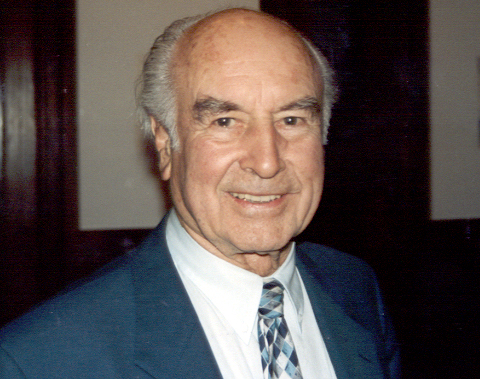
Albert Hofmann, employed by Sandoz Laboratories in Basel, Switzerland, was conducting research on ergots, a toxic fungus, in 1938 to identify potential circulatory and respiratory stimulants. While synthesizing compounds derived from the fungus, he inadvertently created lysergic acid diethylamide (LSD), an alkaloid of the ergoline family, known for their physiological effects on the human nervous system.
Five years later on April 16, 1943, Hofmann became the first person to experience the hallucinogenic effects of LSD while re-synthesizing the compound. He accidentally absorbed a small amount through his skin, leading to vivid hallucinations he later described as a dreamlike state with kaleidoscopic visuals. With two groundbreaking lab accidents occurring five years apart, The Daily Telegraph ranked Hofmann as the greatest living genius in 2007.
During the counter-cultural movement of the 1960s, LSD emerged as a popular recreational drug, attracting advocates such as Timothy Leary, a Harvard psychologist who famously urged people to “Turn on, tune in, drop out.” Leary championed the use of psychedelics to explore altered states of consciousness and challenge conventional societal norms. LSD also played a pivotal role in Ken Kesey’s novel One Flew Over the Cuckoo’s Nest, which focused on the horrific abuse of patients in mental institutions. The book, later adapted into a film starring Jack Nicholson, significantly influenced awareness of the cruelty of mental institutions. However, LSD’s trajectory took a sinister turn beyond recreation when it became a tool for government mind-control experiments.
Starting in the 1950s, the CIA launched MKUltra, a covert program designed to explore drugs and techniques for breaking down individuals psychologically. LSD became a central component of these experiments, often administered secretly to unsuspecting individuals to study its effects. Targets included prisoners, drug addicts, prostitutes, military personnel, CIA employees, and even random civilians. It is difficult to ascertain which acronym took the greater hit to its reputation: the CIA or LSD.
Source: Albert Hofmann by Morgan and Donahue, All That’s Interesting, 2025. Graphic: Albert Hofmann in 1993.
 elsToday