Dracula Lives

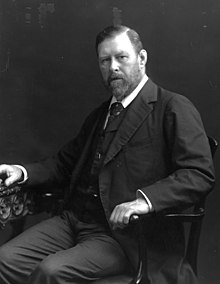
Irish author Bram Stoker wrote the quintessential horror story, Dracula during the early to mid-1890s, publishing it in 1897–except Stoker didn’t write it “as fiction but as a warning of a very real evil” according to J.D. Barker’s history of the book.

Many events in the book were not fiction. The ship Dmitri (Demeter in the book) did run aground in Whitby Harbor, and it was carrying crates of dirt that had originated from the European port of Varna. Mr. and Mrs. Jonathan Harker and Dr. Seward were friends of Stoker who supposedly supplied first person accounts of the tale to the author.

Stoker’s publisher, finding the book too frightening for the public, only agreed to publish the book if the first 101 pages were left out along with extensive revisions to the story which took a very clear story of vampires in our mist to one of fictional horror. In the 1980s the original manuscript showed up in rural Pennsylvania with the first 101 pages still missing and was purchased by Paul Allen of Microsoft fame.

Source: Dracula by Bram Stoker. J.D. Barker, Bram Stocker published by Time.com. Graphic: Bram Stoker, circa 1906, Public Domain.

Atalaya Laya 2020

Other Red Blends from Spain.

Garnacha Tintorera 70%, Monastrell 30%.

Purchase Price: $8.99

Rankings: James Suckling 90, Robert Parker 90, ElsBob 89.

ABV 14.5%

A deep ruby with aromas of black fruits and spices, medium to full body, dry and not too acidic with a medium finish. A middle of the road wine that is useless for sipping, must drink with spicy food to appreciate.

A very good wine that is worth exploring if you can find it under ten dollars.

Before the Flood

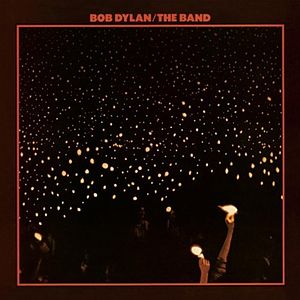
50 years ago, 20 June 1974, Bob Dylan and The Band released their double live album Before the Flood, peaking at number 3 on the U.S. Billboard 200 and going Platinum in the U.S. In addition to being Dylan’s first live album, the music was a compilation of Dylan’s greatest hits.

Stephen Thomas Erlewine of All Music comments “Dylan reworks, rearranges, reinterprets these songs in ways that are still disarming, years after its initial release. He could only have performed interpretations this radical with a group as sympathetic, knowing of his traits as the band, whose own recordings here are respites from the storm. And this is a storm — the sound of a great rocker, surprising his band and audience by tearing through his greatest songs in a manner that might not be comforting, but it guarantees it to be one of the best live albums of its time. Ever, maybe.”

Tom Nolan with Rolling Stone notes that “Throughout Bob Dylan‘s performances on this in-concert album there is evident an effort to match the material — nearly all from much earlier in his career — with a suitable style of delivery, a vocal stance which can express in a later year the brilliant and sometimes malevolent energy contained by these pieces when they were first created.”

The album was high energy, something that Dylan and the Band were not known for, but it brought a side to their music that, up till then, no one had experienced.

Source:  All Music. The Rolling Stone Album Guide. Graphic: Album Cover Before the Flood, copyright Columbia Records.

Journalism-Louis Seibold

Louis Seibold was a newspaper journalist working mostly for New York World from 1894 to possibly1931. In 1921 he won a Pulitzer Prize for an interview he conducted with President Woodrow Wilson in 1920.

At the time of the supposed interview the President was incapacitated due to a stroke and unable to provide answers or comments in any form to Seibold. It came out later that the interview was faked and was conducted through written correspondence with the President’s chief of staff and personal secretary Joseph Tumulty along with the President’s second wife Edith Wilson. The Pulitzer wasn’t returned.

New York World was owned by the Pulitzers, founders of the Pulitzer Prizes and was, at the time, the leading media voice for the Democratic Party. Pure speculation, but the Pulitzers awarded themselves their own prize for an interview that they surely knew never took place. The newspaper under the Pulitzers was known for left wing reporting, sensationalism, and yellow journalism.

Source: Politico, Prabook, Pulitzer.org., Wikipedia, Wikisource.org. Graphic: Louis Seibold, public domain.

End Times for Socrates

Plato documents Socrates’ final days in four books all written as dialogues. The first dialogue, ensuing shortly before Socrates’ trial for impiety and corruption of Athenian youth occurs between Socrates and the Athenian prophet, Euthyphro, who together attempt to define piety without success.

The second book, Apology, Socrates defends himself to the Athenian court, poorly in all respects, purposefully one suspects, confessing that his life’s quest is one of seeking wisdom, nothing more.

Crito is the third book in this series, and it takes place in Socrates’ prison cell after he has been found guilty of his crimes with his execution scheduled for the next day. Crito, a wealthy friend of Socrates, has come to urge him to escape. Socrates refuses and the ensuing dialogue revolves around justice and the damage to one’s soul through the actions of injustice.

In the fourth book Phaedo, a Greek philosopher, visits on the day of Socrates’ execution, and has a discussion centered on the immortality of the soul. Socrates offers four arguments for why the soul must be eternal while the body is mortal, firmly imprinting the duality of nature into the human psyche for endless generations to come.

Source:  Euthyphro, Apology, Crito, and Phaedo by Plato, 4th century BC. Graphic: Statue of Socrates by Drosis, Athens, Classical Wisdom.

The First Precious

Before the One Ring, created by Sauron during the Second Age, Plato created, as a thought experiment, the Ring of Gyges which gave its wearer the cloak of invisibility. Gyges discovered that when he was invisible, he could commit immoral acts and crimes without suffering any adverse consequences or retribution from society.

Plato in his Republic, using the ring of invisibility as an analogy, explores man’s ability to remain honest and moral in the face of immunity from all consequences. He concludes that if one is free of any consequences he will act in his own self-interest, justice be damned, or as the 19th century historian and writer, Lord Acton states, “Power tends to corrupt, and absolute power corrupts absolutely.”

This leads Plato, through the lips of Socrates, to suggest that justice is not a social construct but an inherent quality of one’s soul. The soul must be in harmony with one’s actions and a harmonious soul contributes to a just society. Socrates believed and advised, and he followed his advice, that a harmonious and pure soul leads to true happiness and fulfillment or as the ancient Greeks called it: eudaimonia. For Aristotle eudaimonia is the highest human good and the only human good that is desirable for its own sake, an end in itself. Justice is a by-product of true happiness. Unhappy people and unhappy societies are not just people and just societies.

J.R.R. Tolkien, not only a writer but also a philologist, most certainly was aware of Plato’s Ring of Gyges as an analogy of ultimate power when he used his One Ring in the Lord of the Rings as the definitive symbol of man’s quest to resist and fight evil.

Source: The Republic by Plato. Reason and Meaning.com. Philosophy Terms. Oxford Reference. Graphic: The One Ring, Good Free Photos.

Black Hole of Calcutta

Victorious in a battle against the British on the evening of 20 June 1756 Indian Siraj-ud-Daulah, the ruler of Bengal, imprisoned 146 British troops, and British loyal Indian infantryman and civilians into a 14-by-18-foot Fort William of Calcutta jail cell at 8:00 at night. The prisoners were given no food or water. At 6:00 the following morning the prison cell was opened to find that only 23 of the prisoners remained alive, the rest having perished from suffocation or heat exhaustion.

The prison ever after has been known as the Black Hole of Calcutta.

John Holwell, the prisoner whose account the deaths of 123 persons is based on, acquitted Siraj-ud-Daulah of any guilt “and ascribed it to the malice of certain inferior officers.” Others suggest that the total number imprisoned in the cell equaled about 64 with 21 surviving; either way the number of incarcerated was far beyond the humane limits of the cell.

Source: Itihaas to History. Black Hole of Calcutta by Bruce Heydt, British Heritage, 2024. Wikipedia. Graphic: Artist conception of the Black of Hole of Calcutta, The Granger Collection NY.

Coens’ First

Blood Simple.

Theaters: 12 October 1984

Streaming: 6 December 2022

Runtime: 96 minutes

Genre:  Crime – Drama — Mystery — Neo-Noir — Thriller

Els:  7.5/10

IMDB:  7.5/10

Rotten Tomatoes Critics:  95/100

Rotten Tomatoes Audience:  8.3/100

Metacritic Metascore:  84/100

Metacritic User Score:  8.0/10

Directed by: Joel Coen

Screenplay by: Joel and Ethan Coen

Music by:  Carter Burwell

Cast: John Getz, Francis McDormand, Dan Hedaya

Film Locations:  Austin and Round Rock, Texas

Budget:  $1.5 Million

Worldwide Box Office:  $2.7 Million

Blood Simple is a twisted Texas tale of a honky-tonk owner, a cheating wife, contract killings, misunderstandings, and violence.

This is the Coen brothers’ first movie along with the first major film for Barry Sonnenfeld and Francis McDormand. A classic neo-noir crime film setting the stage for Fargo and No Country for Old Men down the road.

The film was ranked at number 98 on AFI’s 2001 movie listing of the top 100 Thrills in American cinema. In case you are wondering Hitchcock’s 1960 film, Psycho was first.

Source: IMDB. Rotten Tomatoes. Metacritic. Wikipedia. Graphic: Movie Poster, Circle Releasing.

Crios de Susana Balbo Cabernet Sauvignon 2020

Cabernet Sauvignon from Mendoza, Argentina

Purchase Price: $14.99

Rankings: James Suckling 91. Robert Parker 90. ElsBob 91.

ABV: 14.5%

A deep red color, medium to full bodied, aromas of plums and cherries, dry, tannic, with a fresh medium finish. A great sipping wine with strong cheeses or server with steak or lamb.

An excellent wine that has aged nicely with a price is $7-10 less than comparable cabs.

Beck-Ola

This week in June of 1969 Jeff Beck released his second studio album: “Beck-Ola”, and the first album credited to the Jeff Beck Group.  The album peaked on the Billboard 200 at number 15 and is considered a major influence on the future of hard rock and heavy metal.

According to JeffBeck.com the album “cemented the Jeff Beck Group’s place in rock history as one of the prime architects of heavy metal. “It is what it is,” Beck said, recalling the album fondly, “just a snapshot of the situation at the time. The talent was there. We were pioneering heavy rock, big time.”

The album cover is a reproduction of Rene Magritte’s 1958 version of “The Listening Room”.  The apple to Magritte was a symbol for the tension between hidden and visible. Why this painting was chosen for the album remains something of a mystery, but it may just be an expression of adding something new and hidden, heavy metal, to something old and visible, pop and early rock.

The members of the Jeff Beck Group for this album included Beck, Ronny Wood, Rod Stewert, Nicky Hopkins, and Tony Newman, a super group of talent by any measure.

Source: JeffBeck.com. Illustrated Encyclopedia of Rock, 1977. Rene Magritte Organization. Graphic: Beck-Ola Album cover, Epic Records, 1969.