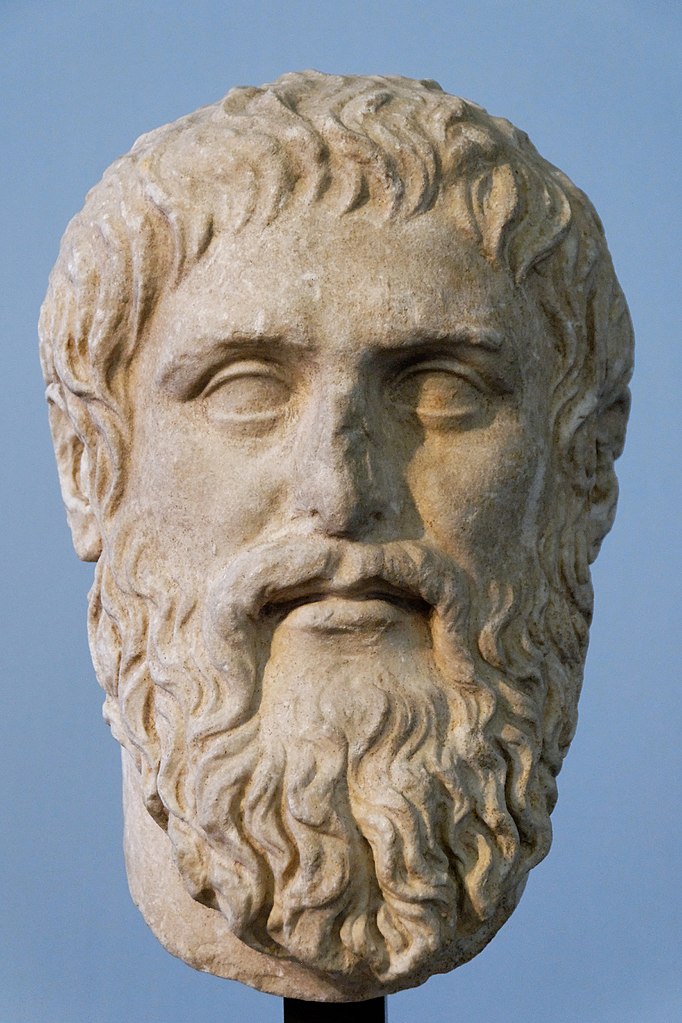
Phaedo is the fourth and final Socratic dialogue by Plato (the others being Euthyphro, Apology, and Crito) discussing the day Socrates was put to death by the Athenian state. Phaedo, who was with Socrates on the day of his death, is in the Greek city of Phlius at a later time and is asked by his friend Echecrates to tell him all about that eventful day.
The dialogue begins with Socrates proposing that a philosopher should look forward to death, but it is immoral for one to take his own life. He posits that the soul is immortal and one’s life should be geared to keeping one’s soul pure. He then provides three, or four depending on interpretations, arguments for the immortality of the soul. First, he puts forth the cyclical argument that death follows life which is followed by death and so on. Second, he proposes that we are born knowing what our souls knew before birth, we just can’t remember it until the proper questions are raised. Finally, Socrates puts forth the Affinity argument which states that the body is mortal and visible, and the soul is immortal and invisible.
After these arguments Socrates introduces Forms, actually a Platonic idea, the fourth argument according to some, sometimes known as the two-world theory where reality is set against what our senses tell us. Our senses give us a visible but imperfect perception of the world as opposed to Forms which are only conceived in one’s mind and are invisible and unchanging.
At the end of the dialog Socrates tells his audience the myth of Er, a discussion of where to soul goes upon death. He then says his goodbyes, drinks hemlock, and slowly dies.
The Phaedo is more a compilation of Plato’s beliefs than a thorough discussion of Socratic philosophy, especially the discussions of Forms.
Source: Ancient Greek Philosophers, translated by Benjamin Jowett, published 2018. Phaedo by Tim Connolly, Internet Encyclopedia of Philosophy. Graphic: Copy of a Bust of Plato, original by Silanion. Photo of bust by Nguyen, 2009.
 elsToday