A Modern Golden Fleece

The question has been making its rounds on social media asking if the U.S. should sell off 20% of the U.S. gold reserves to pay off the debt?

The answer is no.

If I did the math correctly, selling 20% of U.S. gold stocks, 1476 tonnes, at the current price of $2345/oz equals about $462 billion.  A tonne is 2202 pounds. If you are referring to the U.S. debt of $34 trillion then money from the gold sale would only amount to a little more 1% of the total debt.

On a different note, the U.S. used to have more than 18,144 tonnes of gold or $1.5 trillion in today’s dollars. Due to the consequences of 1944 Brenton Woods agreement and the failure of the Kennedy/Johnson/Nixon administrations to stop the ability of foreigners to change dollars into gold, the gold supply was reduced to 7379 tonnes.

Changing the subject again, the Chinese have been on a gold buying spree since 2023. The People’s Bank of China bought 735 tonnes of gold in 2023 and their private sector bought an additional 1411 tonnes. In January of this year alone China has purchased 228 tonnes. All this buying has helped to drive up the price of gold by about 27% since January of 2023.

A better question to explore is why are the Chinese buying so much gold?
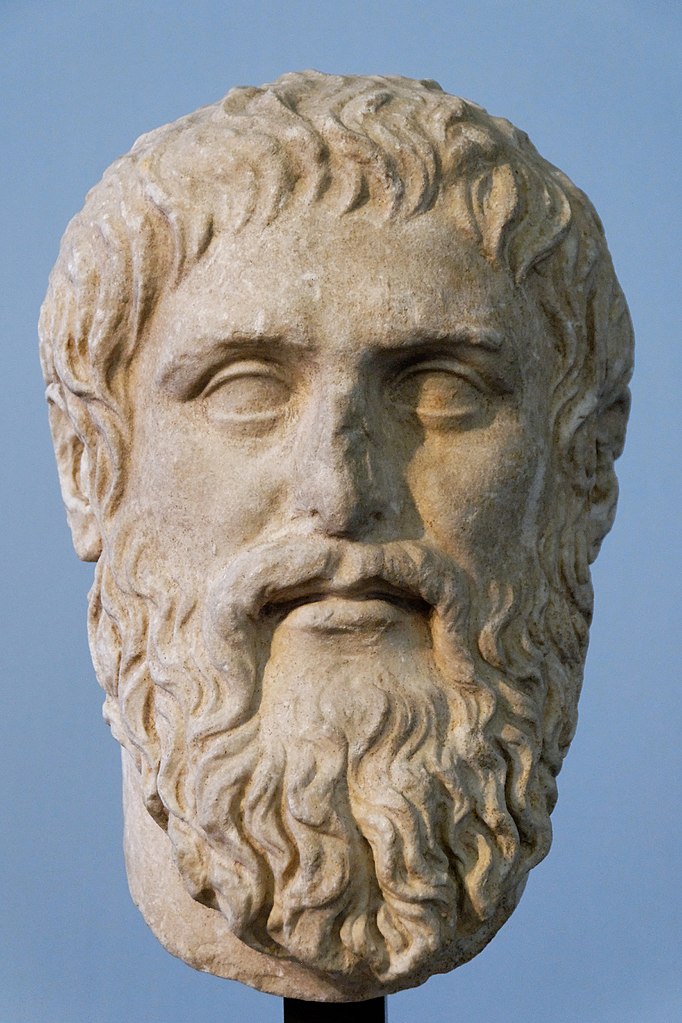
Phaedo

Phaedo is the fourth and final Socratic dialogue by Plato (the others being Euthyphro, Apology, and Crito) discussing the day Socrates was put to death by the Athenian state. Phaedo, who was with Socrates on the day of his death, is in the Greek city of Phlius at a later time and is asked by his friend Echecrates to tell him all about that eventful day.

The dialogue begins with Socrates proposing that a philosopher should look forward to death, but it is immoral for one to take his own life. He posits that the soul is immortal and one’s life should be geared to keeping one’s soul pure. He then provides three, or four depending on interpretations, arguments for the immortality of the soul. First, he puts forth the cyclical argument that death follows life which is followed by death and so on. Second, he proposes that we are born knowing what our souls knew before birth, we just can’t remember it until the proper questions are raised. Finally, Socrates puts forth the Affinity argument which states that the body is mortal and visible, and the soul is immortal and invisible.

After these arguments Socrates introduces Forms, actually a Platonic idea, the fourth argument according to some, sometimes known as the two-world theory where reality is set against what our senses tell us. Our senses give us a visible but imperfect perception of the world as opposed to Forms which are only conceived in one’s mind and are invisible and unchanging.

At the end of the dialog Socrates tells his audience the myth of Er, a discussion of where to soul goes upon death. He then says his goodbyes, drinks hemlock, and slowly dies.

The Phaedo is more a compilation of Plato’s beliefs than a thorough discussion of Socratic philosophy, especially the discussions of Forms.

Source: Ancient Greek Philosophers, translated by Benjamin Jowett, published 2018. Phaedo by Tim Connolly, Internet Encyclopedia of Philosophy. Graphic: Copy of a Bust of Plato, original by Silanion. Photo of bust by Nguyen, 2009.