Gilgamesh: A New English Version
Translator: Stephen Mitchell
Published by Free Press
Copyright: © 2004

Biography:
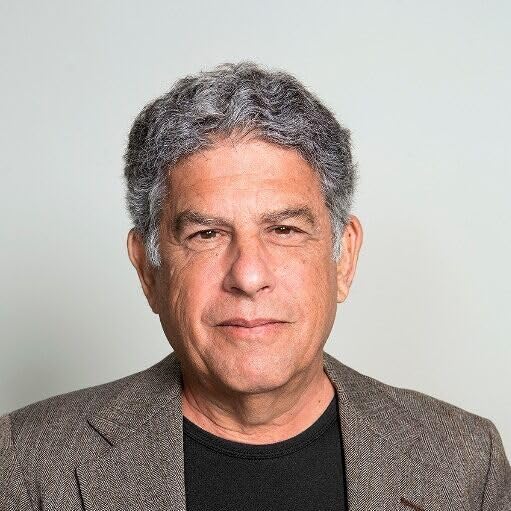
Stephen Mitchell was born in Brooklyn in 1943 (80ish), educated at ‘Ivy League’ schools in the US and France, and, quoting his words, “de-educated through intensive Zen practice“. That may be just a spoonful of humor, it is though a spoonful of humility, and a large serving of Zen-Socratic wisdom. A wisdom that becomes one that reflects upon his life and realizes his education has granted him neither knowledge nor wisdom. He does not say what the Ivy League has instilled in him, but the derivation of any real value from those hallowed halls, as seen from the Zen rear-view mirror, appears minimal.
In an interview with the Los Angeles Times, he ruminates that “If I’m a scholar, I’m an amateur“. A humble observation in the truest form of the personal quest for fulfillment and enlightenment. In the same interview, elaborating on Chuang-tzu in Mitchell’s ‘The Second Book of the Tao‘, he says: “I have no pretensions to scholarship. I just love to play with the Taoist masters. For them, nothing is sacred. The best tribute is contradiction.” Again, humility before all, all before self.
In a separate interview with Scott London also discussing ‘The Second Book of the Tao‘ Mitchell relates the teachings of Chuang-tzu as a philosophy of the unassuming and the simple life. “There was nothing to live up to,” he says. “There was only a passion for the genuine, a fascination with words, and a constant awareness that the ancient Masters are alive and well in the mind that doesn’t know a thing.” Mitchell personifies and lives that philosophy.
Mitchell has translated and authored many books including the bestselling Tao Te Ching, Gilgamesh, The Gospel According to Jesus, and his latest book, The First Christmas released in 2021. He is also the coauthor of three of his wife Byron Katie’s bestselling books: Loving What Is, A Thousand Names for Joy, and A Mind at Home with Itself and numerous children’s books.
The Discovery of the Story of Gilgamesh:
The Epic of Gilgamesh was, in the beginning, a series of Sumerian poems/stories likely passed down through the ages as oral histories before being written down in Akkadian 700-1000 years after the reign of the mythical/historical King of Uruk: Gilgamesh.
Mitchell may have been introduced to the literary stature of Gilgamesh while translating the Austrian mystic poet, Rainer Marie Rilke. Rilke wrote at the end of 1916. “I … consider it to be among the greatest things (the poem Gilgamesh) that can happen to a person. I have immersed myself in [it], and in these truly gigantic fragments I have experienced measures and forms that belong with the supreme works that the conjuring Word has ever produced.”
The poem, written in Assaryian cuneiform script, on clay tablets, was discovered by Austen Henry Layard while excavating mounds, beginning in 1844, around what is now known as the city of Mosul. The mounds turned out to be the remains of the ancient Assyrian capital palaces of Nineveh including the library of King Ashurbanipal or Ashur Banipal (668-627 BC) depending on the source. Over 25,000 clay tablets from the library, twelve of which contained the poem, were shipped back to the British Museum. It took until 1872 before the poem was discovered among this immense trove of tablets and in 1872 George Smith translated and published the poem. These twelve tablets contain the fullest version of the poem found to date.
The first surviving version of the combined epic is known as the Old Babylonian version and dates from the 18th century BC. The longer and more complete copy of the poem, from King Ashurbanipal’s library is from the 10th to the 13th centuries BC and is known as the Standard version. Currently seventy-three fragments, possibly more, of the Standard version have been discovered containing some two thousand lines of the original, which is surmised to be three thousand lines long.
Mitchell mainly adapts the Standard version into a contemporary English language poem with gap filler supplied by the Old Babylonian version. Where there is no original material to complete known gaps, Mitchell has contributed original work to provide clarity and to maintain continuity.
The Man of Gilgamesh:
Gilgamesh is accepted as being the 5th king of Uruk, possibly reigning roughly in the 26th century BC (2800-2500 BC) for 126 years. Some believe the long reign of 126 years may actually be a number in base six which would equate to 54 years in base ten. Very little is known of his reign with the exception that he built the walls Uruk, is listed in the Sumerian King list, and is mentioned as a contemporary of Aga, son of King Enmebaragesi of Kish.
Aga, who ruled over Sumer for 625 years, is the antagonist in the Sumerian poem ‘Gilgamesh and Aga‘, recording the King of Kish’s siege of Uruk after Gilgamesh refused to submit to him. From the poem Aga commands Gilgamesh and the citizens of Uruk to work forever as slaves on Kish’s irrigation projects.
There are wells to be finished.
There are wells in the land to be finished.
There are shallow wells in the land to be completed.
There are deep wells and hoisting ropes to be completed
Gilgamesh is made King of Uruk for his defiance and resistance to Aga’s demands. King Gilgamesh captures Aga on the 10th day of the siege but sets him free to return to Kish.
The Land of Gilgamesh:
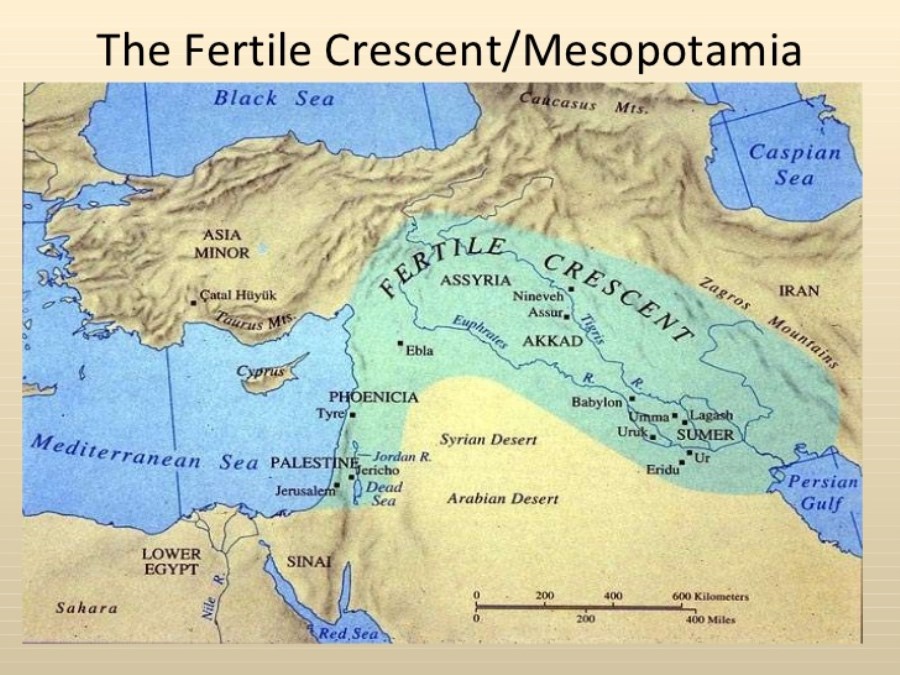
Uruk was a Sumerian city-state established in the southern reaches of Mesopotamia and was located on the east bank of the Euphrates River. The river today, through the process of river channel migration, is much further to the west. The city and its surrounding area were home to about 40,000-125,000 people, who during the time of Gilgamesh controlled the entire Sumer area.
The Sumerian area and Uruk lay claim to the beginnings of civilization, urbanization, laws, and writing. Cuneiform, wedge shaped writing on clay tablets and the earliest known system of writing, dates to the fourth millennium BC with the oldest examples being inventories of goods stored and transported in and out of the Sumer area.
The oldest known surviving law code, the Code of Ur-Nammu, in the world comes down through the ages from the Sumerian king Ur-Nammu or his son Shulgi of Ur during the last half of 21st century through the beginning of 20th century BC. The Code of Urukagina is older but is known only through references in other ancient writings. The better-known Babylonian Code of Hammurabi is younger and dates from the eighteenth-century BC.
The greatest architectural monument of Uruk was the White Temple built upon the Anu Ziggurat during the fourth millennium. The temple was thirteen meters high and 22.3 x 17.5 meters in depth and width. It stood upon a ziggurat with dimensions of 50 x 46 x 10 meters in depth, width, and height, respectively. On the flat plains surrounding Uruk it was visible in the distance for kilometers.
German archaeological excavations in 2003, conducted in and around the old riverbed of the Euphrates, have reportedly revealed garden enclosures, specific buildings, and structures described in The Epic of Gilgamesh, including Gilgamesh’s tomb. According to The Death of Gilgamesh, he was buried at the bottom of the Euphrates when the waters parted after he died. There is debate whether these excavations and discoveries exist or are a hoax. These discoveries have not been confirmed and no updates from the original can be found but one of the original authors of the 2003 study is Jorg Fassbinder, a geophysical archeologist associated with the University of Munich.
Uruk is also recognized as the city of Erech, founded by Nimrod, great-grandson of Noah, as mentioned in Genesis 10:10:
8And Cush begat Nimrod: he began to be a mighty one in the earth.
9He was a mighty hunter before the LORD: wherefore it is said, Even as Nimrod the mighty hunter before the LORD.
10And the beginning of his kingdom was Babel, and Erech, and Accad, and Calneh, in the land of Shinar.
11Out of that land went forth Asshur, and builded Nineveh, and the city Rehoboth, and Calah
The Legend of Gilgamesh:
Gilgamesh in Sumerian possibly means ‘The Old Man Is a Young Man’ or ‘The Ancestor Was a Hero’. An immortal Hero, a synthesis that brings us to the story and plot of Gilgamesh.
Gilgamesh is the epic hero of the times. Dashing, brave, adventurous; a seeker of immortality and wisdom but not much in the way of kingly benevolence. The gods knowing Gilgamesh lacked wisdom sent him his twin and his opposite: Enkidu. Enkidu became Gilgamesh’s brother and constant companion. Thus begins the quest of Gilgamesh to find himself. It is far more than that, though, as Mitchell explains:
“Part of the fascination of Gilgamesh (the story and person) is that, like any great work of literature, it has much to tell us about ourselves. In giving voice to grief and the fear of death, perhaps more powerfully than any book written after it, in portraying love and vulnerability and the quest for wisdom, it has become a personal testimony for millions of readers in dozens of languages.“
Gilgamesh, as with some of his readers of today, is slow to learn the lessons of life, slow to acquire wisdom even when it is given to him/us for free. From the old Babylonian Version in Book X, Siduri, a wise matron brewer of beer offers Gilgamesh an opiate of advice for his pain brought on through the death of his brother Enkidu.
“Gilgamesh, where are you roaming? You will never find the eternal life that you seek. When the gods created mankind, they also created death, and they held back eternal life for themselves alone. Humans are born, they live, then they die, this is the order that the gods have decreed. But until the end comes, enjoy your life, spend it in happiness, not despair. Savour your food, make each of your days a delight, bathe and anoint yourself, wear bright clothes that are sparkling clean, let music and dancing fill your house, love the child who holds you by the hand, and give your wife pleasure in your embrace. That is the best way for a man to live.”
Gilgamesh declines the advice to live for the day and continues with his quest for immortality.
Bibliography:
Dropping Ashes on the Buddha: The Teaching of Zen Master Seung Sahn. 1976
The Selected Poetry of Rainer Maria Rilke. 1982
The Sonnets of Orpheus. 1985
The Book of Job. 1987
Tao Te Ching: 1988
The Enlightened Heart: An Anthology of Sacred Poetry 1989
The Creation. 1990
The Enlightened Mind: An Anthology of Sacred Prose. 1991
Parables and Portraits. 1991
A Book of Psalms: Selected & Adapted from the Hebrew. 1993
Into the Garden: A Wedding Anthology. 1993
Ahead of All Parting: The Selected Poetry and Prose of Rainer Maria Rilke. 1995
Bestiary: An Anthology of Poems about Animals. 1996
Genesis: A New Translation of Classic Biblical Stories. 1996
The Selected Poetry of Dan Pagis. 1996
The Selected Poetry of Yehuda Amichai. 1996
Full Woman, Fleshly Apple, Hot Moon: Selected Poems of Pablo Neruda. 1997
The Essence of Wisdom: Words from the Masters to Illuminate the Spiritual Path. 1998
Meetings with the Archangel: A Comedy of the Spirit. 1998
The Frog Prince: A Fairy Tale for Consenting Adults. 1999
Bhagavad Gita: A New Translation. 2000
The Nightingale. 2002
Loving What Is: Four Questions That Can Change Your Life. With Byron Katie. 2002
Jesus: What He Really Said and Did. 2002
Can Love Last?: The Fate of Romance Over Time, 2002
The Wishing Bone. 2003
Gilgamesh: A New English Version. 2004
The Essential Neruda: Selected Poems (Bilingual Edition). 2004
A Thousand Names for Joy: Living in Harmony with the Way Things Are. With Byron Katie. 2007
Iron Hans: A Grimms’ Fairly Tale. 2007
Genies, Meanies, and Magic Rings: Three Tales from The Arabian Nights. 2007
The Tinderbox. 2007
The Ugly Duckling. 2008
The Second Book of the Tao. 2009
The Iliad. 2011
The Odyssey. 2013
A Mind at Home with Itself: How Asking Four Questions Can Free Your Mind, Open Your Heart, and Turn Your World Around. With Byron Katie. 2017
Beowulf. 2017
Joseph and the Way of Forgiveness: A Story About Letting Go. 2019
The First Christmas: A Story of New Beginnings. 2021
References and Readings:
- A Stillness Within Stephen Mitchell. By Susan Salter Reynolds. Los Angeles Times. 2009
- Gilgamesh Tomb Believed Found. Uncredited. BBC 2003
- Touching the Essence of Things: A Conversation with Stephen Mitchell. By Scott London. 2009
- The Epic of Gilgamesh. By Pulkit Agrawal. Harvard Wiki. 2015
- The Epic of Gilgamesh: Text, Translation, & Tablets. Uncredited. Dust Off the Bible. 2018
- Japanese Zen Buddhist Philosophy. Uncredited. Standford Encyclopedia of Philosophy. 2019
- Stephen Mitchell’s Version of the Tao Te Ching: A Spiritual Interpretation. By Penghua Fan and Senlin Yu. Oxford Academic. 2020
- The Epic Adventures of the Gilgamesh Dream Tablet. Uncredited. BBC. 2021
- Truth and Fiction: The Epic Story of Gilgamesh in Ancient Mesopotamia. By Joshua J. Mark. Brewminate: A Bold Blend of News and Ideas. 2022
- Gilgamesh. By Joshua J. Mark. World History Encyclopedia. 2022
- “All I Know Is That I Know Nothing”: What Did Socrates Mean? By Viktoriya Sus. The Collector. 2023
- Socrates (469—399 B.C.E.). By James M. Ambury. Internet Encyclopedia of Philosophy. No date.
- The Unexamined Life is Not Worth Living. Uncredited. Wikipedia. No date
- Zen Buddhism: By Wiliam M. Bodiford. Britannica. No date
- I Ching. Uncredited. Wikipedia. No date
- Gilgamesh. Uncredited. Wikipedia. No date
- Gilgamesh: Mesopotamian Mythology. Uncredited. Britannica. No date
- Gilgamesh and Aga. Uncredited. Wikipedia. No date
- Austen Henry Layard. Uncredited. Wikipedia. No date
- Rainer Maria Rilke. Uncredited. Poetry Foundation. No date





 elsToday