Written by: Guy Ritchie – Ivan Atkinson – John Friedberg – Josh Berger
Music by: Christopher Benstead
Cast: Jake Gyllenhaal – Dar Salim – Emily Beecham –Jonny Lee Miller
Film Locations: Spain
Budget: $55 million
Worldwide Box Office: $17.5 million
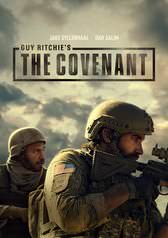
American Army Sergeant John Kinley, played by Jake Gyllenhaal, and his Afghan interpreter Ahmed, played by Dar Salim take on the Taliban in a war-time tale of trust earned and promises kept.
I watched this movie because Guy Ritchie’s name was all over it. Director, writer, producer, even in the title: Guy Ritchie’s The Covenant. I suppose if you direct, write, and produce the movie you can put your name in the title. His past movies: Snatch, RocknRolla, Sherlock, The Gentleman, and others have complex, Rube Goldberg plots, twists within twists with tongue planted firmly in the cheek. I loved them and I wanted more Guy Ritchie movies. I expected more of the same with The Covenant and received nothing of the sort. The Covenant is a drama with a little war, a little action, and a little suspense thrown in. If Ritchie’s name weren’t all over the film you would not know it was a Ritchie film, which I guess explains why he put his name in the title. But it is a movie worthy of Ritchie’s name and fame.
The Covenant is Christopher Benstead’s fourth movie composing the music and score for Ritchie’s movies which included: The Gentlemen, Wrath of Man, and Aladdin. This movie’s play list:
A Horse With No Name – America
Long Cool Woman (In a Black Dress) – The Hollies
Truth – Alex Ebert
Toshna Ye Abem Shoda – Mehri Maftun
Say What You Want – White Denim
Thunder Continues In The Aftermath – Laurie Anderson & The Kronos Quartet
Darkness Falls – Margaret Lewis
Farkhâr Chi Khush-u Khush Havây Dâra Janam – Rahim Takhari
Darkness Falls and Thunder Continues are perfectly placed and worth the price of admission.
I’m ambivalent towards Jake Gyllenhaal, his acting skills, not him personally. Not that he can’t act, he can but his character portrayals always seem a bit off, not what your mind is expecting, especially in his nut case roles. In End of Watch and Nightcrawler he never fully captures the essence of his character. In places he is holding back emotionally, in other scenes he has gone too far but in the wrong direction. In The Covenant he manages a more consistent character portrayal and in the last battle scene he captures the moment with body language and facial expressions. No words needed.
The script is solid and concise without any major plot holes. Having someone with military experience to parse the script would have been helpful in a few of the scenes where Sgt. Kinley and Ahmed are evading capture through the mountains and foothills of Afghanistan. When you’re running for your lives, sitting down in the open when you have trees for cover seems ill-advised.
These negatives are mostly trivial though. The script, the direction, the camera work, the acting is all done well, not exceptional but certainly above average.
In the final scenes of the Benghazi movie, 13 Hours, the protagonists note that the Arab attack against the embassy compound must have required weeks if not months of advanced planning. A subtle message but one that called out the lie of the US administration’s stance that the attack was reaction to an anti-Islam movie the day before in Egypt. In the final scene of The Covenant a statement, posted on screen, revealed that in the aftermath of the Taliban’s recapture of Afghanistan, over 300 Afghan interpreters affiliated with the U.S. military were murdered by the Taliban terrorists, with thousands more still in hiding. Again, a subtle message dealing with the lack of foresight and due diligence concerning the US administration’s Afghan withdrawal plans and execution.
Original Book Publication Dates: 1705/1714/1729/1733
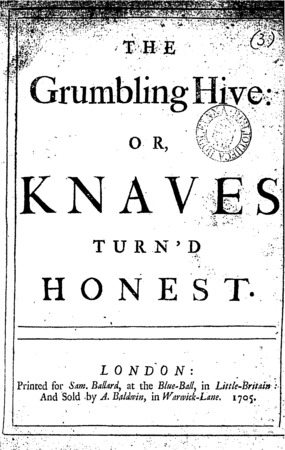
Bernard Mandeville was a free thinker, a contrarian, a troublemaker and likely loved every minute of it. His writings on vice and free living were greedily consumed by the 18th century public, and his notoriety began with a simple poem of 433 eight syllable coupled, rhymed lines, a doggerel of no artistic merit but with a moralistic message that has echoed, in various forms throughout the ages. It was originally titled: The Grumbling Hive or, Knaves turned Honest.
Mandeville was born in 1670 in the Dutch city of Rotterdam where he received a classical education at the Erasmus school and a medical degree from the University of Leiden. In the medical field he developed a special interest in what we would now call psychiatry and the use of talk therapy for curing hypochondriacs, the same branch his father practiced. He anticipated Freud by 175 years. Upon completing his medical studies, he moved to London to learn the language and decided to stay. In London he specialized in treating hypochondriacs, stomach ailments, writing political and philosophical tracts, all in which he achieved minor fame and fortune.
Beyond these meager particulars of his early life very little is known about Mandeville’s personal history. To know him, but not necessarily understand him, one must study his pamphlets and books on politics and philosophy and everything he wrote was soaked with politics and philosophy.
Mandeville’s written works sold so well that dozens of editions were needed to keep up with demand. His most celebrated work was The Grumbling Hive which he published anonymously in 1705. This little ditty immediately became a hit with the public and generated an immense amount of discourse and criticism.
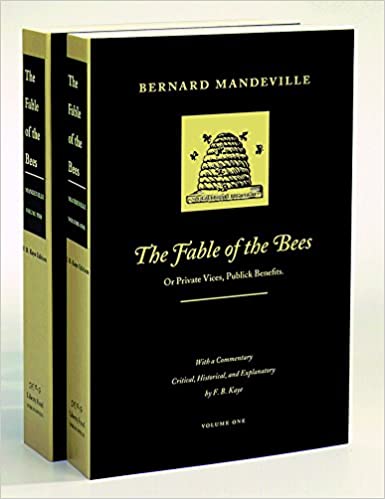
Over the next 25 years or so he expanded the poem with commentary and essays under his own name with the next updated edition coming out in 1714 titled: The Fable of the Bees: or Private Vices, Public Benefits. In 1923 he again expanded the Fable of the Bees with an essay attacking charity schools, free schools for the poor, as nothing more than a vehicle to assuage the guilty conscience of the rich. The schools, while teaching the basics, the three Rs, were also a forum for instructing young minds in morality and religion. Mandeville was not so much against instructing the kids in addition and subtraction but that teaching morality in a capitalistic society was counterproductive.
Mandeville’s premise was that the rich set up and donated to the schools to atone for their gains attained through vice and greed. Mandeville would likely surmise that today’s charity and political donations, such as George Soros’ funding of weak on crime prosecutors, was atonement for their selfish gains in business and the markets. To put it mildly this did not go well with the upper crust, but it did increase the sales of his books.
In 1728 Mandeville expanded the Fable of the Bees again by adding a second volume which provided additional defense of his thesis that vice is good in the form of dialogs: elaborations on the division of labor and their associated economics. The two volumes were published together in 1733, the year of Mandeville’s death.
Mandeville’s basic thesis underlaying the Fable of the Bees was that greed and vice were good for the economy and society. A person’s self-interest in the pursuit of wealth and luxury provides benefits for everyone. A rising tide lifts all boats. The idea of selfishness for the public good certainly predates Mandeville and continues to the present day. The 1987 movie Wall Street, Gordon Gekko played by Michael Douglas argues that the human march of progress is fueled by personal self-interest and greed. Self-interest to accumulate wealth and fame. Morality does not enter into the equation, or it shouldn’t.
Mandeville believed that vice had a negligible effect on the population, but he obviously understood that it was the gateway drug to harder crimes. He understood that victimless crime led to felonious crime. He understood the “Broken Windows Theory” before it had a name. As such he strongly advocated for a robust and universal system of justice. A system that John Adams in 1779 would codify into the Massachusetts constitution as “a government of laws, and not of men.” By laws Mandeville meant the rules of conduct that private society imposed on itself over centuries of trial and error. He was not prescribing a legislative solution to criminal behavior although he offered advice in that arena also. Rather his economic laissez faire attitude carried over to his thoughts on justice. The fewer government mandates the better. He would readily agree with the 20th century Italian political philosopher Bruno Leoni’s notion on government decrees, “legislation…has come to resemble more and more a sort of diktat that the winning majorities in the legislative assemblies impose upon the minorities, often with the result of overturning long-established individual expectations and creating completely unprecedented ones.”
He emphasized the word justice, as in justice for all, without giving much serious thought to the criminal part of the equation. Mandeville’s endeavors at navigating the differences between vice and crime usually led to ambiguous reasoning and muddy waters. He had a wishful belief in a harmless sort of anarchy where everyone didn’t or shouldn’t bother their neighbors — much. Mandeville was stuck between his belief that selfish behavior is good, and that morality is an illusion, leaving no room for compromise. In the end all behavior could be explained by our selfish desires and motives. Altruistic behaviors were just cover for a guilty conscience.
Mandeville’s intellectual, educational, and philosophical journey, with little supporting evidence other than circumstantial bits and pieces, could be a great case study in nature versus nurture. His father and great-grandfather were both respected physicians with the wherewithal to send him to the best schools in Rotterdam.
His formal education began at the local Erasmus school which gave the students a grounding in Christianity, literature, poetry, drama, art, philosophy, languages, and history with an emphasis on lifelong learning. Desiderius Erasmus, a 15th, and 16th century resident of Rotterdam believed that man could only rise above other animals through self-improvement and study.
Another local resident of Rotterdam that had a profound influence on Mandeville was his contemporary, although a few decades older than himself, Pierre Bayle, a philosopher, and skeptic in the purest sense of the word. Bayle believed Christianity did not have a lock on virtuosity and morality. He believed in religious toleration beyond Catholicism for the simple reason that he was persecuted as a protestant. And he believed that one shouldn’t burden one’s conscience with guilt from minor transgressions or sins of the flesh.
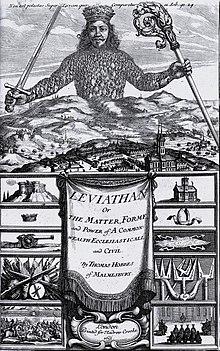
Thomas Hobbes, who died in the same decade that Mandeville was born, was an English polymath best known for his treatise on government and the governed: Leviathan. Leviathan is a discussion on how the individual and societies should be governed, and the covenants between the ruled and the ruler(s) that were needed to hold common-wealth, or as he called it, the Leviathan together. One of Hobbes main points about man as an individual in Leviathan, and which Mandeville was certainly familiar with, was that good and evil were constructs, mere names, for human emotional and physical appetites. The desires that make us human. Morality was nonsense.
26 years after Mandeville’s death Adam Smith wrote The Theory of Moral Sentiments where he introduced the concept of the ‘Invisible Hand’, a concept of individual self-interest driving the economic advancement of society. Adams stated, “They (ed. society) are led by an invisible hand to make nearly the same distribution of the necessaries of life, which would have been made, had the earth been divided into equal portions among all its inhabitants, and thus without intending it, without knowing it, advance the interest of the society, and afford means to the multiplication of the species.” Smith’s ‘Invisible Hand’ is practically interchangeable with Mandeville’s self-interest and greed thesis. Smith expanded upon the ‘Invisible Hand’ in his 1976 publication The Wealth of Nations.
The Theory of Moral Sentiments introduced the ‘Invisible Hand’ but was primarily intended to provide logical reasoning for man’s altruistic nature and furnish a rebuttal to Mandeville and others. Adams believed that morality was more than a word, more than an ethical nicety. Smith believed our sense of morality was real and natural. It was built into our being through the experience of living, and he termed it sympathy, what we would now call empathy. It was natural to care about the lives of others either because we have walked in the shoes of the less fortunate, or we can see with our own eyes what the less fortunate are living with or without. Empathy was the laissez faire sense of justice that Mandeville could not see, but should have, because it was in the opposite direction of selfishness. He wouldn’t look there because he believed it couldn’t be found.
Richard Dawkins’ 1976 book The Selfish Gene asserts that a human gene propagates itself into the future through the individual selfish motives of survival rather than through the desire to better a group or organism. The thought that a gene can be selfish is no more plausible than it can run a 4-minute mile, but it is a useful term to use as a descriptor. Dawkins claims that the selfish gene increases its chances of replication and survival by promoting altruistic behavior between like members of a group or organism. The selfish actions of the individual or the gene leads to unselfish actions of the group or the organism.
In the end Mandeville articulated a theory of self-interest driving societal economic advancement that causes emotional discomfort in most of us, not because it is wrong but because it is only half right. We may be selfish, but altruism and benevolence are part of our nature, a major part of who we are. Selfishness and altruism together advance our species and our society.
Bibliography:
1685 de Medicina Oratio Scholastica. Regneri Leers, Rotterdam. An oration in which BM declares his intent to study medicine at Leyden.
1689 Disputatio Philosophica de Brutorum Operationibus. Abraham Elzevier, Leyde. A dissertation delivered at Leyden in 1689, in which Mandeville defended the Cartesian position that animals are unfeeling automata.
1691 Disputatio Medica Inauguralis de Chylosi Vitiata. Abraham Elzevier, Leyden. Mandeville’s medical dissertation in which he argued that digestion involved fermentation, rather than warmth.
1703 Some Fables After the Easie and Familiar Method of Monsieur de la Fontaine. Printed for and sold by R. Wellington, London
1703 The Pamphleteers. A Satyr, London
1704 Æsop Dress’d or A Collection of Fables Writ in Familiar Verse. Printed for R. Wellington, London
1704 Typhon: Or the Wars Between Gods and Giants. Printed for J. Pero, Little Britain
1705 The Grumbling Hive, or Knaves Turn’d Honest. Printed for S. Ballard and A. Baldwin, London
1709 The Virgin Unmask’d: Or, Female Dialogues Betwixt an Elderly Maiden Lady … Printed, and are to be sold by J. Morphew, and J. Woodward, London
1709 The Female Tatler, by “a Society of Ladies”. A. Baldwin, London
1711 A Treatise of the Hypochondriack and Hysterick Diseases. In Three Dialogues. Printed J. Tonson, London
1712 Wishes to a Godson, with Other Miscellany Poems. Printed for J. Baker, London
1714 The Mischiefs that Ought Justly to be Apprehended from a Whig-Government. Printed for J. Roberts, London
1714 The Fable of the Bees: or, Private Vices, Public Benefits. Printed and sold by J. Roberts, London
1720 Free Thoughts on Religion, the Church, and National Happiness. Printed, and sold by T. Jauncy, and J. Roberts, London
1723 An Essay on Description in Poetry with A Description of a Rouz’d Lion. Printed in St. James Journal
1723 The Death of Turnus. Printed in St. James Journal
1723 The Fable of the Bees: or, Private Vices, Public Benefits. Expanded Edition. Printed for E. Parker, London
1724 A Modest Defence of Publick Stews. Printed by A. Moore, London
1725 An Enquiry into the Causes of the Frequent Executions at Tyburn: and a Proposal for Some Regulations Concerning Felons in Prison, and the Good Effects to be Expected from Them. Letters to the British Journal
1729 The Fable of the Bees: or, Private Vices, Public Benefits. Volume II. Printed and sold by J. Roberts, London
1732 An Enquiry into the Origin of Honour and the Usefulness of Christianity in War. Printed for J. Brotherton, London
1732 A Letter to Dion, Occasion’d by his Book called Alciphron. Printed and Sold by J. Roberts, London
1733 The Fable of the Bees: or, Private Vices, Public Benefits. Volumes I and II. London
Written by: Shay Hatten, Michael Finch, Derek Kolstad (creator of characters)
Music by: Tyler Bates – Joel J. Richard
Cast: Keanu Reeves – Ian McShane – Donnie Yen – Hiroyuki Sanada – Bill Skarsgard
Film Locations: France – Germany – Japan – Jordan – USA
Budget: $100 million
Worldwide Box Office: $430 million
Nobody give me trouble ’cause they know I got it made I’m bad, I’m nationwide Well I’m bad, bad, bad, bad, bad, I’m nationwide
ZZ Top – I’m Bad, I’m Nationwide – 1979 – Deguello Album
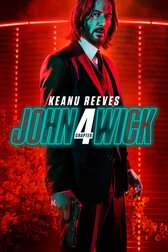
John Wick wants his freedom back. He skips the nationwide bit, goes worldwide in Chapter 4 against the High Table and he’s bad, sooo bad as in he’s really good, and the movie is good; all is good. Make that better than good. Better than the previous three, which were also really good. Do yourself a favor and watch.
The core team is back for Chapter 4. Chad Stahelski directs again as he did in the first three Wick movies. Stahelski, a former stunt coordinator and stuntman, co-founder of design company 87Eleven, debuted as a director in the first John Wick garnering several Best First Feature awards. He is producing the upcoming Ballerina, a John Wick spinoff set in a time between John Wick Chapter 3 – Parabellum and John Wick Chapter 4.
Shay Hattan returns as screenwriter as he was in Chapter 3. Although only 29 years old or 30 depending on who you ask, Hattan has already established himself as a force in Hollywood. His upcoming writing projects include Ballerina and Rebel Moon, a sci-fi, space action movie.
Tyler Bates and Joel J. Richard served up the music for all four movies. Bates has also worked on the two Guardians of the Galaxy movies, Deadpool 2, Fast and Furious: Hobbs and Shaw. In his past life he wrote, produced, and played guitar for the band Marilyn Manson. Richard’s efforts beyond the Wick movies are mostly confined to movie shorts and tv series which include The Andromeda Strain and Quantico.
Reeves, Reddick, and McShane keep it fun and tite. Reeves is John Wick. It is his role, and it will be a long time before they find someone else to play the role, if ever. Wick will endure — as long as Disney never buys the rights to the franchise.
Just for fun Reeves as John Wick spoke 511 words in the first movie which ran for 101 minutes. Normal speech is 100-130 words per minute. 380 words in the second movie with a duration of 122 minutes. An unknown number in the third movie and 380 words again in Chapter 4 which came in at 169 minutes. If Reeves and Eastwood ever team up, they could do an entire movie without saying a word.
Ian McShane was an excellent choice as the manager of The Continental. British suave, debonair, unflappable but the years are taking their toll. He will be 81 in September of 2023.
Lance Reddick died on 17 March 2023 at the age of sixty. Much too short of a time on this planet, much too soon to leave. RIP.
Fishburne contines in his role as the Bowery King but only in a few quick scenes well into this movie plus the closing scene. His first scene in Chapter 4 where he delivers a ‘I am God’ speech is perplexing. This scene could have been pared down by two thirds without any loss of continuity or meaning.
Long live John Wick. If spinoffs are the answer, I’ll take ’em and it will be good.
Awards: Fantasia International Film Festival 2022 — Best International Feature Award
Directed by: Franklin Ritch
Written by: Franklin Ritch
Music by: —
Cast: Tatum Matthews, David Girard, Sinda Nichols, Franklin Ritch, Lance Henriksen
Film Locations: —
Budget: Low Budget
Worldwide Box Office: Limited Release – Unknown
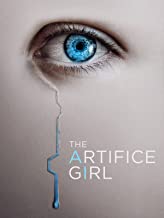
The beginning of the movie finds a computer programmer, Gareth played by Franklin Ritch, being interrogated by government agents questioning his ties to various pedophiles operating around the world. As the scene progresses, we learn that the programmer has created an artificial intelligence program represented by a nine-year-old girl avatar named Cherry. She entices, online, child molesters and pedophiles, learns their identities, and reports them, through Gareth, to the authorities.
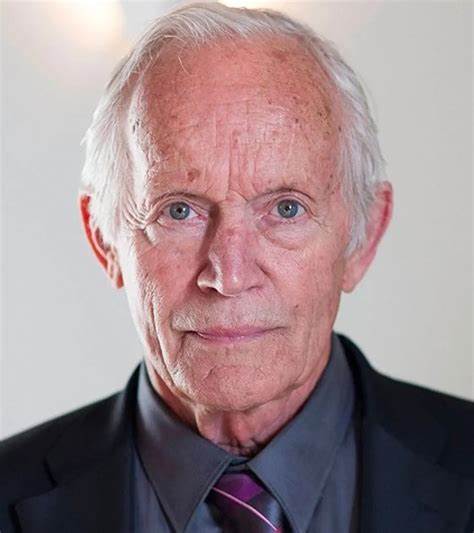
The movie is divided into three main scenes progressing linearly in time. The first scene opens with Gareth in his early to mid-twenties. The second scene is 15 years into the future with the same actors aged 15 additional years except Cherry who is still nine years old. The final scene is even further into future where Gareth is an old man played by Lance Henriksen. Cherry hasn’t aged a day.
I found the choice of Henriksen to play Gareth simply sublime. He played a synthetic human named Bishop with a heroic ‘heart’ in the 1986 movie Aliens and the living human Bishop with an evil heart in the 1992 Alien 3 movie.
For a low budget movie everything is done right, almost to perfection. The only quibble is Sinda Nichols’ over the top acting in the opening scenes but that is more of a ding on the screenplay and direction rather than the performance. Tatum Matthew’s acting is very good considering her age. She maintains a slight mechanical inflected voice throughout the movie which seems fitting for a computer-generated delivery.
This movie is worth your investment of 93 minutes not just because it is well done but also there is some thinking to be done. The thinking isn’t heavy. It just comes along for the ride. A few of the same questions addressed in the Alien movies, and others, by Henriksen’s Bishop roles are reprised in The Artifice Girl. Are humans good or evil for creating Cherry? Is Cherry ultimately evil or good? Do humans understand the consequences of AI? Should you do something just because you can?
(Picture above left: Tatum Matthews age 14. Picture above right is Lance Henriksen age 83.)
Roger Zelazny was a giant of science fiction and fantasy from the mid-1960s till his death in 1995 at the age of 58. For 42 years, beginning slow, learning to crawl in 1953, sprinting from the mid-60s onward, his prodigious writing produced 46 novels and novellas, more than 140 short stories, and plethora of poems, chapbooks, anthologies, and collections which earned him six Hugos and three Nebula Awards.
Zelazny’s prolific output flowed from an inventive mind wrapped around the mythology and literary fiction of the distant past. Homer to Shakespeare, Greek gods to Norse myths — Zelazny’s fictional future was filled with characters reprising roles from civilization’s long-gone coterie of rogues and heroes, some real, most not.
His greatest commercial achievement, the ten novels of Amber weave through the book’s fictional universe’s two true worlds: Amber, an Arthurian legend with Shakespearean Histories and Chaos, Greek myth at the edge of the abyss with all else in between being nothing but shadow of no real substance. Zelazny credits Farmer’s World of Tiers and French legend including the Song of Roland for inspiration in writing Amber with allusion to much that is Shakespeare: Hamlet, As You Like It, Julius Ceasar, and many of the other Histories and Romances. With an M.A. in Jacobean literature and a love of poetry it takes little imagination to suspect the shadows of Amber may also have a connection to Shakespeare’s Sonnet 53:
What is your substance, whereof are you made, That millions of strange shadows on you tend? Since every one hath, every one, one shade, And you but one, can every shadow lend. …
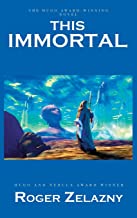
This Immortal or …And Call Me Conrad is a story of Greek myth meeting nuclear Armageddon of Earth. With the remaining population of a couple million living in the few places left on Earth that aren’t toxic, the galactic future appears to belong to the Vegans. The Vegans, from the star system of Vega, who may incidentally have been herbivores, were blue skinned aliens preferring humans as a source of cheap labor and prostitution and not much else. A Vegan author has come to Earth to write a book on the remaining locations of civilizational wonder left on the planet. He has requested that Conrad serve as his tour guide.
Conrad or Konstatin Nomikos, a young man, a rather ugly young man of innumerable years bearing a mysterious past would rather not. Would rather not serve as a tour guide. Would rather not serve as protector of a blue alien that Conrad’s former freedom party wishes to kill. But he does because he is curious, and it may be important.
With promises to protect and to serve Conrad, the blue alien, a few old acquaintances from his old freedom party and a hired assassin set off to survey the Earth’s past glories.
The story plays out as a film noir in words. A detective novel solving mysteries that may or may not be crimes. A cynical protagonist questioning motivations of all. A page-turner of mutant battles, robot wrestling, life squabbles, and glib dialogue. A piece-by-piece narrative of what Conrad wants and who he is. All brought to you through the lens of ancient Greek gods, myth, and literature.
MajorAwards:
1966 Hugo Novel Award for: …And Call Me Conrad (published in book form as This Immortal)
1966 Nebula Novelette Award: The Doors of His Face, the Lamps of His Mouth
1966 Nebula Novella Award: He Who Shapes
1968 Hugo Novel Award: Lord of Light
1976 Hugo and Nebula Novella Award: Home Is the Hangman
1984 Hugo Novelette Award: Unicorn Variation
1986 Hugo Novella Award: 24 Views of Mt. Fuji, by Hokusai
1987 Hugo Novelette Award: Permafrost
Bibliography:
Novels and Novellas:
1965…And Call Me Conrad
1966 This Immortal (book form of the serialized …And Call Me Conrad)
1966 The Dream Master
1967 Lord of Light
1969 Creatures of Light and Darkness
1969 Isle of the Dead (Francis Sandow)
1969 Damnation Alley
1970 Nine Princes in Amber (Chronicles of Amber)
1971 Jack of Shadows
1972 The Guns of Avalon (Chronicles of Amber)
1973 Today We Choose Faces
1973 To Die in Italbar (Francis Sandow)
1975 Sign of the Unicorn (Chronicles of Amber)
1976 Deus Irae (co-authored with Philip K. Dick)
1976 Home is the Hangman
1976 Doorways in the Sand
1976 Bridge of Ashes
1976 The Hand of Oberon (Chronicles of Amber)
1978 The Courts of Chaos (Chronicles of Amber)
1979 Roadmarks
1980 Changeling (Wizard World)
1981 Madwand (Wizard World)
1981 The Changing Land
1982 Coils (co-authored with Fred Saberhagen)
1982 Dilvish, the Damned
1982 Eye of Cat
1985 Trumps of Doom (Chronicles of Amber)
1986 Blood of Amber (Chronicles of Amber)
1987 Sign of Chaos (Chronicles of Amber)
1987 A Dark Traveling
1989 Knight of Shadows (Chronicles of Amber)
1989 Wizard World (omnibus)
1990 The Mask of Loki (co-authored with Thomas T. Thomas)
1990 The Black Throne (co-authored with Fred Saberhagen)
1991 Bring Me the Head of Prince Charming (The Millennial Contest co-authored with Robert Sheckley)
1991 Prince of Chaos (Chronicles of Amber)
1992 Flare (1992) (co-authored with Thomas T. Thomas)
1992 Here There Be Dragons (written 1968/69)
1992 Way Up High (written 1968/69)
1993 If at Faust You Don’t Succeed (The Millennial Contest co-authored with Robert Sheckley)
1993 A Night in the Lonesome October
1994 Wilderness (1994) (co-authored with Gerald Hausman)
1995 A Farce to Be Reckoned With (The Millennial Contest co-authored with Robert Sheckley)
1998 Psychoshop (co-authored with Alfred Bester)
1997 Donnerjack (posthumous collaboration with Jane Lindskold)
1999 Lord Demon (posthumous collaboration with Jane Lindskold)
2009 The Dead Man’s Brother (written in 1971)
Short Stories:
1953 Conditional Benefit
1954 And the Darkness is Harsh
1954 Mr. Fuller’s Revolt
1955 Youth Eternal
1958 The Outward Sign
1962 Horseman!
1962 Passion Play
1962 The Teachers Rode a Wheel of Fire
1962 Moonless in Byzantium
1963 On the Road to Splenoba
1963 Final Dining
1963 The Borgia Hand
1963 A Thing of Terrible Beauty
1963 Circle has Her Problems
1963 The Malatesta Collection
1963 The Stainless Steel Leech
1963 Monologue for Two
1963 Threshold of the Prophet
1963 A Museum Piece
1963 Mine is the Kingdom
1963 King Solomon’s Ring
1963 The Misfit
1963 A Rose for Ecclesiastes
1963 The Great Slow Kings
1964 Lucifer
1964 The Salvation of Faust
1964 The New Pleasure
1964 The Monster and the Maiden
1965 But Not the Herald
1965 He Who Shapes (shorter version of The Dream Master)
1965 The Doors of His Face, the Lamps of His Mouth
1965 Passage to Dilfar (Dilvish)
1965 Of Time and Yan
1965 The Furies
1965 The Drawing
1965 Thelinde’s Song (Dilvish)
1965 Devil Car (Sam Murdock)
1966 Synopsis of Part One…And Call Me Conrad (became This Immortal)
1966 Comes Now the Power
1966 Love is an Imaginary Number
1966 Divine Madness (republished by Lightspeed Magazine 2018)
1966 For a Breath I Tarry
1966 The Bells of Shoredan (Dilvish)
1966 Late, Late Show
1966 This Moment of the Storm
1966 The House of the Hanged Man
1967 The Knight for Merytha (Dilvish)
1967 Dawn (Lord of Light)
1967 The Man Who Loved the Faioli
1967 In the House of the Dead (excerpt from Creatures of Light and Darkness)
1967 Angel, Dark Angel
1967 Damnation Alley
1967 The Last Inn on the Road (with Dannie Plachta)
1967 A Hand Across the Galaxy
1967 Death of the Executioner (Lord of Light)
1968 Dismal Light (Francis Sandow)
1968 Heritage
1968 Stowaway
1968 Corrida
1968 He That Moves
1968 Song of the Blue Baboon
1968 Creatures of Light
1969 The Eve of RUMOKO (Nemo)
1969 The Steel General
1969 Creatures of Darkness
1969 Come to Me Not in Winter’s White (with Harlan Ellison)
1969 The Year of the Good Seed (with Dannie Plachta)
1970 The Man at the Corner of Now and Forever
1970 My Lady of the Diodes
1970 Alas! Alas! This Woeful Fate
1971 Sun’s Trophy Stirring
1971 Add Infinite Item
1973 ‘Kjwalll’kje’k’koothaïlll’kje’k (Nemo)
1974 The Engine at Heartspring’s Center
1975 Home is the Hangman (Nemo)
1975 The Game of Blood and Dust
1976 TheForce That Through the Circuit Drives the Current
1977 No Award
1977 Is There a Demon Lover in the House?
1978 Shadowjack (Jack of Shadows)
1978 Stand Pat, Ruby Stone
1979 Halfjack
1979 Go Starless in the Night
1979 A Very Good Year …
1979 Garden of Blood (Dilvish)
1979 The White Beast (Dilvish)
1980 The Places of Aache (Dilvish)
1980 Exeunt Omnes
1980 Fire and/or Ice
1980 The George Business
1981 The Changing Land (Dilvish)
1981 Tower of Ice (Dilvish)
1981 Last of the Wild Ones (Sam Murdock)
1981 Recital
1981 Walpurgisnacht
1981 Unicorn Variation
1981 And I Only Am Escaped to Tell Thee
1981 The Naked Matador
1981 The Horses of Lir
1981 Madwand (excerpt)
1982 A City Divided (Dilvish)
1982 Devil and the Dancer (Dilvish)
1982 Eye of Cat (excerpt)
1983 Shadowjack (character Outline)
1983 Mana from Heaven (Magic Goes Away)
1984 Itself Surprised (Berserker with Fred Saberhagen)
1984 LOKI 7281
1985 Dayblood
1985 A Mars rózsája
1985 Dreadsong
1985 24 Views of Mt. Fuji, by Hokusai (Cthulhu Mythos)
1985 Prolog to Trumps of Doom (Amber)
1986 The Bands of Titan
1986 Permafrost
1986 Night Kings
1987 The Sleeper (Wild Cards-Croyd Crenson)
1987 Quest’s End
1987 Ashes to Ashes (Wild Cards-Croyd Crenson)
1988 Concerto for Siren and Serotonin I-VIII (Wild Cards)
1988 Deadboy Donner and the Filstone Cup
1988 Concerto for Siren and Serotonin (Wild Cards-Croyd Crenson)
1989 Kalifriki of the Thread
1990 The Deadliest Game
1992 Flare (excerpt with Thomas T. Thomas)
1992 Way Up High
1992 Come Back to the Killing Ground, Alice, My Love (Kalifriki)
1993 The Long Sleep (Wild Card-Croyd Crenson)
1993 Prince of the Powers of This World
1994 The Salesman’s Tale (Amber)
1994 Tunnel Vision
1994 Godson
1994 The Shroudling and The Guisel (Amber)
1995 Blue Horse, Dancing Mountains (Amber)
1995 Coming to a Cord (Amber)
1995 Epithalamium
1995 The Long Crawl of Hugh Glass
1995 The Three Descents of Jeremy Baker
1995 Lady of Steel
1995 Postlude (Forever After)
1995 Prelude the First (Forever After)
1995 Prelude the Second (Forever After)
1995 Prelude the Fourth (Forever After)
1995 Prelude the Third (Forever After)
1996 Hall of Mirrors (Amber)
2000 Lord Demon (excerpt with Jane Lindskold)
2005 A Secret of Amber (Amber. Co-authored with Ed Greenwood between 1977 and 1992)
2009 Sandow’s Shadow (Francis Sandow outline)
2009 Shadowland (Jack of Shadows outline)
2009 The Sleeper (Wild Cards-Croyd Crenson outline)
2009 Hand of the Master
2009 Studies in Saviory
2009 The Great Selchie of San Francisco Bay
2009 The Juan’s Thousandth
2009 There Shall Be No Moon!
2009 Through a Glass, Greenly
2009 Time of Night in the 7th Room
2009 Bridge of Ashes (outline)
2009 Doorways in the Sand (summary)
2009 Guns of Avalon: Deleted Sex Scene
2009 The Hounds of Sorrow
2009 The Insider
2009 The Window Washer
2009 Alien Speedway (outline)
2009 Changeling (film outline)
2009 Coils (outline)
2009 Donnerjack, of Virtù: A Fable for the Machine Age (outline)
2009 Dysonized Biologicals (outline)
2009 Godson: A Play in Three Acts
2009 Head Count
2009 The Ahriman Factor (outline)
2019 Seven Tales of Amber (Amber)
Poetry:
1974 Poems
1980 When Pussywillows Last in the Catyard Bloomed
1981 To Spin Is Miracle Cat
1996 Hymn to the Sun: An Imitation
2011 Collected Stories (poetry and unpublished works)
Snippets and Chapbooks:
1974 Poems
1979 The Bells of Shoredan
1980 For a Breath I Tarry
1980 The Last Defender of Camelot
1981 A Rhapsody in Amber
1986 The Bands of Titan / A Freas Sampler / A Dream of Passion
1991 The Doors of His Face, the Lamps of His Mouth
1992 Here There Be Dragons
1992 Way Up High
1996 Home is the Hangman
1994 And the Darkness is Harsh
2003 The Last Defender of Camelot
Collections:
1967 Four for Tomorrow
1969 Three for Tomorrow
1971 The Doors of His Face, The Lamps of His Mouth, and Other Stories
1976 My Name Is Legion (Nemo)
1978 The Illustrated Roger Zelazny
1980 When Pussywillows Last in the Catyard Bloomed
1980 The Last Defender of Camelot (Pocket Books and SFBC)
1981 The Last Defender of Camelot (Underwood-Miller)
1981 Today We Choose Faces / Bridge of Ashes (omnibus)
1981 A Rhapsody in Amber
1981 To Spin is Miracle Cat
1981 Alternities #6
1982 Dilvish, the Damned
1983 Unicorn Variations
1989 Frost & Fire (1989)
1991 Gone to Earth
1992 The Graveyard Heart/Elegy for Angels and Dogs
1992 Gone to Earth / Author’s Choice Monthly #27 (Pulphouse)
1996 Hymn to the Sun: An Imitation
2001 Isle of the Dead / Eye of the Cat (omnibus)
2002 The Last Defender of Camelot (ibooks)
2003 Manna from Heaven
2003 To Die in Italbar / A Dark Traveling (omnibus)
2005 The Doors of His Face, The Lamps of His Mouth, and Other Stories
2009 The Collected Stories of Roger Zelazny
Volume 1: Threshold
Volume 2: Power & Light
Volume 3: This Mortal Mountain
Volume 4: Last Exit to Babylon
Volume 5: Nine Black Doves
Volume 6: The Road to Amber
2018 The Magic – October 1961-October 1967
2022 The Scarlet Lady
2022 Kalifrike
Anthologies:
1953 Thurban 1 #3
1955 Senior Scandals
1964 The Graveyard Heart (Party Set)
1968 Nebula Award Stories Three
1968 Nozdrovia #1
1989 He Who Shapes / The Infinity Box (with Kate Wilhelm)
1990 Elegy for Angels and Dogs / The Graveyard Heart (Party Set with Walter Jon Williams)
1990 Home is the Hangman / We, in Some Strange Power’s Employ, Move on a Rigorous Line (with Samuel R. Delany)
1995 Forever After
1995 Warriors of Blood and Dream (with Martin H. Greenberg)
1995 Wheel of Fortune
1996 The Williamson Effect
2017 Shadows and Reflections: Stories from the Worlds of Roger Zelazny
2022 The Night Kings and the Heirs
Non-Fiction:
1988 Roger Zelazny’s Visual Guide to Castle Amber (with Neil Randall)

 elsToday