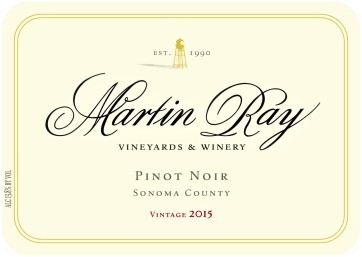
 Pinot Noir from Los Carneros and Russian River Valley, Sonoma County, North Coast, California, US
100% pinot noir
13.8% alcohol
Purchased: 2 July 2017 – $18.99
Open: 15 July 2017
els: 9.1/10
James Suckling: 95
Cellar Tracker: 87
The US, when first discovered by the Vikings, was covered in vines and they named the area Vineland. Unfortunately the early settlers discovered that those vines produced a terrible wine. The effort to find a suitable vine for the US began in earnest in the 1600s with the introduction of the Mission grape to Texas, Arizona, and New Mexico and Vitis vinifera to Virginia. America’s first commercial winery was not established until 1798, finding its home in Kentucky. Today the US is the 4th largest producer of wine in the world, behind Spain and ahead of Argentina, accounting for 8% of the world’s wine production. There are 89 regions in the country planting 129 prime varieties of grape. The country has almost 8000 wineries that produced 800 million gallons of wine in 2016.
The California wine industry was initially established by Spanish in the 18th century, planting the Mexican sourced “black grape” around their Catholic missions to be used for religious ceremonies and enjoying Californian sunsets. The “black grape” or the Mission grape, was originally brought to the new world buy Hernan Cortes in the 16th century. It did nothing of note for the Aztecs but it dominated the state’s industry for almost 200 years.
California is far and away the largest grower and producer of wine in the country accounting for about 85% of US production. The state still ranks as the 4th largest producer in the world just behind France, Italy, and Spain; without including the rest of country. There are over 600,000 acres of vines, 5900 growers and just shy of 4700 wineries in the state producing 285 million cases of wine in 2016. Chardonnay and Cabernet Sauvignon are the most common wine varieties, accounting for about 90,000 and 85,000 acres planted, respectively. In 2016 the state had about 44,600 acres planted in Pinot Noir grapes.
The state has 5 main growing regions: Central Coast, Inland Valleys, North Coast, Sierra Foothills, and South Coast. Within these 5 regions are upwards to 200 AVAs. The AVAs are defined by geography only; counties are automatically classified as an AVA without further registration with the federal government. 85% of the grapes used on an AVA that’s smaller than a county, must be grown there but there are no restrictions on what grapes or amounts that can be used. If it is a county labeled AVA only 75% of the grapes need to come from that area.
The North Coast region, just north of San Francisco, includes the counties of Lake, Marin, Mendocino, Napa, Sonoma, and Solano. The area stretches 100 miles, north to south, and about 50 miles east to west. From Clear Lake on the eastern boundary to the Pacific Ocean on the western edge, the area includes the valleys just north of the San Francisco Bay to the North Coast Mountains in the northern part of the region. The North Coast contains almost half of all the state’s wineries spread over 3 million acres with more than 130,000 acres dedicated to vineyards within 50 smaller AVAs. The predominate grapes are Cabernet Sauvignon and Chardonnay.
Sonoma County wine history dates back to the early 1800s when a Catholic priest established a vineyard around the San Francisco Solano Mission which is now in the city of Sonoma. By the early 1920s the county boasted 20,000 acres of vines and 250 plus wineries. Prohibition knocked Sonoma’s wine industry down to a shadow of its former glory and it took almost 60 years for the county to recover from that social experiment.
Sonoma County has a rich, heterogeneous geography of mountains and valleys that present a profusion of soils and climates that make the French landscape look like vanilla pudding. The area’s soils are heavily influenced by volcanism along the county’s eastern boundary in the Mayacamas Mountains. The volcanoes include the Plio-Pleistocene aged Mount St. Helena and Hood Mountain which, among others, spiked the surrounding soils with ash and other wine-loving volcanic ejecta. The climate of the area is a product of its proximity to the Pacific Ocean which has endowed the area with foggy mornings, warm days, not too hot, and cool nights.
Sonoma County is the North Coast’s largest AVA, about 50 miles on a side, containing more than third of North Coast region’s grape acreage, along with 1800 growers, and 400 wineries. The county grows 66 varieties of grapes on 60,000 acres but just 7 of these account for about 90% of all the wine produced. Chardonnay, Pinot Noir, and Cabernet Sauvignon are the top 3 grapes grown. The area produces about 6% of California’s total wine production versus 4% for Napa.
The county is further subdivided into 3 large AVAs loosely based on geography: Northern Sonoma, Sonoma Coast, and Sonoma Valley with each of these containing an additional 15 distinct AVAs within their borders. These include: Alexander Valley, Bennett Valley, Carneros Sonoma, Chalk Hill, Dry Creek Valley, Fort Ross-Seaview, Fountaingrove District, Green Valley, Knights Valley, Moon Mountain District, Petuluma Gap, Pine Mountain – Cloverdale Peak, Rockpile, Russian River Valley, Sonoma Mountain. Petuluma Gap was granted AVA status in 2018.
The Los Carneros AVA straddles Sonoma and Napa Counties along the north coast of San Pablo Bay, 25-30 miles north of San Francisco. Vineyards date back to the 1830s and the first winery opened in the 1870s. There are approximately 9000 acres planted in vine and 45 wineries in the AVA. Chardonnay and Pinot Noir are the most common varieties planted. The soils are primarily clay with poor drainage and low to moderate fertility. The growing season temperatures range from the low 50s to the low 80s with rainfall ranging from 0.0-2.0″ per month. The area is the windiest and coolest of all Napa and Sonoma Country AVAs.
The Russian River Valley AVA is located in Sonoma County along the southern bank of the Russian River as it turns west towards the Pacific Ocean. The city of Santa Rosa defines AVAs southern boundary and the city is about 50 miles northwest of San Francisco. There are 10,000 acres of vines planted in the valley with Chardonnay and Pinot Noir comprising 42% and 29% of all grapes harvested, respectively. The climate is cool, known for its early morning fogs coming up the river. Temperatures can change significantly in 24 hours with a 35-40°F drop at night being common. Rainfall averages 2-4″ per month except July and August when rains are very rare. The soils are typically sand-rich or clay-rich loams.
Pinot Noir, native to the Burgundy region of France, is a cool climate, thin-skinned, fussy grape. It is a popular drinking wine, ranking as number 10 in the world by acreage. France and the US are the largest growers of the vine, each with about 75,000 acres under cultivation out of 215,000 acres worldwide. The grape produces a garnet to ruby colored wine with low tannins and medium-body. The low tannins generally mean it does not age well but that property can be quite unpredictable. Young wines have aromas of cherries and raspberry but older wines tend to acquire more earthy smells.
Martin Ray produced iconic wines in the Santa Cruz Mountain area from 1943 to 1972. Courtney Benham, recognizing the dedication and art that Ray brought to his wines and their intrinsic value, purchased the Martini and Prati winery and the Martin Ray brand in 1990 and has been producing artisanal wines ever since. In 2003 he moved the winery to the cool marine climate of the Russian River Valley in Sonoma County, California, 50 miles northwest of the Golden Gate Bridge. Notable, for no earthly reason, the winery is about 6 miles west of the Charles M. Schulz Museum. The winery has roughly 12 acres of rather newly planted, 2011 Pinot Noir vines.
The grapes for this Martin Ray Pinot Noir are predominately sourced from Martin Ray’s neighbor’s vineyards; with their permission of course, the Ricioli and Foppian Vineyards being the main suppliers. These vineyards are along the Russian River and experience a growing season temperature range of 47-85°F with rains bringing 2-4″ per month. July and August are very dry though. The soils are sand-rich loams. 2015 was a warm, dry (drought) year with almost no rain. The grapes ripened early with low yields but excellent quality.
The different vineyard’s grapes were fermented separately in open top vessels. They were aged in new and used French oak barrels for 11 months.
The wine has a brilliant ruby-red color with aromas of raspberry, plum and earthy mushroom. A smooth medium to full-bodied, delicious tongue treatment leading to a satisfying balanced finish. An outstanding wine which I would grade just a few notches below James Suckling’s rating but I may quibble.
Snoopy may have wanted a root beer but Linus would have preferred sipping this Pinot along with some dried salmon, Jarlsberg cheese and salty crackers.
An outstanding wine at a reasonable price. Drink this year but likely good until 2020-2022. Decant and aerate for one hour, or more, before drinking.
24.99 Total Wine
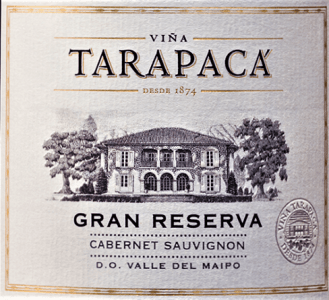 Cabernet Sauvignon from Isla de Maipo, Maipo Valley, Central Valley, Chile
 elsToday