Claret is an English term for Bordeaux wines that traces its origins back to 16th century. The name derives from the French word “clairet,” which described a lighter, more rosé-like style from the Bordeaux region.
Originally, the grapes used to make this wine were Cabernet Sauvignon, Merlot, and Cabernet Franc, similar to today’s right-bank Bordeaux. The left bank added Malbec, Petit Verdot, and Carménère to the mix.
By the 17th and 18th centuries, clarets evolved, through better maceration, aging, and blending techniques, into a darker, full-bodied wine we would recognize today as a Bordeaux. It became a major export to England and the world.
Trivia: Charles Dickens in ‘Martin Chuzzlewit’, ‘The Pickwick Papers’, and ‘Great Expectations’; Wilkie Collins in ‘The Moonstone’; Anthony Trollope in ‘The Belton Estate’; William Thackeray in ‘Vanity Fair’; and George Eliot in ‘Middlemarch’ all mention the drinking of claret, usually at their dinners.
In these novels the claret was diluted with water to reduce the alcohol content, making it more palatable and easier to drink over long meals or gatherings and to stretch the supply.
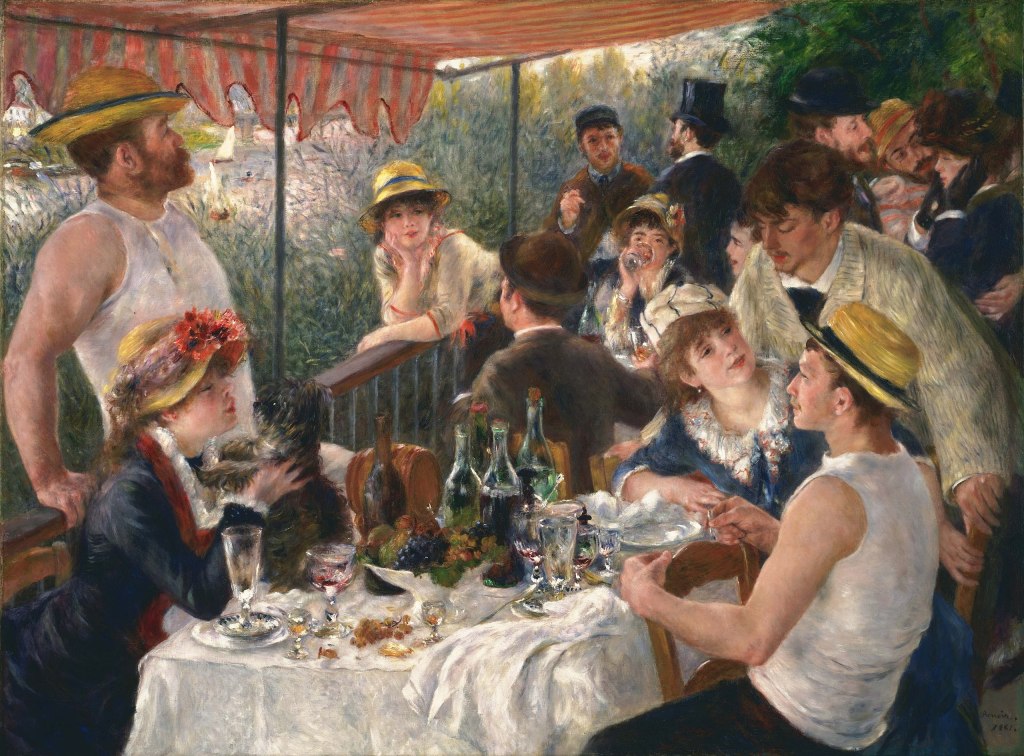
Source: Wine Spectator. Decanter. Graphic: Luncheon of the Boating Party by Pierre-Auguste Renoir, 1881. Public Domain.
 elsToday