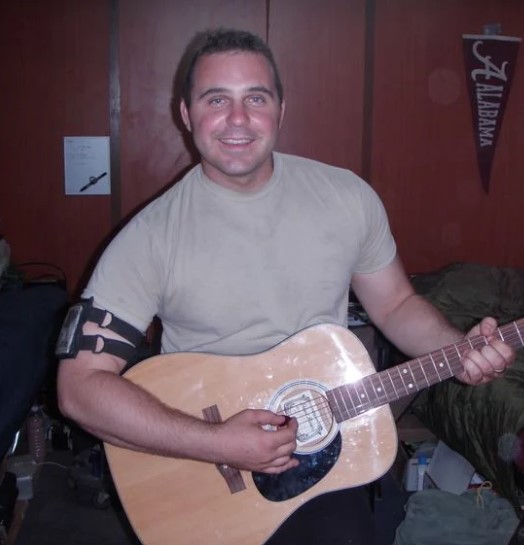
Journalism – Scott Thomas Beauchamp

In 2007 The New Republic published three articles by an American Army private, Scott Thomas Beauchamp serving in Iraq titled “Shock Troops”, detailing misdeeds and possible war crimes occurring in and near his forward operating base, Falcon, in Bagdad. The articles were, in part, fact checked by The New Republic Fact-Checker Elspeth Reeve who was also Private Beauchamp’s wife.

Beauchamp claimed that army personnel found mass graves that contained children, and targeted wild dogs for fun, and Beauchamp horribly insulted a woman disfigured by an IED.

The US Army and other news outlets could find no collaboration or substantiation for the events described by Beauchamp. In late 2007 The New Republic stated that they could no longer stand by Beauchamp’s stories.

Reeve is currently a correspondent for CNN. There is no information on the current activities or whereabouts of Beauchamp.

Source:  Fog of War, The New Republic.  Alchetron, 2024. Graphic: Beauchamp by Alchetron, copyright unknown.

Journalism — Ruth Shalit Barrett

Ruth Shalit Barrett, American writer and journalist, resigned from The New Republic in 1999 for alleged instances of plagiarism and inaccurate reporting for stories written in 1994 and 1995. The Atlantic in 2020 retracted a freelance story by her for inventing sources and having lied to the editors and fact-checkers about details in her reporting.

In 2022 Shalit Barrett sued the Atlantic for $1 million claiming that the magazine “smeared” her reputation. The Atlantic says her lawsuit is without merit. The lawsuit is unresolved as of mid-2024.

Source: The Atlantic Issues Scathing Correction by Blake Montgomery, Daily Beast, 2020. Barrett Sues the Atlantic by Howie and Gerstein, Political, 2022.  Graphic: Shalit Barrett, The Wrap, 2020.

Journalism – Stephen Glass:

Stephen Glass was an American serial fabrication specialist or as they call it in the trade, a journalist, working for The New Republic from 1995 to 1998. He was a rising star in the profession, a young Turk with a strong work ethic but he was manipulative and emotionally controlling towards his superiors. And just about everything he wrote was a lie. For his severe allergic reaction to telling truth, he was fired from The New Republic in 1998.

Buzz Bissinger in Vanity Fair wrote, “The New Republic, after an investigation involving a substantial portion of its editorial staff, would ultimately acknowledge fabrications in 27 of the 41 bylined pieces that Glass had written for the magazine in the two-and-a-half-year period between December 1995 and May 1998. In Manhattan, John F. Kennedy Jr., editor of George, [Glass contributed to other publications while working full time at The New Republic including George] would write a personal letter to Vernon Jordan apologizing for Glass’s conjuring up two sources who had made juicy and emphatic remarks about the sexual proclivities of the presidential adviser and his boss. At Harper’s, Glass would be dismissed from his contract after a story he had written about phone psychics, which contained 13 first-name sources, could not be verified.”

A 2003 critically acclaimed biographical movie covering Glass’s scandal as a journalist, Shattered Glass, explores what happens when a profession loses the public’s trust. Except it never really answers that question or even why Glass could not tell the truth. Other than that, the audiences loved it.

He currently works as a paralegal at the law firm Carpenter, Zuckerman & Rowley, serving as the director of special projects and trial-team coordinator.

Source: Michael Noer in Forbes, 2014. Buzz Bissinger in Vanity Fair, 2007. The Famous People. IMDb. Graphic from TMDB.