Money for Nothing

In 1985 Dire Straits released their 5th studio album “Brothers in Arms”, becoming their most successful album while attaining several firsts for the band and British music. It was the first album to sell over a million CDs and the first British album to go 10x Platinum in the UK, eventually reaching 14x platinum.

The whimsical, tongue in cheek firmly planted, “Money for Nothing”, the 2nd track on “Brothers in Arms” was to become their greatest commercial success reaching No. 1 on the Billboard Hot 100 in the United States and winning the Grammy Award for Best Rock Performance by a Duo or Group with Vocal. The song’s partially animated music video was a staple on MTV when the channel focused on music videos.

Mark Knopfler got the idea from listening to hardware store employees who thought rock stars had it easy. He, however, found a successful musician’s life exhausting. In 2009, he remarked, “If anyone can tell me one good thing about fame, I’d be very interested to hear it.”

Source: PDMusic.org. Knopfler…by Ian Young, BBC, 2009. Graphic: Money for Nothing—Dire StraitsVEVO.

The Last Waltz: A Timeless Rock Odyssey

On Thanksgiving Day in 1976, Bill Graham’s legendary Winterland Ballroom in San Francisco played host to an unparalleled musical spectacular: The Last Waltz. Orchestrated by the visionary filmmaker Martin Scorsese and the iconic concert promoter Bill Graham, this five-hour marathon has earned its place in history as the greatest rock documentary ever made.

A star-studded fantasy night where rock, roots rock, blues, and folk giants converged. The Band taking center stage, were joined by a stellar lineup including Bob Dylan, Dr. John, Van Morrison, Joni Mitchell, Ringo Starr, Eric Clapton, and many more. Each performance was a masterpiece, weaving together years of musical brilliance into a single, unforgettable tapestry.

Michael Wilmington of the Chicago Tribune and Rolling Stone have rightfully hailed this epic concert as a monumental achievement, a time capsule of musical greatness that continues to inspire and captivate audiences nearly 50 years later.

The Last Waltz wasn’t just a concert; it was a celebration of artistic vision, camaraderie, and the timeless power of music.

Graphic: The Last Waltz Official Trailer #2, 1978, Copyright Last Waltz Productions.

You Still Got Me

Beth Hart’s 11th solo studio album, the October 2024 release of ‘You Still Got Me’, follows up her 2022 Led Zeppelin tribute album with 11 original songs spanning the genres of blues, rock, pop, ballads, a touch of jazz, and a delightful tongue-in-cheek country nod to Johnny Cash. All songs are written by her, with a little help from Rune Westberg and Glen Burtnik.

While this may not be her best work—those honors go to her collaborations with the incomparable guitarist Joe Bonamassa—listening to the bluesy evolution of her throaty voice is a joy to be cherished and treasured; an album that captures the pure magic that is Beth Hart.

Source: AllMusic. Rock & Roll Muse with Martine Ehrenclou. Graphic: Album Cover and ‘Wanna Be Big Bad Johnny Cash, Provogue, Mascot, October 2024.

Jason Isbell and the 400 Unit

Isbell in a 2020 interview said great songwriting required the ability to build a song that goes beyond personal experience into the realm of emotional storytelling. Storytelling about a perception of the world rather than one’s role or experiences in it.

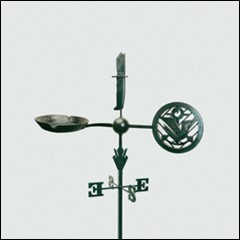
His 2023 album release of ‘Weathervane’ delves predominately into the personal with a nod towards the worldly distractions, more Springsteen than Dylan but it is all a master class in songwriting. Great songwriting is the man not the subject.

Isbell provides 13 tracks of mostly Americana and roots ballads, providing his enchanted interpretations of love, longing, and regret.

The album won the 66th Annual Grammy Award for Best Americana Album.

Source: Apple Music. AllMusic. Graphic: Weathervane album cover, copyright Southeastern Records. The album cover has only two directions S and E.

Blondie

Fifty years ago in 1974, Debbie Harry and Chris Stein formed Blondie in New York from the ashes of their previous and very forgettable group: the Stilettoes. It was an effort of love between the two but for Harry it also allowed her alter ego to express itself to the world.

Stating in her 2019 memoirs “Face It” she says that in the band she was acting out a role, “I was saying things in songs that female singers didn’t really say back then. I wasn’t submissive or begging him to come back, I was kicking his ass, kicking him out, kicking my own ass too. My Blondie character was an inflatable doll but with a dark, provocative, aggressive side. I was playing it up yet I was very serious.”

The group has released 11 studio albums to date including their 1978 Parallel Lines which reached no. 6 on the U.S. charts and no. 1 in the U.K. The album included their no. 1 smash hit Heart of Glass, a universal lament of unrequited love.

Source: Blondie.net. Face It.  Graphic: Blondie, 1977, no known copyright.

Beck-Ola

This week in June of 1969 Jeff Beck released his second studio album: “Beck-Ola”, and the first album credited to the Jeff Beck Group.  The album peaked on the Billboard 200 at number 15 and is considered a major influence on the future of hard rock and heavy metal.

According to JeffBeck.com the album “cemented the Jeff Beck Group’s place in rock history as one of the prime architects of heavy metal. “It is what it is,” Beck said, recalling the album fondly, “just a snapshot of the situation at the time. The talent was there. We were pioneering heavy rock, big time.”

The album cover is a reproduction of Rene Magritte’s 1958 version of “The Listening Room”.  The apple to Magritte was a symbol for the tension between hidden and visible. Why this painting was chosen for the album remains something of a mystery, but it may just be an expression of adding something new and hidden, heavy metal, to something old and visible, pop and early rock.

The members of the Jeff Beck Group for this album included Beck, Ronny Wood, Rod Stewert, Nicky Hopkins, and Tony Newman, a super group of talent by any measure.

Source: JeffBeck.com. Illustrated Encyclopedia of Rock, 1977. Rene Magritte Organization. Graphic: Beck-Ola Album cover, Epic Records, 1969.

461 Ocean Boulevard

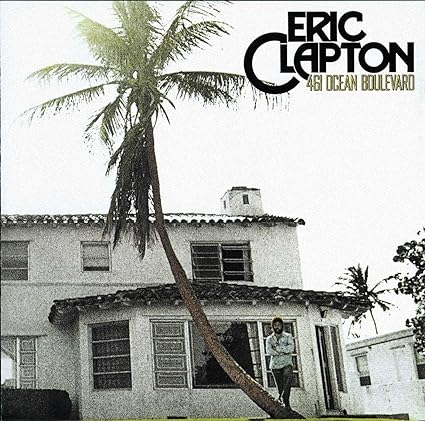
50 years ago, in 1974 Eric Clapton released his second solo album, the hugely successful 461 Ocean Boulevard. It topped the Billboard 200 weekly chart in the USA and reached the top ten in several other countries. It placed number 88 in the Billboard 200 year-end chart and was certified Platinum selling more than two million copies.

The album’s ten tracks run the gambit from hard rock to pop to blues-rock containing 3 new Clapton songs including the theme continuation of Derek & the Dominos, Keep on Growing: Let it Grow. The album’s number one hit, Bob Marley’s: I Shot the Sheriff was released as a single slightly before the album came out in July of 74.  Johnny Otis’s Willie and the Hand Jive, another hit from the album, was released as a single in October of 74.

The album was produced by the legendary Atlantic Records recording engineer, Tom Dowd who also produced the 1970 release of Derek & the Dominos album: Layla and Other Assorted Love Songs.

The album’s title: 461 Ocean Boulevard was the address of the house in Golden Beach, Florida where Clapton and the band stayed in will recording the album at Criteria Studios in Miami.

Source: All Music. Classic Rock Review.

Hey Joe

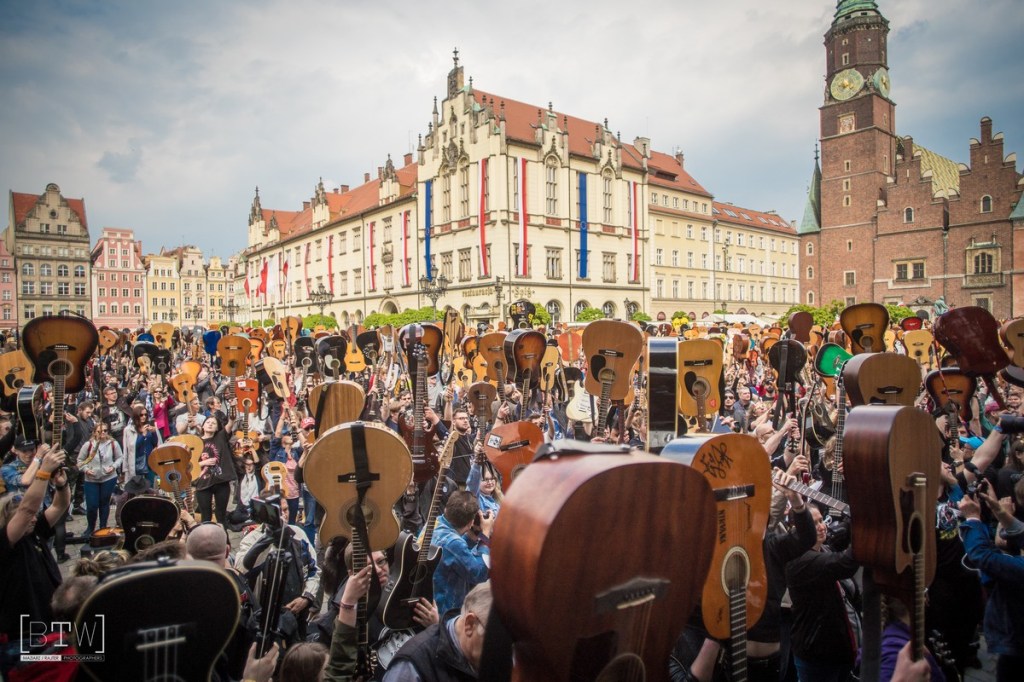
It’s that time of the year when guitarists and Jimi Hendrix fans everywhere trek to Poland for the annual “Thanks Jimi Festival”; a yearly guitar freakout where thousands from Poland and elsewhere gather to try and set a record for number of people playing Jimi Hendrix’s “Hey Joe” simultaneously.

The gig’s history goes back to a Blues Express workshop in 1997 where Leszek Cichonski, a Polish blues guitarist, found himself on stage with 17 other guitarists playing “Hey Joe” thus providing the incentive to answer the theological question of how many guitarists can fit into Wroclaw, Poland’s Main Market Square on the first day in May every year. Below is a list of the records, which, apparently, always need to be broken because the theological limit hasn’t been reached yet.

  • In 2003 “Hey Joe” was played by 588 guitarists.
  • In 2004 the number expanded to 916.
  • In 2005 it went up to 1201.
  • In 2006, 1581.
  • In 2012, 7273. The musicians were led by Jimi Hendrix’s brother, Leon Hendrix.
  • In 2019, 7423.
  • In 2020, because of Fauci cruelty and madness, the event was held online, and 7998 guitarists strummed and boomed out the five chords of “Hey Joe”.
  • In 2023, 7967 guitarists played.

The “Thanks Jimi Festival” will go live again for another record on 1 May 2024.  At this year’s festival thousands will join in and play 10 songs:

  1. Hey Joe by Jimi Hendrix, released as a single in 1966
  2. Foxy Lady by Jimi Hendrix, released on the album “Are You Experienced? in 1967
  3. Voodoo Child by Jimi Hendrix, released on the album “Electric Ladyland” in 1968
  4. Smoke on the Water by Deep Purple, released on the DP album “Machine Head” in 1972. Added to the festival lineup in 2009. The song was written in December 1971. Jimi died on 18 September 1970
  5. Little Wing by Jimi Hendrix, released on the album “Axis: Bold as Love” in 1967
  6. Wild Thing by the Troggs, released in 1966. Jimi played this song live at the Monterey International Pop Festival in 1967 aka The Summer of Love
  7. Red House Blues by Jimi Hendrix, released on the British version of “Are You Experience” in 1967
  8. Thanks Jimmi, by Leszek Cichonski
  9. Kiedy byłem małym chłopcem (When I was a little boy), Composition by Tadeusz Nalepa
  10. Like a Rolling Stone, by Bob Dylan. This song was usually performed at Hendrix’s live shows

Long live Jimi.

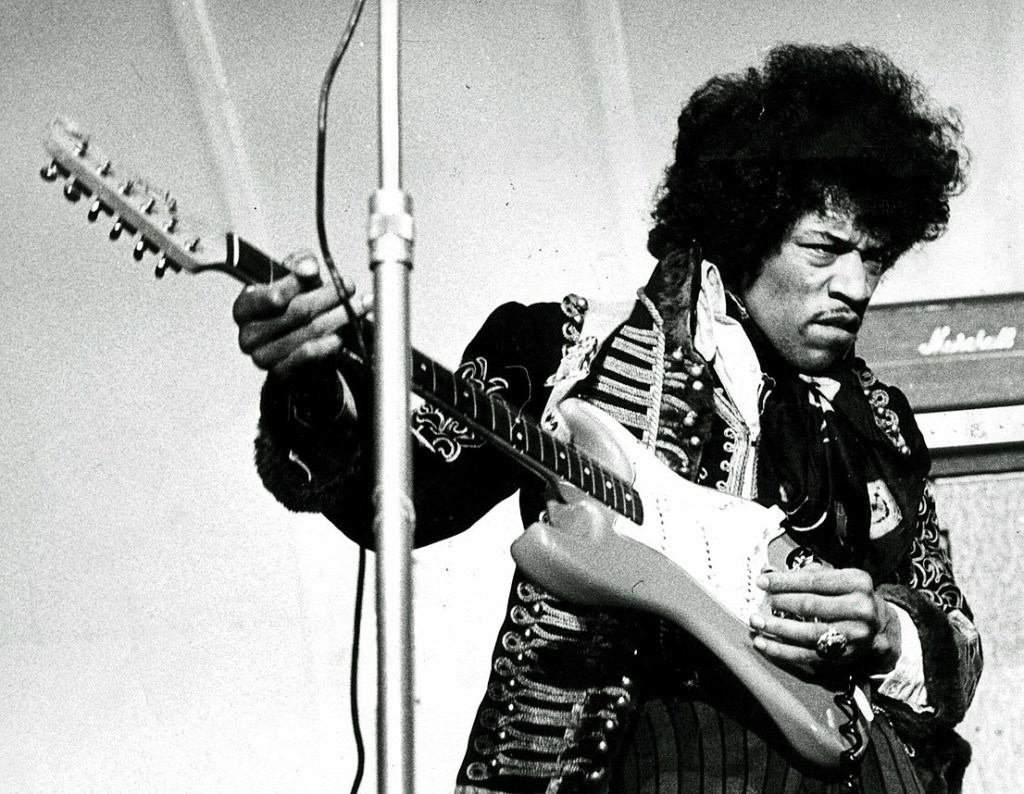
Source: Everything you need to know about the Guitar World Record (https://heyjoe.pl/summary/). Photo of Wroclaw, Poland’s Main Market Square during the “Thanks Jimi Festival.” Photo of Hendrix in Sweden, 1967. Public domain.

Immediate Family

Theaters: 15 December 2023

Streaming: 15 December 2023

Runtime:  102 minutes

Genre:  Documentary-Music-Rock and Pop

els:  9.0/10

IMDB:  8.5/10

Rotten Tomatoes Critics:  100/100

Rotten Tomatoes Audience:  92/100

Metacritic Metascore:  75/100

Metacritic User Score:  8.5/10

Awards: Tons

Directed by: Denny Tedesco (Son of 1960s session musician Tommy Tedesco)

Music by:  Everyone

Cast: James Taylor, Carole King, David Crosby, Keith Richards, Linda Ronstadt, Jackson Browne, Don Henley, Stevie Nicks, Warren Zevon, Phil Collins, Lyle Lovett, Steve Jordan, Neil Young, plus the band

Film Locations:  USA

Budget:  –

Worldwide Box Office:  $66,100

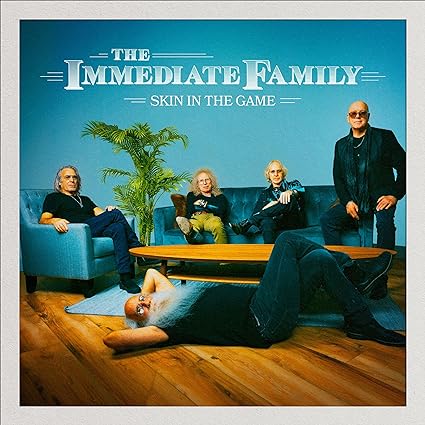
Some of the greatest rock and pop session and touring musicians ever come together after 50 years of playing for others to play as family. The Immediate Family is Danny Kortchmar on guitar and vocals, Russ Kunkel on drums, Steve Postell on guitar and vocals, Leland Sklar on bass, and Waddy Wachtel on guitar and vocals.

This documentary follows the musicians from their beginnings in the 1970s as studio musicians that decided to take their talent on the road. In the past the studio guys backed the stars and helped them get their music to the market and that was it. Studio guys didn’t go on the road because when they got back someone else would have taken their job. Going on tour is something session musicians just didn’t do until Danny, Russ, Steve, Leland, and Waddy came along. They were so good that the artists asked for them and the studios went out and brought them in.

They have just released their second studio album, Skin In the Game, on 16 February 2024 through Quarto Valley Records. Skin in the Game weighs in with 14 tracks, 13 originals plus a cover by the Sparks’: “The Toughest Girl in Town”. It is a wonderful addition to their first eponymous named album/EP.

If you followed rock and pop through the seventies and onward you heard these guys play, you just may not have known who they were; until now.

Chillin’ Back to the Future

Baby Driver (Theaters-2017; Streaming-2017)  Rated: R  Runtime: 112 minutesM Baby 2017

Genre:  Action-Crime-Music-Suspense-Thriller

els – 8.5/10

IMDb – 7.0/10

Amazon – 3.9/5 stars

Rotten Tomatoes Critics – 8.0/10

Rotten Tomatoes Audience – 4.2/5

Metacritic Metascore – 86/100

Metacritic User Score – 7.7/10

Directed by:  Edgar Wright

Written by:  Edgar Wright

Music by:  Stephen Price

Cast:   Ansel Elgort, Jamie Foxx, Kevin Spacey, Jon Hamm, Lily James

Film Locations:   Atlanta, Dunwoody and Gainesville, Georgia, New Orleans, Louisiana, US

Budget:   $34,000,000

Worldwide Box Office:  $228,311,809

Baby (Elgort) is a getaway driver, choreographing his high RPM street racing to the music pumping through his ear buds, playing catch me if you can with a no sweat demeanor that has you cheering for him non-stop.  Baby works for Doc (Spacey), a criminal mastermind that plans all his heists in chalk-board detail, never using the same group of robbers twice, except for Baby.  Baby is exceptional. Spacey catches Baby, how that happens is somewhat implausible since no one every catches Baby, trying to rob him and forces him to drive his den of thieves away from their crime scenes as retribution.

I’m late to this movie so I will give my due respect to the principles and then move on to what makes this movie so special: script and score–together.  Edgar Wright has put together a story that doesn’t come along too often, a story that has is all, action, comedy, crime, love, suspense–it has everything that you and I watch movies for. He brings it all together with a coherent and convincing screenplay, tight directing, precision choreographed cinematography (Bill Pope), and acting that is just perfect. Of course it doesn’t hurt to have Elgort, Foxx, Hamm, and Spacey providing believable and real characters along with the very pretty James. Throw in some subtle paeans to the past, such as Back to the Future, and you have a simply stunning movie, a true masterpiece; the bits and pieces adding up to a fulfillment of a lost cinematic ideal: pure, unadulterated entertainment.

Then Wright brings forth the melody.  A melody that matches and honors the lyrics: the screenplay. Lyrical poetry, accordant with the harmonic notes performing a dance of rockin’, rollin’, tango action.  Not since the 1983 Big Chill has Hollywood scored music so perfectly with the movie.

The Big Chill brought together children of the 1960s, audience and actors alike, in a comedic drama about trying to find meaning in a modern world after their fling with anarchy and drugs.  They found no meaning.  The point of the 60s was that there was no point.  But the 60’s music was sublime and transcendent. The music in The Big Chill, complimented the story as if they were fraternal twins, different veins but the same beat. Bringing together the rockin’ soul of the era with the burn-it-down pathos of its youth.  Marvin Gaye, Aretha Franklin, Smokey Robinson, black soul groovin’ the white bourgeoisie who thought they were the proletariat.  A movie, and an era, of no meaning, expressing itself with music that meant everything, and the two together brought soothing cover and entertainment.

Baby Driver just brings entertainment, no-guilt-pleasure, meshing the visual with the phonic.  It brings in The Big Chill‘s soul sound with the likes of Carla Thomas, Sam and Dave, and Barry White; and then branches out to include the  old-time rockers of Queen, T. Rex (Marc Bolan’s son sued the movie for using Debora without permission), and Golden Earring; progressing up the time scale with blues-rocker Jon Spencer Blues Explosion, and alternate-stuff Beck; capping it off with the synth-pop of Sky Ferreira. A great collection of musicians that compliments the movies action, creating a greater artistic experience than the two alone could achieve. Jon Spencer’s Bellbottoms in the opening car chase scene sets the throbbing standard for the movie that doesn’t abate until the ending credits roll, accompanied by the Simon and Garfunkel song: Baby Driver.

Sony and Edgar Wright have agreed to a sequel, hopefully in 2019.  May the magic strike twice.