Friends

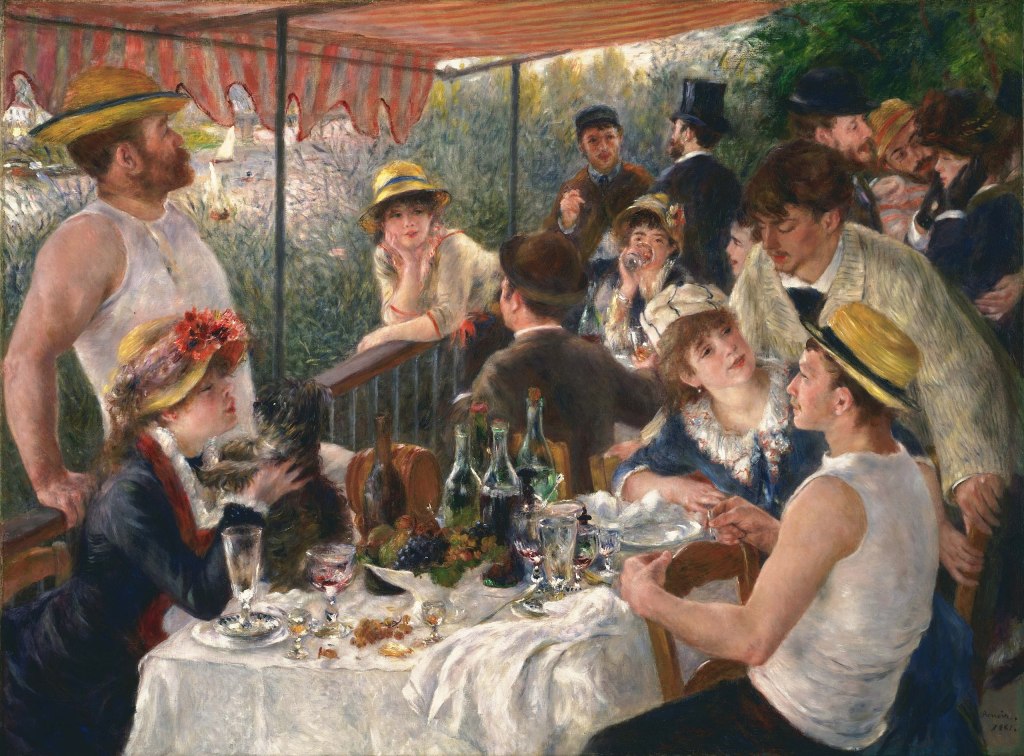
On a fine, lazy summer day along the banks of the Seine in 1880, possibly 1881, Pierre-Auguste Renoir began sketching and painting his most celebrated structured composition, “Luncheon of the Boating Party”.

The luncheon party takes place on the balcony of the Maison Fournaise restaurant and includes 14 friends and acquaintances of the painter, 13 of whom have been identified.

The Phillips Collection, where the painting resides, comments that, Renoir has immortalized his friends to such a degree that the image is “not anectdotal [sic] but monumental.” …Renoir’s magnus opus is a very tightly composed work, uniting within one image the time-honored compositional traditions of figure painting, still life, and landscape.

Edward G. Robinson, American actor and art collector, in “All My Yesterdays: An Autobiography” amusingly remarks, “For over thirty years I made periodic visits to Renoir’s Luncheon of the Boating Party in a Washington museum, and stood before that magnificent masterpiece hour after hour, day after day, plotting ways to steal it.

Source: The Phillips Collection, Washington D.C. All My Yesterdays by Robinson. Graphic: Luncheon of the Boating Party by Pierre-Auguste Renoir, 1881. Public Domain.
Claret to Bordeaux

Claret is an English term for Bordeaux wines that traces its origins back to 16th century. The name derives from the French word “clairet,” which described a lighter, more rosé-like style from the Bordeaux region.

Originally, the grapes used to make this wine were Cabernet Sauvignon, Merlot, and Cabernet Franc, similar to today’s right-bank Bordeaux. The left bank added Malbec, Petit Verdot, and Carménère to the mix.

By the 17th and 18th centuries, clarets evolved, through better maceration, aging, and blending techniques, into a darker, full-bodied wine we would recognize today as a Bordeaux. It became a major export to England and the world.

Trivia: Charles Dickens in ‘Martin Chuzzlewit’, ‘The Pickwick Papers’, and ‘Great Expectations’; Wilkie Collins in ‘The Moonstone’; Anthony Trollope in ‘The Belton Estate’; William Thackeray in ‘Vanity Fair’; and George Eliot in ‘Middlemarch’ all mention the drinking of claret, usually at their dinners.

In these novels the claret was diluted with water to reduce the alcohol content, making it more palatable and easier to drink over long meals or gatherings and to stretch the supply.

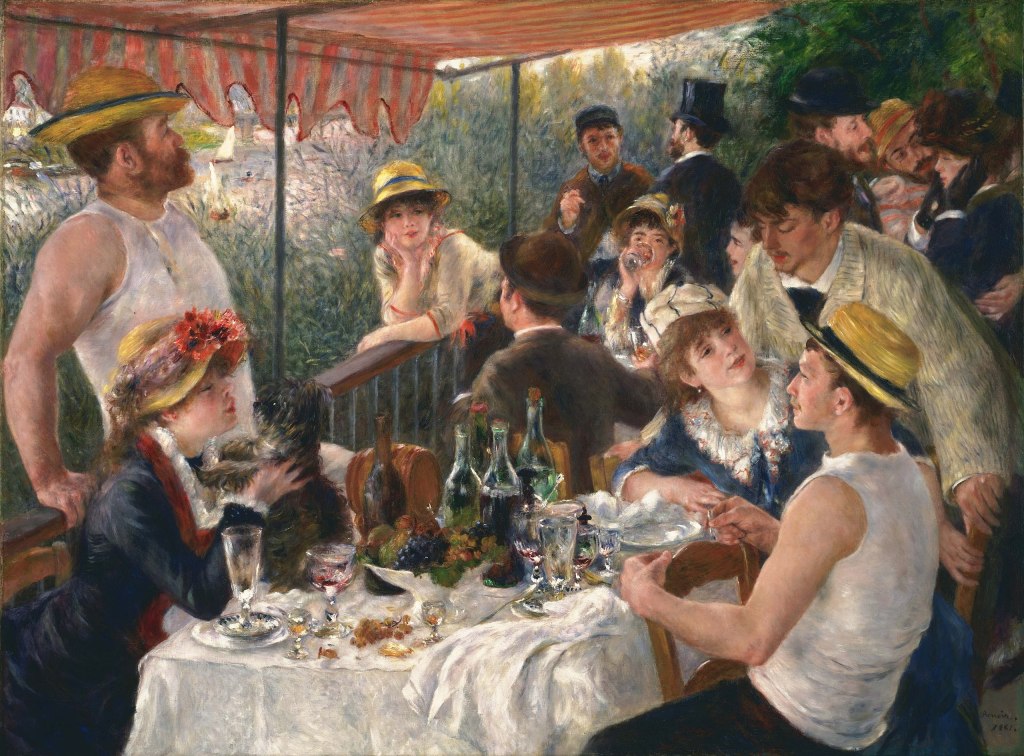
Source: Wine Spectator. Decanter. Graphic: Luncheon of the Boating Party by Pierre-Auguste Renoir, 1881. Public Domain.
Bourgeois Realism

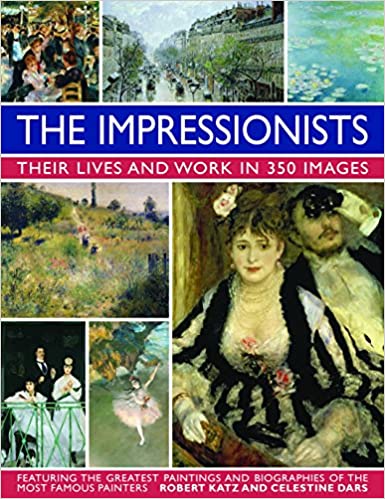
The Impressionists: Their Lives and Work in 350 Images

By Robert Katz and Celestine Dars

Published by Lorenz Books

Copyright: © 2016

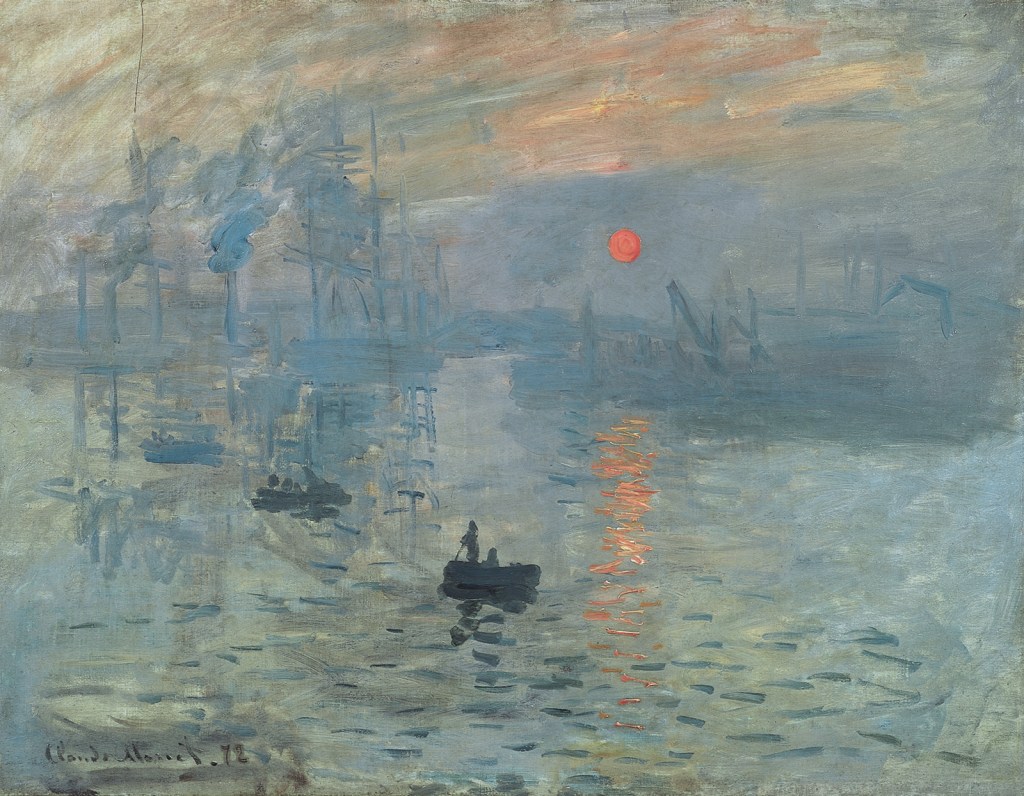
A small coterie of Parisian painters, less than a dozen, mostly French, mostly young and middle class, disillusioned with the elite’s adherence to Neoclassicalism and Romantism, began to experiment in the latter half of 19th century with bold colors and light, loose, broad brushwork and forms, simple, pleasing scenes of everyday life and contentment, landscapes painted in the open air: en plein air, painting what their eyes saw, and their hearts felt. Their style came to be known as Impressionism, a term lifted by an art critic who intended censure and derision from Monet’s painting: ‘Impression, Sunrise’ (shown above right). Impressionism, initially disregarded and rejected by the critics and the public, became the solid foundation for all painting to come; Post-Impressionism, Art Noveau, Cubism, and onto what is today casually labeled modern or contemporary art.

As Impressionism birthed the future of painting in the west, the Realists: Millet, Corot, Corbet, and others created the base for Degas, Manet, Monet to which they added something fresh and enjoyable. Realists painted the world as they perceived it: poor, laboring, dismal, dystopian. The Impressionists kept the Realists’ stage, the world as it is, but added cheerfulness and peace by experimenting with light and form.

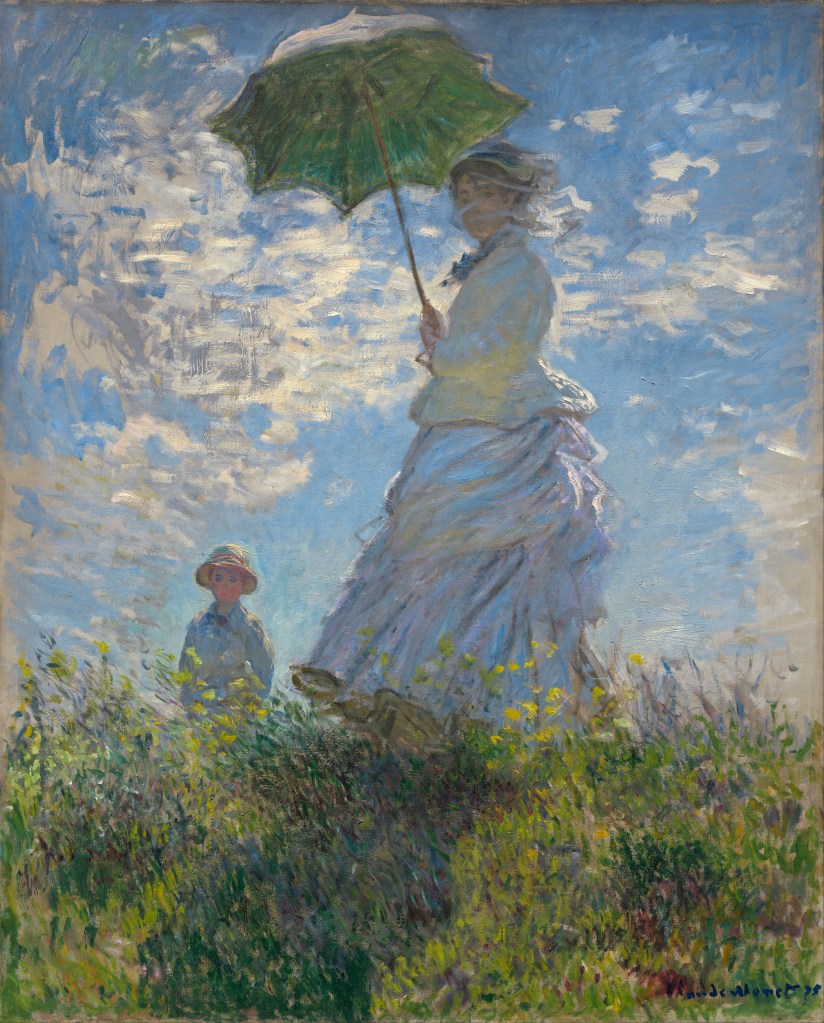
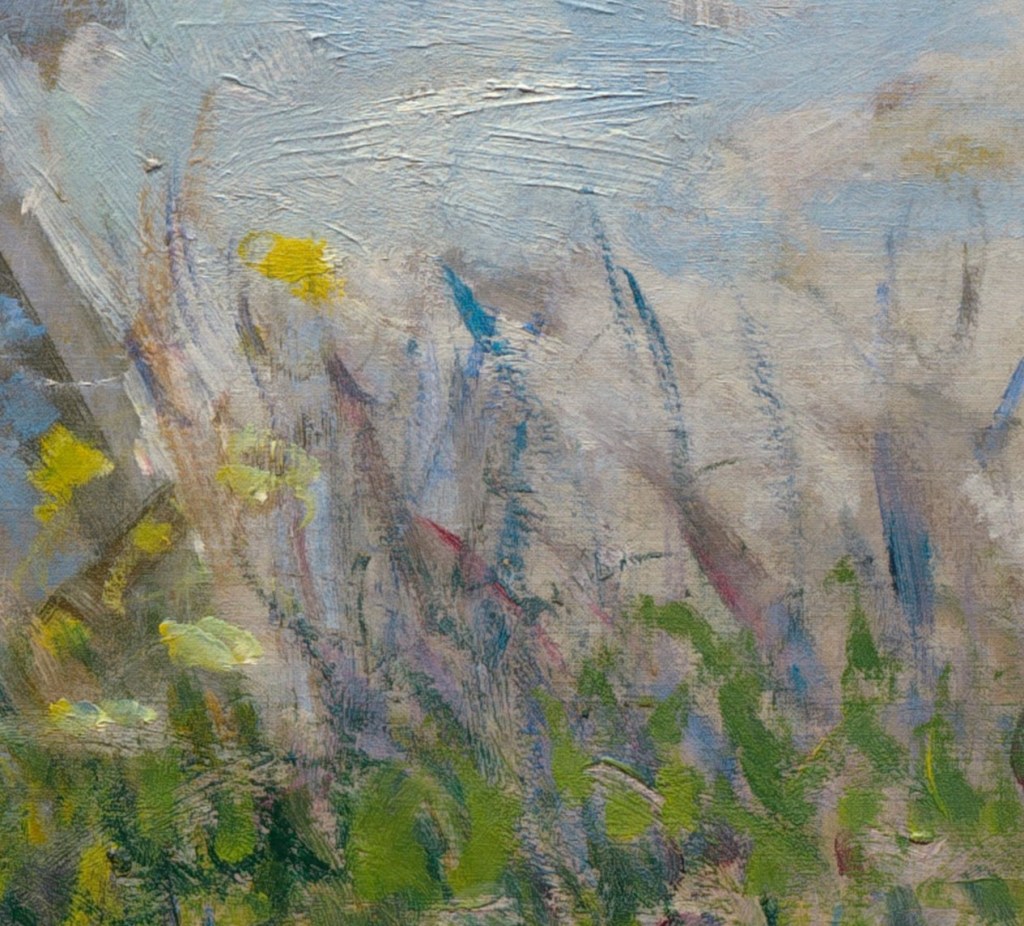
Monet’s genre masterpiece, ‘Woman with a Parasol-Madame Monet and Her Son (shown above left), captures his wife and son in a leisurely stroll around a blustery Argenteuil, a suburb of Paris, in 1875. The woman and son are looking down on the painter with her umbrella blocking out the sun creating an impression of light dancing through the clouds and sky, imparting a stark contrast for the shadows below moving across the grass and flowers. The woman’s vail and dress ripples across her face and body in tune with the breeze. The boy is in the background giving the painting an added sense of depth. The detail of the painting (above right) shows the broad brushstrokes, bold colors and contrasts that came to characterize Impressionistic art.

‘The Impressionist’ brings form and substance to the lives of six of the greatest artists of the genre: Pissarro, Manet, Degas, Monet, Renoir, and Sisley, who gave birth to something new.