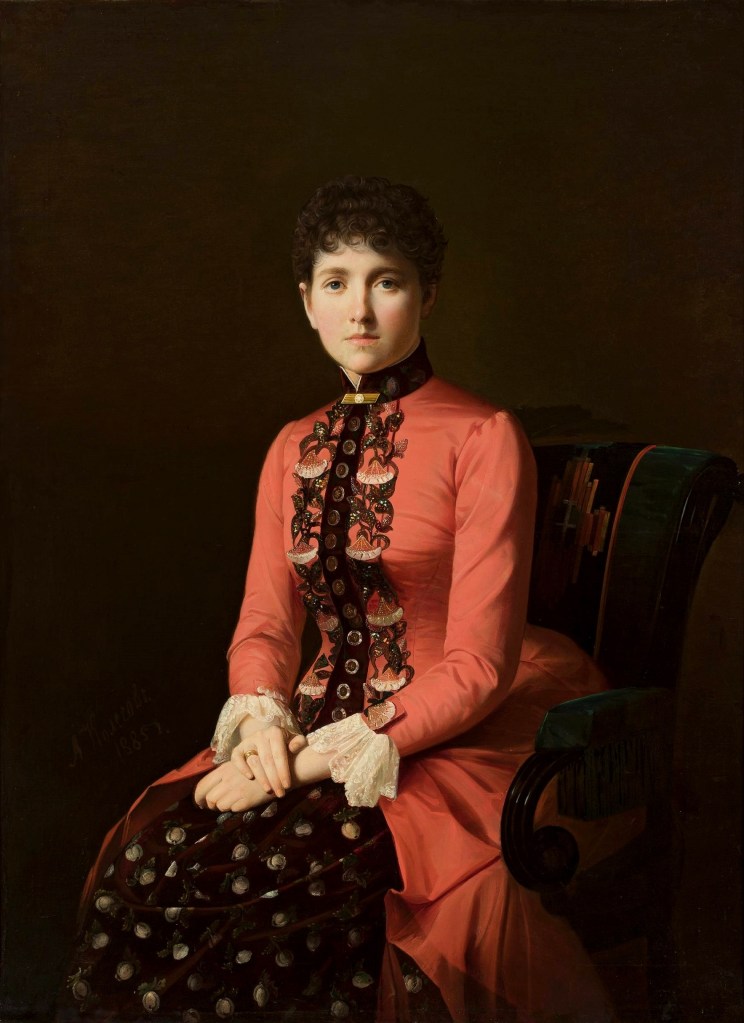
“Happy families are all alike; every unhappy family is unhappy in its own way.” So begins Leo Tolstoy’s epic 19th century Russian novel, Anna Karenina. A beginning line that is not only one of literature’s great openings, but it indubitably stages an existential story that transcends time, culture, and humanity: a diegesis of love and misery.
Love and misery where mental and societal control is lost to emotional need. When Anna’s lover, Vronsky, pleads with her to respect her mother’s needs and his duty, she snaps, “Respect was invented to cover the empty place where love should be. And if you don’t love me anymore, it would be better and more honest to say so.” (chapter 24)
Anna Karenina through time has consistently ranked as one of the greatest novels ever written. Encyclopaedia Britannica lists it as the number one novel of all time.
Sources: Leo Tolstoy, Anna Karenina, serialized in 1875, published in book form in 1878. Plath et al, The 100 Greatest Literary Characters, published in 2019. Enclyclopaedia Britannica, 12 Novels Considered the “Greatest Book Ever Written”, by Jonathan Hogeback.
Aleksey Kolesov, “Portrait of a Young Woman” (Anna Karenina), 1885. Public domain, via Wikimedia Commons

 elsToday