Salvator Mundi

Salvator Mundi, Savior of the World, is believed to have been painted by Leonardo da Vinci sometime between 1499 and 1510 which is considered by historians to be the beginning of the High Renaissance period. The painting was supposedly commissioned by King Louis XII of France and was later recorded in the possession of the English Kings Charles I and II. How the English acquired the painting is unknown. It was then passed onto the Duke of Buckingham in the 1600s after which his son sold it in 1763. The painting then disappeared for 137 years.
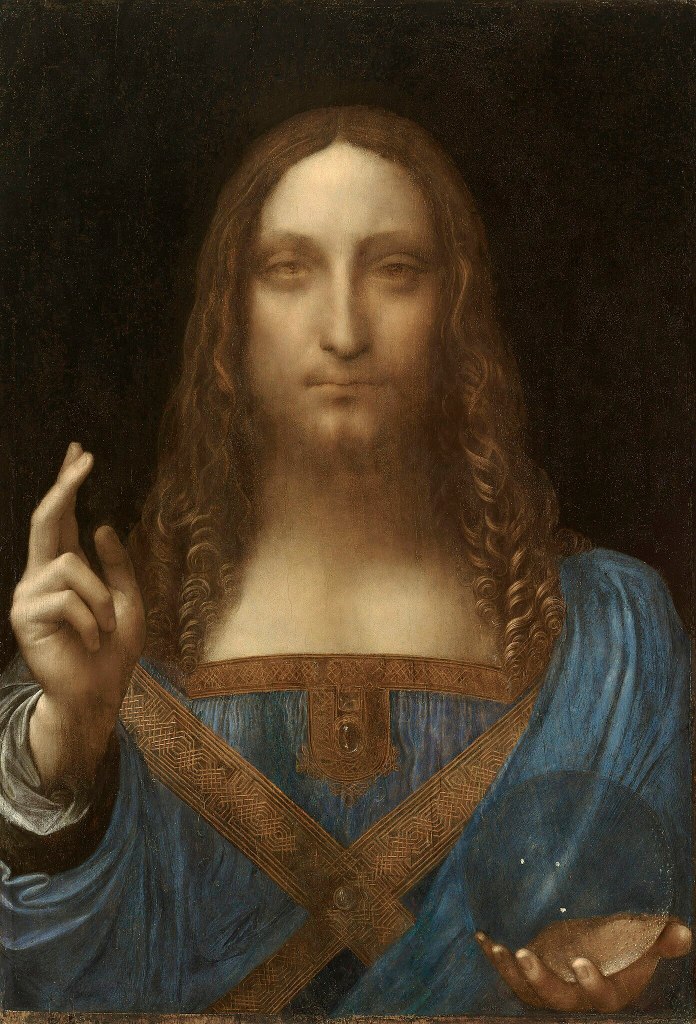
It reappeared in 1900, changing hands a few times without anyone realizing it may be an authentic Leonardo. In 2005 a consortium of art dealers and collectors purchased it with the intent to have it cleaned and restored all the while attempting to prove that it was indeed a Leonardo painting. In 2013 most experts agreed that it was an authentic Leonardo allowing it to be sold for $80 million to Swiss art dealer Yves Bouvier which he quickly resold to the Russian Rybolovlev for $127.5 million. This sale quickly became a legal mess with the resolution not entirely clear.

Somehow the legal issues resolved themselves and the painting came to market again in 2017 selling for $450.3 million, making it the most expensive painting ever sold. After much wild and erroneous speculation, it was revealed that Abu Dhabi’s Department of Culture and Tourism bought the painting.  It is currently in storage awaiting the completion of the Louvre Abu Dhabi in the United Arab Emirates.

In 2020 the experts have struck again and attribution of the painting to Leonardo is in doubt. Experience says this debate will continue ad infinitum. Meanwhile an extremely expensive art piece supposedly by a gay painter of Jesus Christ resides in the Arab Middle East.

Sources: Leonardo da Vinci by Walter Isaacson published in 2017. Salvator Mundi by Christies published in 2017. Salvator Mundi by ArtNet published in 2020.
Bourgeois Realism

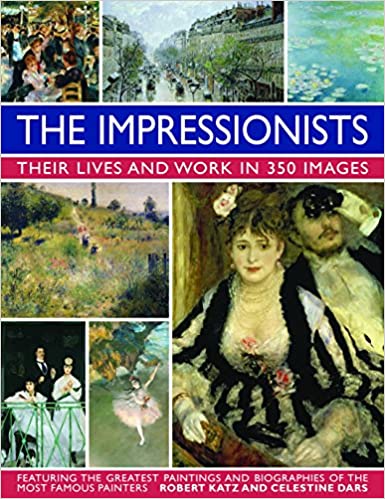
The Impressionists: Their Lives and Work in 350 Images

By Robert Katz and Celestine Dars

Published by Lorenz Books

Copyright: © 2016

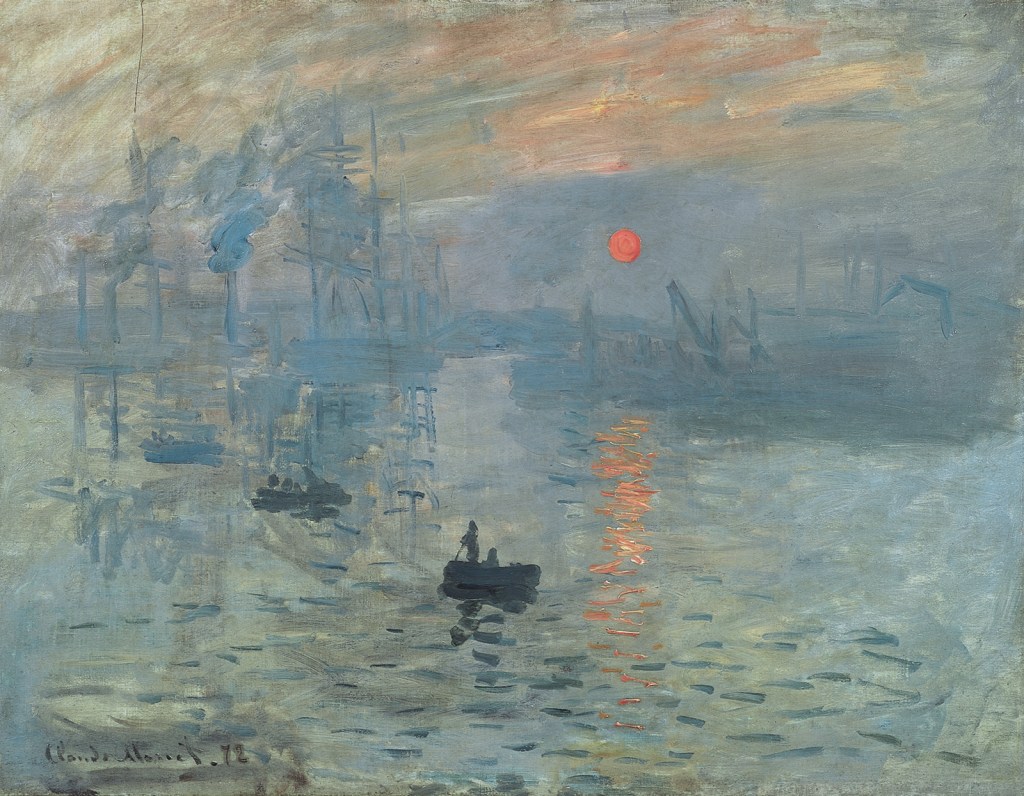
A small coterie of Parisian painters, less than a dozen, mostly French, mostly young and middle class, disillusioned with the elite’s adherence to Neoclassicalism and Romantism, began to experiment in the latter half of 19th century with bold colors and light, loose, broad brushwork and forms, simple, pleasing scenes of everyday life and contentment, landscapes painted in the open air: en plein air, painting what their eyes saw, and their hearts felt. Their style came to be known as Impressionism, a term lifted by an art critic who intended censure and derision from Monet’s painting: ‘Impression, Sunrise’ (shown above right). Impressionism, initially disregarded and rejected by the critics and the public, became the solid foundation for all painting to come; Post-Impressionism, Art Noveau, Cubism, and onto what is today casually labeled modern or contemporary art.

As Impressionism birthed the future of painting in the west, the Realists: Millet, Corot, Corbet, and others created the base for Degas, Manet, Monet to which they added something fresh and enjoyable. Realists painted the world as they perceived it: poor, laboring, dismal, dystopian. The Impressionists kept the Realists’ stage, the world as it is, but added cheerfulness and peace by experimenting with light and form.

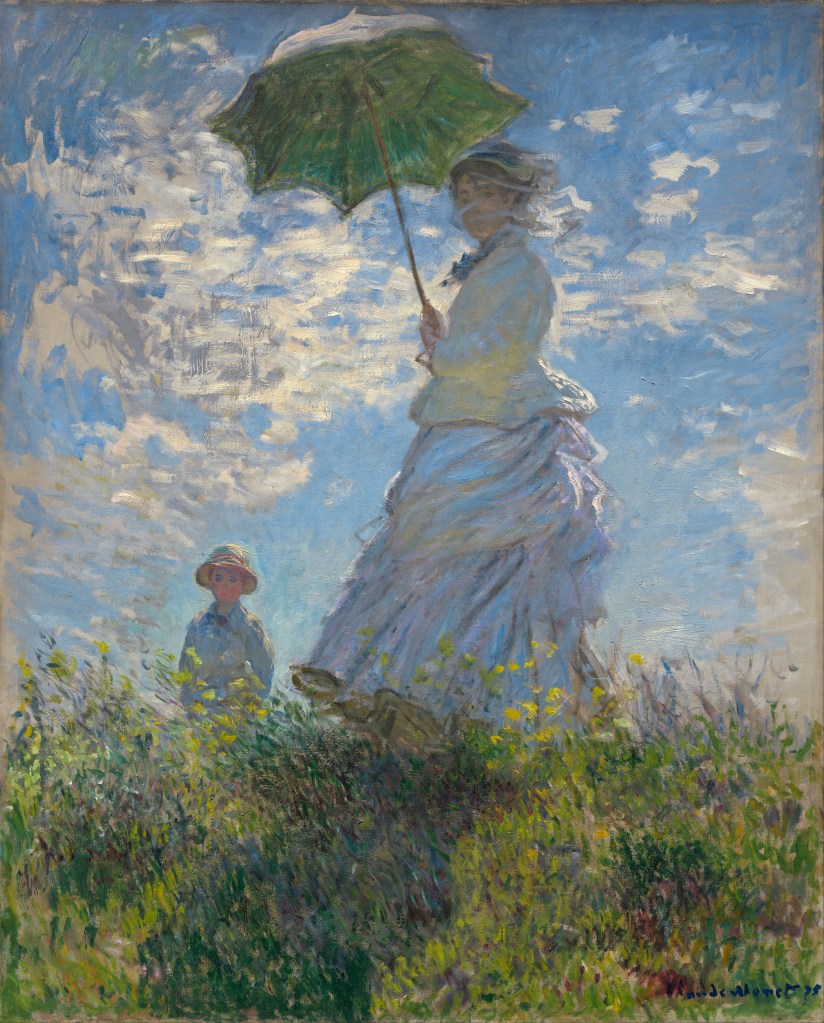
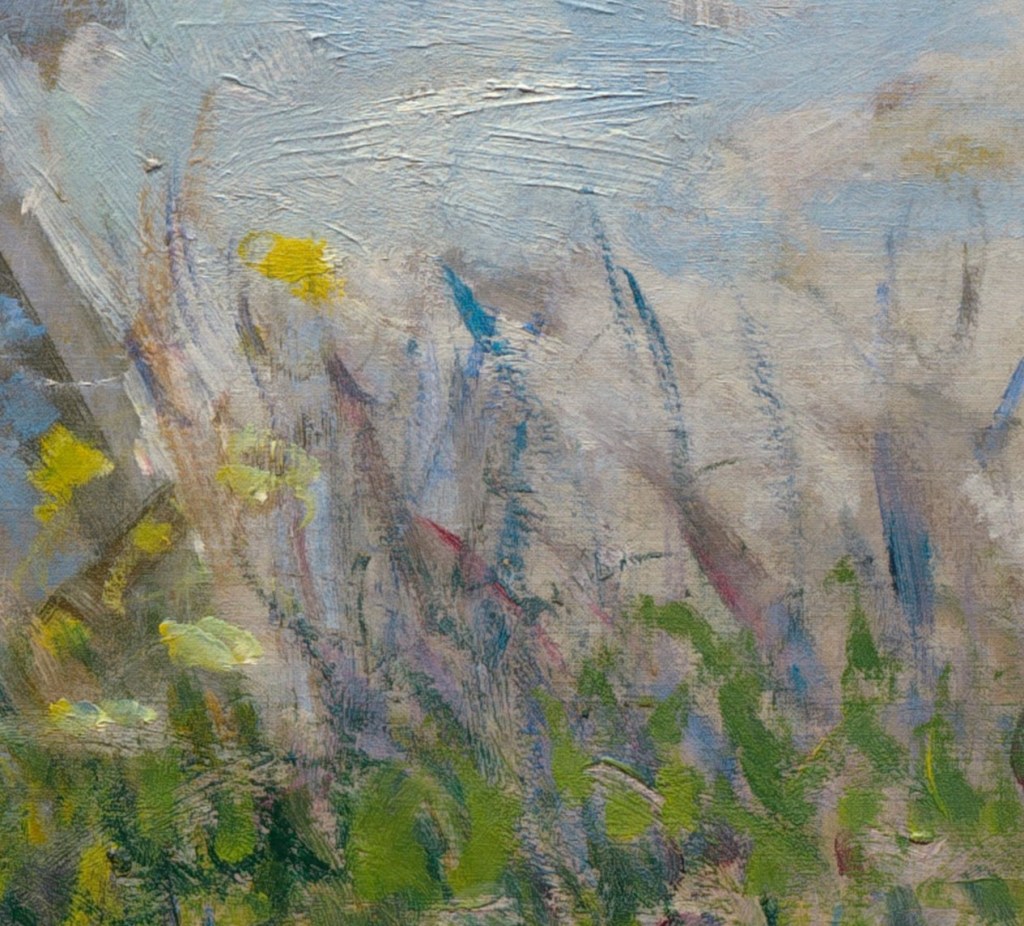
Monet’s genre masterpiece, ‘Woman with a Parasol-Madame Monet and Her Son (shown above left), captures his wife and son in a leisurely stroll around a blustery Argenteuil, a suburb of Paris, in 1875. The woman and son are looking down on the painter with her umbrella blocking out the sun creating an impression of light dancing through the clouds and sky, imparting a stark contrast for the shadows below moving across the grass and flowers. The woman’s vail and dress ripples across her face and body in tune with the breeze. The boy is in the background giving the painting an added sense of depth. The detail of the painting (above right) shows the broad brushstrokes, bold colors and contrasts that came to characterize Impressionistic art.

‘The Impressionist’ brings form and substance to the lives of six of the greatest artists of the genre: Pissarro, Manet, Degas, Monet, Renoir, and Sisley, who gave birth to something new.

The Other Michelangelo

Caravaggio: The Complete Works

By Sebastian Schutze

Published by TASCHEN

Copyright: © 2015

The other Michelangelo, Michelangelo Merisi da Caravaggio, was born almost 100 years after the Michelangelo of Florence and Sistine Chaple fame, in the northern Italian city of Milian, at the time a part of the Spanish Empire; coming of age as a painter in the dying days of the Renaissance art period and the birth of Baroque, developing and leading a style with an increased attention to detail, lighting, and volume not so much in contrast, but in addition to the scientific realism of the previous 200 years.

Caravaggio took the Baroque art beyond the biblical themes of the Renaissance while retaining the humanism, maintaining naturalism but with detail likely unavailable to painters before him, improving on perspective and volume through the use of light and dark: Chiaroscuro, and giving the subjects an emotional bearing that communicates to the viewer a deportment not obtainable to the first Michelangelo.

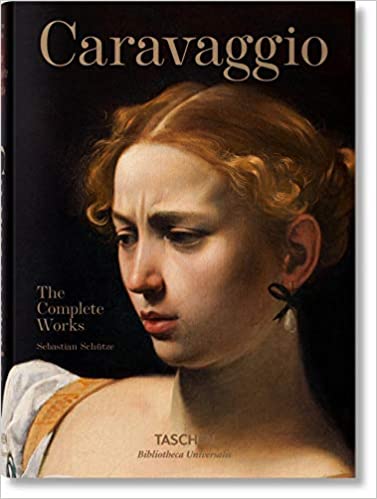
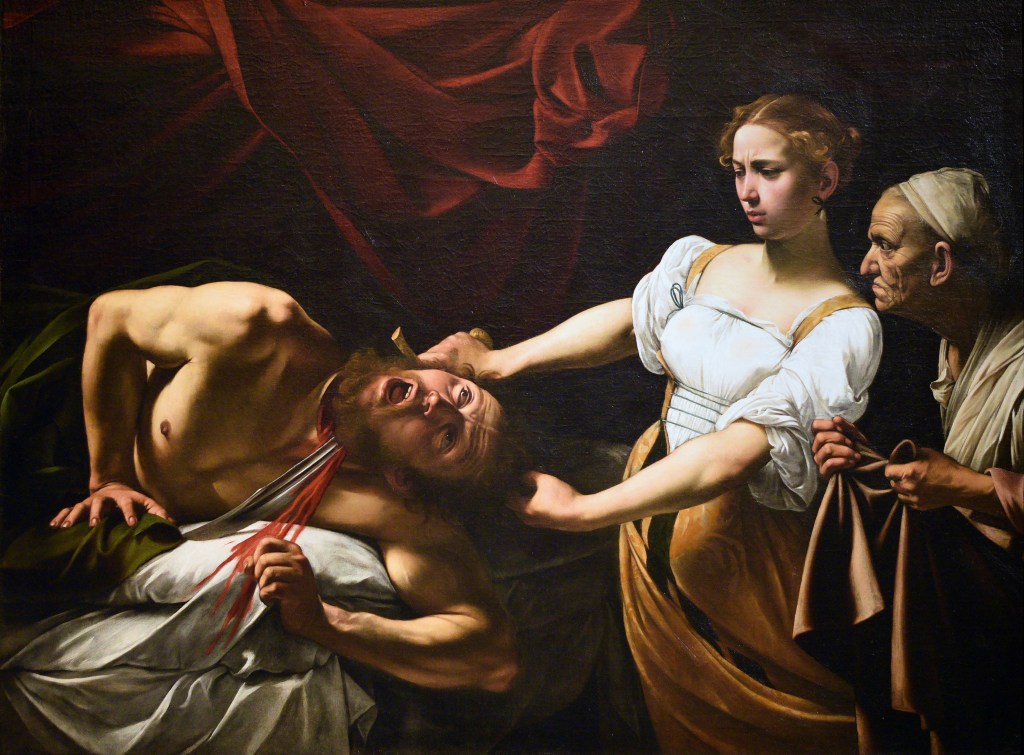
The book cover, Judith beheading Holofernes, detail above with full painting shown below, depicts Judith looking down and to the viewers left with a look, according to some, of revulsion and disgust, but my interpretation is one of apathy and possibly puzzlement, as noted by the slight creases between the eyebrows and the bridge of the nose and the minor squint of the eyes. Panning out may add an unquestioning repugnance to the painting but not to Judith’s countenance, it remains one of bemusement, a ‘is this all there is’ to vanquishing one’s enemy, while an old woman looks over Judith’s shoulder concurring, not seeing the gore of the moment but the moral of the act and feeling ‘Good, it is done’. The detail may be there, but the viewers interpretation is still required.

Caravaggio, CC BY-SA 4.0 https://creativecommons.org/licenses/by-sa/4.0, via Wikimedia Commons