Florence, the Medici family, and the Renaissance are inextricably linked, forming a vibrant nexus of world-shaping brilliance and energy. After Lorenzo the Magnificent’s death in 1492, Michelangelo emerged as the towering figure of art and beauty during the High Renaissance, spanning the late 15th and early 16th centuries.
Michelangelo’s unparalleled artistic mastery endured for nearly fifty years beyond his death in 1564, yet with the passing of Ferdinando I de’ Medici in 1609, Baroque masters like Caravaggio and Bernini ascended as Europe’s preeminent talents.
Michelangelo navigated a delicate balance with the shifting demands of his Medici patrons, fiercely defending his artistic vision while securing payment, often with friction. The expectations of the Medici popes, Leo X (1513–1521) and Clement VII (1523–1534), frequently clashed—both in timing and creative intent—with his ambitions. This tension, happily, fueled his masterpieces, including the Sistine Chapel ceiling (1508–1512) and the Last Judgment (1536–1541).
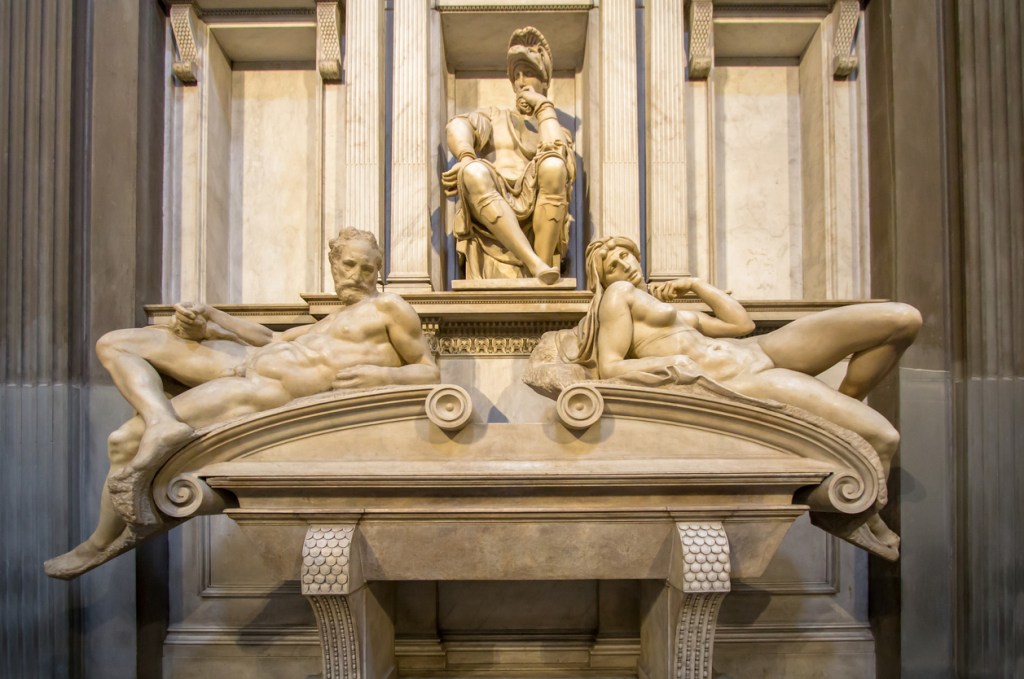
The image depicts the Tomb of Lorenzo II de’ Medici, a work Michelangelo sculpted between 1524 and 1531.
Source: The Medici, Michaelangelo…Florence, Essays by Acidini…2002. Graphic: Tomb of Lorenzo II de Medici, Michelangelo, 1524-1531. CAHJKT iStock Photo Licensed.
 elsToday