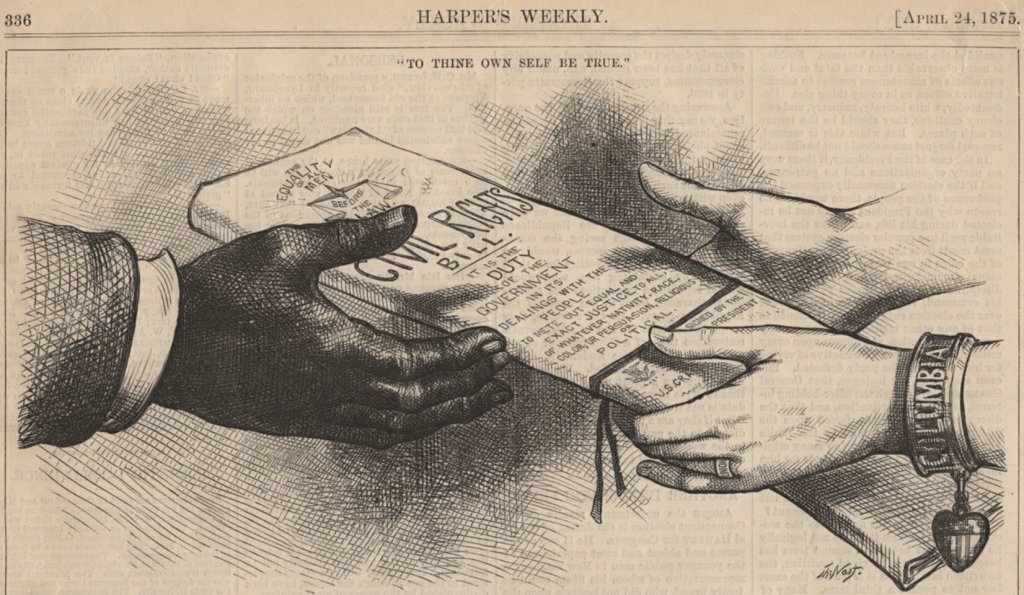
14th Amendment

The 14th Amendment, introduced during the Reconstruction era, was crafted to address legal and constitutional deficiencies exposed after the U.S. Civil War. Its first sentence; “All persons born or naturalized in the United States, and subject to the jurisdiction thereof, are citizens of the United States and of the State wherein they reside“, has become a focal point for competing interpretations. Much like the Second Amendment, its wording has sparked legal and grammatical debates, particularly surrounding the clause “and subject to the jurisdiction thereof.”

The Second Amendment faced similar scrutiny for over 200 years, particularly its prefatory clause, “A well-regulated Militia.” This ambiguity was finally addressed in District of Columbia v. Heller (2008), where the Supreme Court clarified that the historical record and documents like the Federalist Papers supported the right of private citizens to own firearms. The Court also ruled that the prefatory clause did not limit or expand the operative clause, “the right of the people to keep and bear Arms, shall not be infringed.

Likewise, the 14th Amendment’s clause “and subject to the jurisdiction thereof” remains unsettled, awaiting similar historical and grammatical scrutiny to solidify its interpretation. Initially aimed at protecting freed slaves and securing their citizenship, this provision has since invited broader interpretations in response to modern challenges like immigration.

The framers’ intent during Reconstruction was to ensure equality and citizenship for freed slaves and their descendants, shielding them from exclusionary laws. At the time, the inclusive principle of jus soli (birthright citizenship) aligned with the nation’s need to address the injustices of slavery and foster unity among the country’s existing population. However, changing migration patterns and modern cultural dynamics have shifted the debate. The ambiguity of “subject to the jurisdiction thereof” now raises questions about its application, such as how jurisdiction applies to illegal immigrants or children of foreign diplomats, in a globalized world.

Legal precedents such as United States v. Wong Kim Ark (1898) affirmed that nearly all individuals born on U.S. soil are citizens, regardless of whether their parents’ immigration status is legal or illegal. While this aligns with the practical interpretation of jurisdiction, it has spurred debates about the fairness and implications of modern birthright citizenship practices.

Immigration today involves a broader spectrum of cultures and traditions than during earlier waves, when newcomers often shared cultural similarities with the existing population. Assimilation, once relatively seamless, now faces greater challenges. Nations like Britain and Germany have recently revised their jus soli policies to prioritize the preservation of societal norms. The unresolved question of how to address declining populations further complicates the debate; a debate with the citizens that has not occurred much less resolved.

While originally crafted to address the systemic exclusion of freed slaves, the 14th Amendment’s principle of birthright citizenship continues to evolve in its application.

Graphic: 14th Amendment Harper’s Weekly.
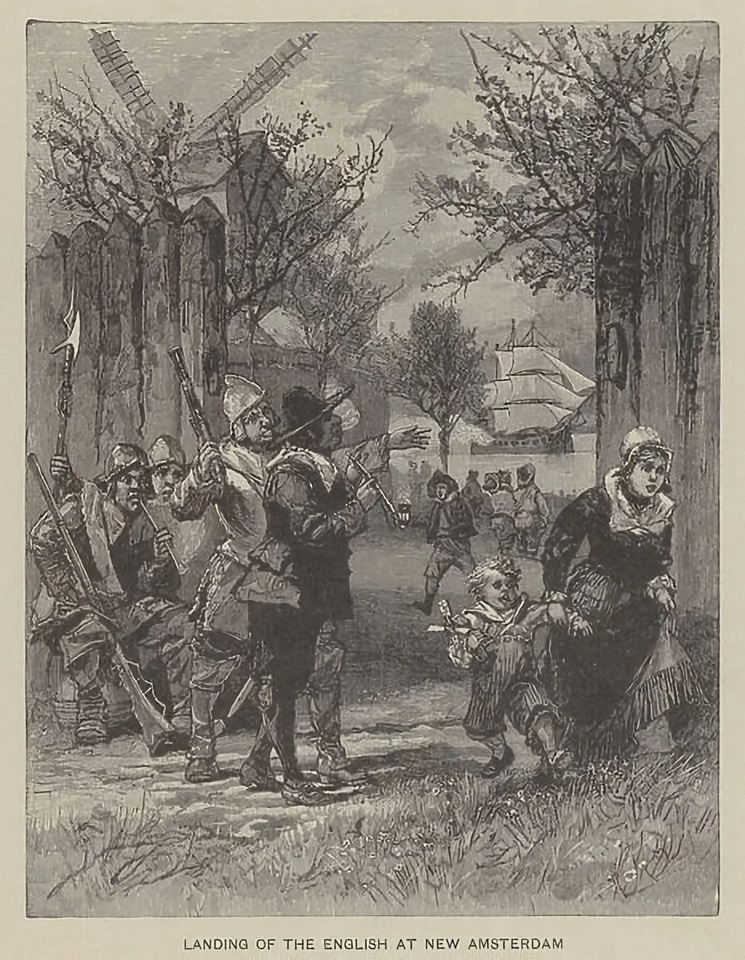
American Colony’s First Naturalization Act of 1664

On 12 March 1664, King Charles II, eager to expand the English empire and reward his loyal brother James, Duke of York, granted him a vast swath of North American territory. This prize included New Netherland—stretching roughly from the Delaware River to the Connecticut River—plus scraps of modern Maine and islands like Long Island, Martha’s Vineyard, and Nantucket along the Atlantic coast. Whether Charles saw the Dutch, who currently claimed and occupied most of this land, as a mere obstacle to be swept aside or a challenge for a later Machiavellian showdown isn’t entirely clear in today’s histories. But that’s a story for a later post. What’s certain is that on September 8, 1664, some 300 British troops under Colonel Richard Nicolls peacefully seized New Netherland, renaming its heart, New Amsterdam, as New York.

The conquest raised a question: what to do with the Dutch, French, Walloons, and other non-English settlers now under British rule? The Articles of Capitulation, signed that day, were generous: these residents could keep their property, trade rights, and personal liberties. They weren’t forced out or stripped of their livelihoods—a pragmatic move to avoid rebellion in a colony where the Dutch outnumbered their new overlords. But this deal had limits. Without British citizenship, they owed no loyalty to the Crown, couldn’t pass property seamlessly under English law, and lacked full access to British markets. Enter the curiously dated Naturalization Act of 12 March 1664—more on that head-scratching date in a moment.

This act offered foreign-born settlers a path to English subjecthood. By swearing allegiance to the Crown and paying a fee—described by some as modest, by others as steep—they could gain the rights and privileges of English subjects. The exact fee is lost to time, but it was likely hefty enough to filter out the poor while drawing in merchants and landowners eager for legal and economic benefits. The act aimed to stabilize the colony’s economy, secure political control, encourage growth, and align local realities with British common law.

In mid-17th-century England, citizenship hinged on jus sanguinis—citizenship by blood. Only children of British parents were natural subjects; foreign-born adults, like New York’s Dutch settlers, needed a legal workaround to join the fold and fully participate in colonial life. The act filled that gap, promising a unified British colony over time.

History pegs this Naturalization Act to 12 March 1664—the same day Charles granted James the land—yet the English didn’t hold New Netherland until September. A citizenship act before possession seems nonsensical. One plausible explanation? It’s a backdated fiction. The real policy likely emerged post-conquest, perhaps in late 1664 or 1665, as Nicolls integrated the Dutch population. Linking it to March 12 could’ve been a deliberate move to dress up the original grant as lawful and inevitable—a tidy origin story for English New York. The Articles handled the surrender’s chaos; naturalization was the long-term glue, and pinning it to the charter’s date cast the shift from Dutch to British rule as seamless and legitimate.

Addendum: The Evolution of British Citizenship

British subjecthood didn’t stay rooted in jus sanguinis. Between 1664 and the mid-18th century, it gradually shifted toward jus soli—citizenship by soil. By the time Sir William Blackstone penned his Commentaries on the Laws of England (1765–1769), anyone born in the Crown’s dominions was a natural-born subject, regardless of parentage. This held until the British Nationality Act of 1981, which dialed back unconditional jus soli. Now, a child born in the UK needs at least one parent to be a British citizen or a settled legal resident to claim citizenship—leaving others out of the fold.

Sources: America’s Best History; discussions with Grok 3. Graphic: Landing of the English at New Amsterdam, 1664, produced 1899, public domain.