The Pirates of Somalia (Theaters-2017; Streaming-2017) Rated: R Runtime: 116-118 minutes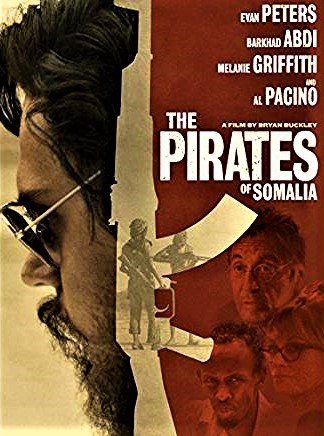
Genre: Biography-Drama
els – 6.0/10
IMDb – 6.9/10
Amazon – 3.8/5 stars
Rotten Tomatoes Critics – 6.1/10
Rotten Tomatoes Audience – 4.2/5
Metacritic Metascore – 54/100
Metacritic User Score – 7.8/10
Directed by: Bryan Buckley
Written by: Bryan Buckley
Music by: Andrew Feltenstein, John Nau
Cast: Evan Peters, Barkhad Abdi, Melanie Griffith, Al Pacino
Film Locations: Cape Town and Western Cape, South Africa; New York, US
Budget: NA
Worldwide Box Office: NA
Jay Bahadur (Peters), a young, idealistic Canadian, aspires to be a journalist, but his job prospects are poor to nonexistent. Going to Somalia to observe, interview, report, and write a book on the pirates is just the scoop he needs to break into the profession. He wrote a term paper in his first year of college romanticizing the peaceful transition to power of a newly elected government in Somalia, in which he extrapolates from that occurrence, a country that is a charming spot of sand, full of peace and love, not so different from his beloved home country of Canada; minus the sand of course. He naively weaves this theory throughout the movie, and beyond, with conviction, never contemplating that Somalia life and politics may be just a tad more complicated and less perfect than this young, inexperienced man may imagine.
With some journalistic mentoring from a retired newsman, Seymour Tolden (Pacino), Jay sets off for Somalia without any real inkling of what he is up against. Using Tolden’s contacts in the country, along with bribes and khat, a local addictive stimulant, he gains access to the pirates and is able to document their side of the story. The pirates see themselves as modern-day Robin Hoods, taking from the multinational corporations what is due them. Due them for past wrongs, due them for the British and Italian colonization and to help set matters right. I suspect the Nazis, the Mafia, Castro, Chavez, and countless others saw matters in a similar light; it was their due and they were going make everything alright.
The movie is based on a biographical account, chronicled in the 2011 New York Times bestseller: The Pirates of Somalia: Inside Their Hidden World by Jay Bahadur. The movie was filmed in early 2016, had its world premiere at the Tribeca Film Festival in April 2017 and was released in the US on 8 December 2017.
Leaving the kid’s politics aside, just for a moment, this is an interesting and well filmed and acted drama, with the exception of the tongue-in-cheek over prints and narratives which are fun and irritating at the same time, depicting life in Somalia and the pirates claim to authority and respect in this peaceful country. At the end of the movie Bahadur appears to have made a very good living off his book, movie and consulting; telling the world about the wonderful and peaceful land of Somalia and its citizens.
The problem with his story though is that he never successfully bridges the logical, the cerebral disconnect between the peaceful transition of the newly elected government with the existence of the shadow government run by the pirates; much less contemplate the very peaceful, 1991 civil war, precipitated by the smooth transition-to-power-coup that claimed up to 500,000 lives and resulted in 1,000,000 plus refugees, or using the pc correct term: displaced persons. Add to that, the bloodless 1993 Battle of Mogadishu, that claimed 19 American lives, 73 wounded and 1 captured, which was subsequently documented and portrayed, poorly, in the 2002 film: Black Hawk Down. An interesting aside is that in this movie the Somalis complain that no Somalis were used as actors in depicting the butchering of Americans in Black Hawk Down. The irony is lost on Bahadur. Jay Bahadur is naive and likely not very bright, he wanted to go into journalism for cripes sakes, but watch the movie anyway, it’s a useful lesson in ignorance and a trusting nature leading to self-deception.

 elsToday