Ghost Written by Ted Sorensen
Concept by John F. Kennedy
HarperCollins
Copyright: © 1984
Original Copyright: © 1956
Sorensen Biography:
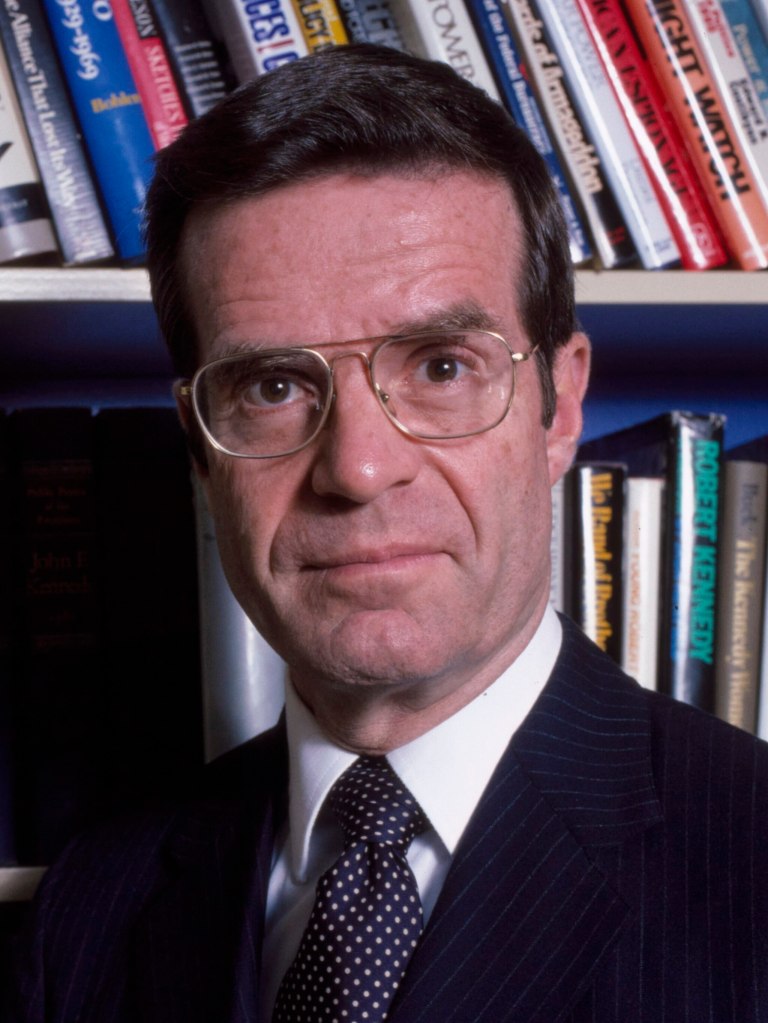
Ted Sorensen, died in 2010 at the age of eighty-two, was White House counsel and speechwriter for President Kennedy and speechwriter for Lyndon Johnson from 1961-1964. In the early days of Kennedy’s administration, he assisted in drafting the President’s inaugural speech in which the famous line, “Ask not what your country can do for you; ask what you can do for your country.”
Initially Sorensen was limited to domestic issues within the administration but after the April 1961 Bay of Pigs fiasco, a 24-hour failed attempt to overthrow Castro, which ostensibly Sorensen bitterly opposed, Kennedy asked him to help with foreign policy going forward.
Eighteen months later in October 1962, the Cuban Missile Crises gripped the nation and the world. The Soviets were staging nuclear missiles in Cuba just ninety miles from U.S. shores. The U.S. responded with a naval blockade of Cuba along with the threat of invading the island. Soviet First Secretary Khrushchev offered to remove the missiles if the U.S. promised not to invade Cuba. Khrushchev also added an additional condition less than 24 hours later, insisting that the U.S. also remove their missiles from Turkey. The President was inclined to accept the Khrushchev’s initial proposal, but the second condition took them by surprise. McGeorge Bundy, Kennedy’s national security advisor, suggested that the administration just ignore the second proposal and proceed with accepting the conditions from the first offer. Sorensen collaborated with the president and Robert Kennedy in drafting a letter agreeing to the Soviet leaders’ initial terms; missiles out of Cuba and the U.S. will not invade the island. Meanwhile, unbeknownst to most, Robert Kennedy was meeting with Soviet Ambassador Anatoly Dobrynin agreeing to also remove U.S. missiles from Turkey. This was a secret agreement that the Soviets agreed never to make public. Truth and lies. War averted.
Sorensen was also involved with Kennedy and the Vietnam War. Sorensen wrote in his memoir that the President was “determined not to lose Vietnam to communism” and that he “believed that only the South Vietnamese could win it.” Sorensen also wrote that Kennedy “never accepted the advice of those who urged him to send American combat troops to Vietnam” and that Kennedy did not believe in the Domino Theory. By 1962 the Kennedy administration had increased U.S. military personnel in Vietnam, from less than eight hundred under Eisenhower, to about 9,000 during his administration. Others have also said that Kennedy accepted without serious question the basic tenets of the Domino Theory. Sorensen also claimed that Kennedy had a secret plan to withdraw US advisers from Vietnam after the 1964 election although no one has ever been able to find any evidence to support this claim.
On 22 November 1963 Kennedy was assassinated in Dallas, Texas. Sorensen was riding in a car behind the president’s limousine when the shots were fired. Sorensen stayed on briefly after Kennedy’s death to assist the new president, Lyndon Johnson, as a speechwriter but left the White House in 1964.
Sorensen remained loyal to the Kennedy family, supporting Robert (Bobby) F. Kennedy’s presidential campaign in 1968 and attempting to provide damage control for Ted Kennedy’s Chappaquiddick drunk driving episode that resulted in the senseless death of Mary Jo Kopechne in 1969.
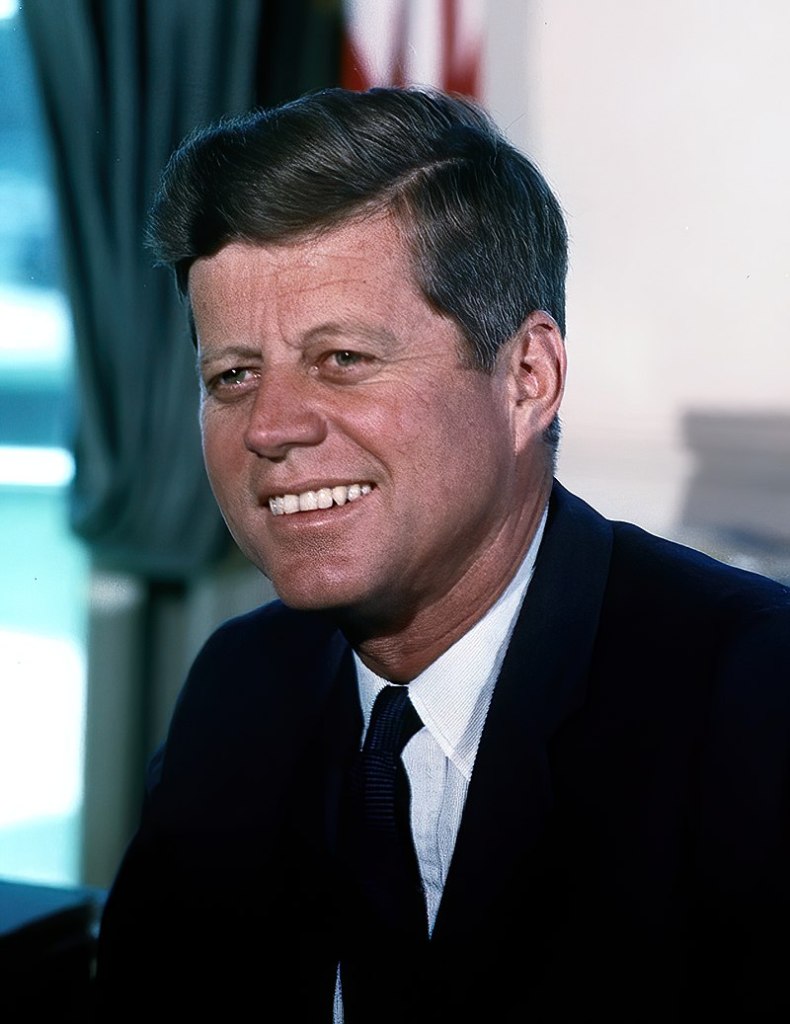
Kennedy Biography:
“The greater our knowledge increases, the greater our ignorance unfolds.” JFK
John Fitzgerald Kennedy, assassinated in 1963 at the age of forty-six, was the charismatic 35th president of the United States remembered as much for his initiatives, which were many as his accomplishments, which were few.
JFK, born into a wealthy New England family, the second oldest of nine siblings, educated at the best schools but he was a poor student academically, having interests only in history and girls. Near the end of his studies at Harvard he finally pulled himself together enough to author a commendatory analysis, as his senior thesis, of England’s lack of preparation for WWII. The thesis relied heavily on his father’s contacts and position as the U.S. ambassador to England. His thesis was soon published in book form, titled Why England Slept, and sold 80,000 copies in England and the U.S.
He joined the U.S. Navy after Harvard and commanded a torpedo boat in the South Pacific during WWII. His boat was split into two by a Japanese warship, killing two of his sailors and permanently injuring his back. He and his remaining sailors managed to swim to a nearby island and were rescued six days later.
In 1952 he ran for the U.S. senate from Massachusetts challenging the Republican incumbent Henry Cabot Lodge. Kennedy won the race and became a rising star in Democratic politics.
After the election to the senate, he married Jacqueline Bouvier in 1953. They had three children: Caroline, John Jr., and Patrick Kennedy.
While recovering from back surgery in 1956, due to his WWII naval injury, he began his book, Profiles in Courage, with Ted Sorensen, which won him a Pulitzer in 1957.
After 8 undistinguished years in the senate, he ran for president in 1960 against Richard Nixon. He won, becoming the second youngest president ever elected. He served as president for three short years, being assassinated by Lee Harvey Oswald in Dallas, Texas on 22 November 1963. His domestic and foreign policy initiatives were significant but due to his limited time in office he saw few results or conclusions related to his governing vision. A few of his strategies, visions, and world events during his presidency are listed below:
- Creation of the Peace Corps in 1961
- Increased U.S. involvement in Vietnam 1961-1963
- Bay of Pigs Invasion 1961
- Soviet construction of the Berlin Wall in 1961
- Cuban Missile Crises 1962
- Desegregation of Mississippi colleges in 1962
- Nuclear Test Ban Treaty with Great Britain and the Soviet Union 1963
- Sent the Civil Rights Act to Congress in 1963 (passed into law in 1964)
- Proposed sweeping tax cuts in 1963 (Revenue Act passed in 1964)
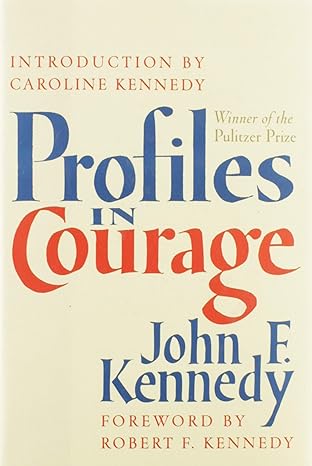
Profiles in Courage:
Profiles in Courage is a compilation of vignettes describing eight senators’ actions that bucked their party and sometimes popular public sentiment to help pass legislation. Each vignette is preceded by a short ‘Time and Place‘ chapter that sets the stage and mood of the country at the time.
- Federalist John Quincy Adams, from Massachusetts, broke with his party and sided with the Republicans. The Republicans became better known as the Democrat-Republicans which eventually became just the Democrats. The Federalist party morphed into the Republicans with a slight stop-over as Whigs. Using today’s terms Adams broke with the Republicans and sided with the Democrats. Adams courage was for shutting down the Massachusetts economy by voting for the Embargo Act of 1807. The act attempted to punish the English for their impressment of American sailors and disrespecting American sovereignty. War with England occurred shortly after in 1812.
- Federalist and Whig Daniel Webster, also from Massachusetts, spoke in favor of the Compromise of 1850. The Compromise of 1850 was five separate bills concerning slavery status in various states and the District of Columbia, California state admission to the Union, boundary disputes between the states, and assumption of Texas debt by the Federal government. The bills broke mainly along geographic lines, northern states versus southern states with party loyalty playing a secondary role. The Compromise of 1850 kicked the slavery issue down the road and postponed the civil war for ten years. At the time it was believed the compromise would settle the issue permanently. The consequence of voting in favor of the Compromise was to allow the north to grow stronger, economically and militarily, and the south to weaken.
- Democrat Thomas Hart Benton, from Missouri, was a staunch anti-slavery politician but remained in the pro-slavery Democratic Party, hating Republicans more than slavery. This was called courageous.
- Democratic-Republican (Democrat) Sam Houston, from Texas, voted against the Kansas–Nebraska Act of 1854, which would have allowed the voters of those two states to decide on the slavery question themselves effectively repealing the Missouri Compromise. Houston wanted to uphold the Missouri Compromise which would have banned slavery in Kansas and Nebraska. Texas was a pro-slavery state thus Houston’s vote was condemned as treasonous in his home state. Houston eventually left the Democrat Party.
- Republican Edmund G. Ross, from Kansas, voted for acquittal in the Democrat Andrew Johnson’s impeachment trial. As a result of Ross’s vote, along with six other Republicans, Johnson’s presidency was saved, and the stature of the office was preserved. The charges against Johnson were insubstantial and without legal merit or in other words it was all about politics.
- Democrat Lucius Lamar, from Mississippi, eulogized anti-slavery Republican Charles Sumner on the Senate floor and made other efforts to mend ties between the North and South during Reconstruction. Charles Sumner was a nominal Republican having thoroughly alienated his standing with presidents, Lincoln, and Grant. Lamar eventually convinced the voters of Mississippi that his tactics were correct, and they were wrong.
- Republican George Norris, from Nebraska, opposed Republican Joseph Gurney Cannon’s autocratic power as Speaker of the House, spoke out against arming U.S. merchant ships during the United States’ neutral period in World War I, and supported the presidential campaign of Democrat Al Smith, the first Catholic to be a major party nominee.
- Republican Robert A. Taft, from Ohio, criticized the post-WWII Nuremberg Trials that were trying Nazi war criminals under ex post facto laws. His whole argument revolved around fairness to the accused. Taft may have had the law on his side, but it was like a lawyer getting his guilty as sin, ax murdering client off Scott-free due to a technicality. Tone-deaf would be a better adjective to describe Taft rather than courageous.
Literary Criticism:
I’ve always wanted to read this book. It just took a long time to get around to it. I heard and read glowing terms of its contents since I was in high school and the few snippets I had read were interesting. I should have left matters at that.
Profiles in Courage is a pedestrian book with little new to add to the history and biography of the eight senators covered. The analysis is light and generally one sided which can be summed up as voting for Democrats is courageous, voting against Democrats isn’t. Kennedy was awarded a Pulitzer for this book. It is always good to be born and raised on the right side of the tracks.
Authorship Note:
In 1957 Drew Pearson, journalist, stated on The Mike Wallace Interview show that “John F. Kennedy is the only man in history that I know who won a Pulitzer Prize for a book that was ghostwritten for him.” Pearson added that Ted Sorensen, Kennedy’s advisor, and speech writer authored the book. Joseph Kennedy’s, JFK’s father, response was to sue Pearson and ABC, the network broadcasting Mike Wallace’s show. ABC made a retraction and issued an apology.
Herbert Parmet, historian, and biographer, wrote in his 1983 book Jack: The Struggles of John F. Kennedy that Kennedy developed the concepts and provided direction for Profiles in Courage, but it was Sorensen who wrote the bulk of the book. The essays in the first and last chapters were likely written by John F. Kennedy.
Sorensen in his 2008 memoir, Counselor: A Life at the Edge of History stated that he helped write Profiles in Courage. Sorensen admits that he wrote “a first draft of most of the chapters” and “helped choose the words of many of its sentences“. He also wrote: “While in Washington, I received from Florida almost daily instructions and requests by letter and telephone – books to send, memoranda to draft, sources to check, materials to assemble, and Dictaphone drafts or revisions of early chapters“.
Sorensen Bibliography:
- Kennedy 1965
- The Kennedy Legacy: A Peaceful Revolution for the Seventies. 1969
- Watchmen in the Night: Presidential Accountability after Watergate. 1976
- A Different Kind of Presidency: A Proposal for Breaking the Political Deadlock. 1984
- Let the Word Go Forth: The Speeches, Statements, and Writings of John F. Kennedy, 1947-1963. 1991
- Why I Am a Democrat. 1996
- Counselor: A Life at the Edge of History. 2009
Kennedy Bibliography:
- Why England Slept. 1940
- Profiles in Courage. 1956
- A Nation of Immigrants. 1958
References and Readings:
- Ted Sorensen’s Fallible Memory of the Cuban Missile Crisis. By Sheldon M. Stern. History News Network. 2008(?)
- The Reflections of JFK’s Closest Advisor, Ted Sorensen. By Robin Lindley. History News Network. 2009(?)
- Theodore C. Sorensen, 82, Kennedy Counselor, Dies. By Tim Weiner. The New York Times. 2010
- John F Kennedy: “I Think the Doc Should have Read Just One More Book Before Picking Up the Saw”. Uncredited. Spinal News International. 2017
- Ted Kennedy’s Chappaquiddick Incident: What Really Happened. By Sarah Pruitt. History.com. 2018
- Ted Sorensen on the Kennedy Style of Speech-Writing. By Richard Nordquist. ThoughtCo. 2019
- John F. Kennedy. Uncredited. Biography. 2021
- Bay of Pigs Invasion. By History.com Editors. History.com. 2022
- Cuban Missile Crisis. By History.com Editors. History.com 2023
- John F. Kennedy. By William Manchester. Britannica. 2023
- John F. Kennedy. Uncredited. Wikipedia. No date
- Herbert Parmet. Uncredited. Wikipedia. No date
- Profiles in Courage. Uncredited. Wikipedia. No date
- Profiles in Courage Award. Uncredited. Wikipedia. No date
- Profiles in Courage Award. Uncredited. JFK Library. No date
- Ted Sorensen. Uncredited. Wikipedia. No date
FootnoteA: Ted Sorensen. USA Government Photo. Bernard Gotfryd Photographer. 1983. Public Domain
FootnoteB: John F. Kennedy. Oval Office Photo. Cecil Stoughton Photographer. 1963. Public Domain
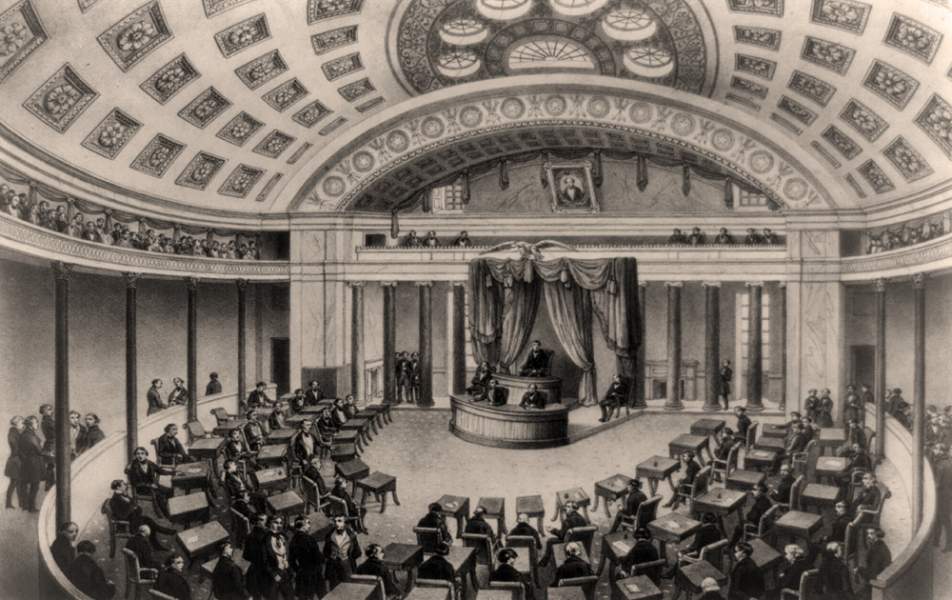
FootnoteC: The United Sates Senate Occupies its New Chamber… 1950. Library of Congress. Public Domain
 elsToday