Looking In All the Wrong Places

Johnny Lee’s 1980 recording of “Lookin’ for Love” in all the wrong places is a mantra that most scientists and engineers eventually learn. Not love, but when confronted with the conundrum of not finding an object where it should be, the first response, before questioning the theory, is to look elsewhere.

This is further encapsulated in Arthur Conan Doyle’s “Fate of the Evangeline” when Holmes quips, “Exclude the impossible and what is left, however improbable, must be the truth.”

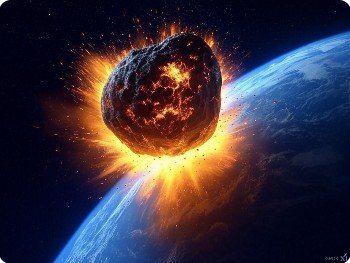
Recent research suggests that Earth and Mars originally had higher concentrations of moderately volatile elements (MVEs), such as copper. These elements were likely abundant in the early formation of Earth and Mars but were depleted by violent cosmic events, such as collisions with meteorites.

These collisions during planetary formation caused large-scale vaporization, leading to the loss of these crustal sources of MVEs into space but not necessarily those present in the mantle or core. While this new understanding challenges traditional theories about why MVEs are not in higher concentrations on Earth, it may also mean that we need to look not only to space for the lost MVEs but also to other deeper and less explored crevices and crannies here on Earth.

Additional areas of exploration on Earth may include hydrothermal vents on the ocean floors, deep crustal and mantle areas, tectonic boundaries, and active volcanic provinces.

Source: …Earth’s Missing Elements by Kim Baptista ASU, 2025. Lookin’ for Love written by Morrison, Ryan, and Mallette. Graphic: Earth Collision, Grok, 2025.
The Big Sleep

She came over near me and smiled with her mouth and she had little sharp predatory teeth, as white as orange pith and shiny as porcelain. They glistened between her thin too taut lips. Her face lacked color and didn’t look too healthy.

“Tall, aren’t you?” she said.

“I didn’t mean to be.” (said Marlow)

Her eyes rounded. She was puzzled. She was thinking. I could see, even on that short acquaintance, that thinking was always going to be a bother to her.

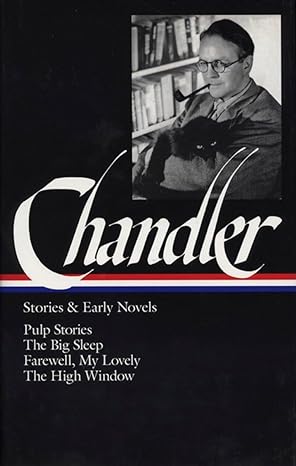
The above excerpt is from Raymond Chandler’s first Philip Marlowe novel: “The Big Sleep”, published in 1939. Marlowe is a hard, introspective private eye dreamed into existence from Chandler’s cynical but playful mind, creating the quintessential detective and crime novel of the 20th century.  “The Big Sleep” has been ranked as one of the best 20th century novels by The Guardian, Time Magazine, Le Mond, and at least 20 other current best book lists.

The 1946 movie adaptation of the book starring Humphrey Bogart and Lauren Bacall with the screenplay by William Faulkner achieved a Metascore of 86 and a user score of 8.0. The Telegraph, critiquing the movie, in 2004 stated that “The Big Sleep is the best scripted, best directed, best acted, and least comprehensible film noir ever made.”

Chandler was 44 years old, an out of work alcoholic, before he wrote his first piece, a short story, “Blackmailers Don’t Shoot”.  “Blackmailers” was the warm-up private eye mystery that would evolve, over the course of the next six years, into his first Philip Marlowe novel: “The Big Sleep”.

Source. Chandler: Stories and Early Novels published by Library of America, 1995. The 100 Greatest Literary Characters by Plath et al published by Rowman and Littlefield, 2019. Graphics: Warner Bros’ 1946. “The Big Sleep” and book cover.