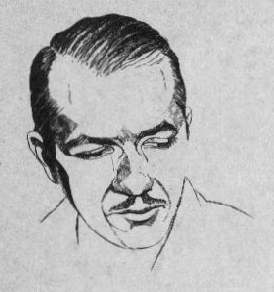
“No matter where or what, there are makers, takers, and fakers.” Heinlein: Time Enough for Love, 1973.
William Golding’s 1954 dystopian novel Lord of the Flies follows a group of stranded schoolboys who, without adult supervision, descend into savagery. Their initial attempt at cooperative survival deteriorates as fear and power struggles drive the strong to dominate the weak; order gives way to chaos, smothering courage beneath a blanket of terror.
While Lord of the Flies initially struggled in sales, Heinlein, perhaps one of its few early readers, found its premise of boys descending into barbarity overnight to be an absurd fiction. In response, he swiftly crafted Tunnel in the Sky, a sci-fi adventure that presents a striking contrast with a parallel plot: instead of chaos and savagery, his young survivors rise to heroic heights, confronting their primal fears with resilience and camaraderie.
The ninth of Heinlein’s thirteen juvenile novels (1947–1963), Tunnel in the Sky is framed as sci-fi but at its core,it’s an adventure story rooted in the conceptual school of literary romanticism. A story of survival wrapped in the timeless cloak of human values and existence. The novel uses sci-fi primarily as a means to transport young student survivalists to an uninhabited planet for their final class exam: surviving 5–10 days in a primitive, dangerous setting. After depositing the students on the planet, the novel’s sci-fi categorization reverts to Call of the Wild. A passing grade is assigned to those that were able to walk or crawl out alive.
After sending the students to the planet the transport mechanism malfunctioned and they are trapped alone on the planet with only a few provisions, maybe forever. With a few knives, limited medical supplies, and other paraphernalia that would fit in packs and pockets they are forced to search out each other to put together a workable society to provide food, shelter, and defense against the elements and native man-eating fauna. With expected fits and starts the kids put together a workable society that provides for their needs and a few wants eventually raising the question of whether they would even accept a rescue.
Heinlein was an incorrigible optimist and humanist. He believed humanity could and will solve all existential problems. To him Lord of the Flies was an impossibility. Humans want to live and self-interest eventually embraces “The needs of the many outweigh the needs of the few” (Spock-The Wrath of Khan).
In semitic languages such as Hebrew, Lord of the Flies is a literal translation of Beezlebub, who was initially a minor Philistine god that expelled flies, believed to be a source of sickness. Over time the Jews referred to him as a major demon and eventually Christianity elevated him to Satan himself. In Indo-European languages Beezlebub literally translates to Lord of the Jungle, one who conquers for the good of humanity: lebensraum. Golding’s Beelzebub represents dystopian destruction; Heinlein’s brings forth the utopian Lord of the Jungle.
Source: Tunnel in the Sky by Robert Heinlein, 1955. Graphic: Heinlein in Amazing Stories, 1953. Public Domain.
 elsToday