During the late 18th century French Revolution, the peasants laid their grievances at the feet of the nobles and took their heads in lieu of apology and retribution. As the years passed the revolutionary fervor subsided, Napoleon’s reign was brief yet transformative, and finally Louis XVIII, replacing Napoleon, restored the French nobility which brought peace to the land but also returned the country to the immoral customs of yore, not that they really went away, of avarice, promiscuity, and vice. Themes that Honoré de Balzac vividly paints in Old Goriot (Gor-e-u or Gor-e-ot), his greatest novel, first published in serial form in 1834; a fearless reflection of the Realist artistic movement taking shape in his time.
In this forlorn, unflattering critique of French society he uses a fine brush to sketch the uncomfortable and unseemly details of a decayed culture like a faded relic of indulgence, stripped of its former grandeur, except now the lower classes join the upper crust in a race to the dishonorable depths of unprincipled shame.
Honoré de Balzac’s Old Goriot tells the tale of unrequited, selfless paternal love thoroughly blind to the selfish indifference of his two young daughters, Delphine and Anastasie who have forsaken their father for wealth and prestige. Eugene de Rastignac, a young but poor law student, pursues the married Delphine with the blessings of her father with little thought about the moral implications of his ambitious desires or the Faustian struggles they entail. Vautrin, a criminal mastermind, enters the scene to put an exclamation point on the plot’s everything is inbounds, nothing is forbidden in early 19th century Parisian life. As Goriot dies alone, broke and broken, Eugene must decide his path in a city of corruption, indifference, and immorality. To succumb to the ruthless ambition of Parisian society or fight for a moral existence to save his soul.
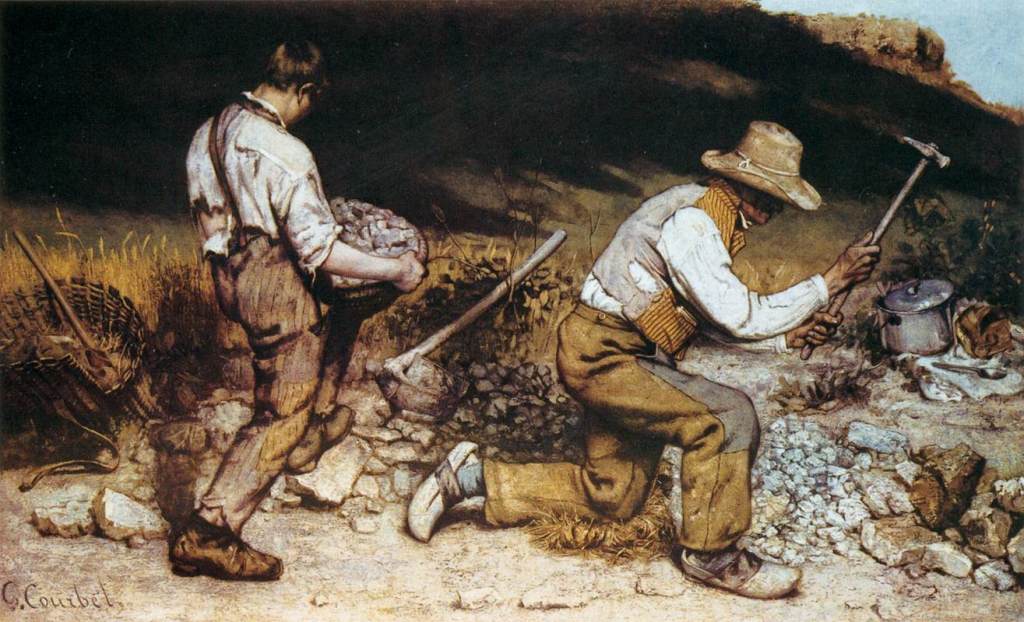
Source: Old Goriot by Honoré de Balzac’s, 1834. Graphic: The Stone Breakers by Gustave Courbet, 1849 (Realism art movement).
 elsToday