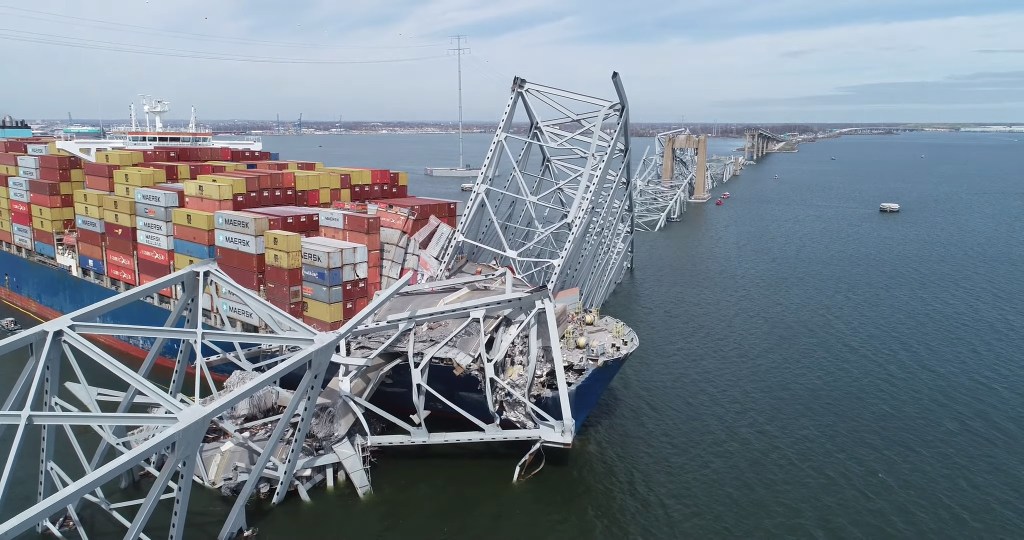
An hour and a half after midnight on 26 March 2024 the main spans of the Francis Scott Key bridge collapsed when the Singapore registered container ship MV Dali lost power and collided with the supporting pier of the main truss section. The NTSB blamed the bridge for being old and not up to snuff with the latest safety features. If the bridge had been built a day after the collision with adequate safety redundancies in place it certainly would not have collapsed.
The bridge collapse blocked the shipping channel to the Port of Baltimore, causing daily economic losses of $15 million and billions in total from damages, lost business, and liability.
The Maryland Department of Transportation stated that construction of a replacement bridge, which began in early 2025 is projected to take four years to complete, with an estimated cost of $2 billion.
The U.S. government and Maryland sued the ship’s owners and operators for full liability but maritime law limits catastrophic losses for shipping companies. The owners and operators will be limited to $100 million in damages, mainly for cleanup of collapsed bridge.
The ship’s owners not only argued for limited liability under maritime law, but that bridge was ill-prepared for a sneaky late-night naval attack on its structure. Of course, the fact that the ship was ill-prepared to sail the seven seas is immaterial. Legal arguments are interesting features of modern life, providing unlimited opportunities for head scratching cognitive dissonance and wonderment.
Graphic: Francis Scott Key Collapse by NSTB.
 elsToday