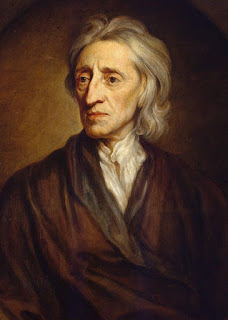
John Locke, the intellectual and philosophical father of modern Western democracies, argues in his Second Treatise of Government that membership in a political society—and thus citizenship—is not automatically granted by birth on a country’s soil alone. Instead, it depends on the concept of consent, whether explicit or tacit, and the allegiance of the parents. Locke asserts that a child’s status is tied to the political community of the parents rather than merely the geographic location of their birth. Citizenship to Locke was not a right but a contract between the governed and the government. A summation of his reasoning follows:
- Voluntary Consent as the Basis of Citizenship: Locke begins with the premise that all individuals are born free and equal in a state of nature. Political society emerges only through the voluntary consent of individuals to join together. For Locke, citizenship is not an inherent trait but a contractual relationship. A child born on foreign soil to non-citizen parents has not entered this contract, nor have their parents done so on their behalf.
- Parental Influence on Political Identity: Locke suggests that a child’s initial political identity derives from their parents. He describes the natural subjection of children to parental authority, implying that their political allegiance aligns with that of their parents until they reach an age where they can consent for themselves. If the parents are foreigners—not members of the political society where the child is born—they owe no allegiance to that country’s government, and thus neither does the child by extension.
- Rejection of Jus Soli: Unlike later theories of jus soli (right of the soil), Locke does not consider birth on a territory sufficient for citizenship. He distinguishes between temporary presence and permanent allegiance. A foreigner residing in a country does not automatically become a member of its commonwealth unless they explicitly consent to its laws and government. A child born to such foreigners, being incapable of agreeing to these terms, does not acquire citizenship through birth alone.
- Tacit Consent and Its Limits: Locke acknowledges that tacit consent—such as owning property or residing long-term in a country—can signal allegiance. However, a newborn child cannot provide consent, tacit or otherwise. If the parents are merely visitors or temporary residents, their presence does not imply a commitment to the political community, and thus the child does not gain citizenship by default.
- An Illustrative Analogy: Locke reinforces his argument with an example: a child born to English parents in France does not become a French subject simply because of the location of birth. Instead, the child remains tied to the English commonwealth through the parents’ allegiance. This reflects Locke’s view that citizenship stems from political bonds, not just physical geography.
In summary, Locke’s arguments about citizenship, consent, and political society in his Second Treatise of Government are deeply rooted in his broader natural law framework. Natural law, for Locke, is a set of universal moral principles derived from reason and human nature, which govern individuals in the state of nature—before the establishment of organized political societies.
Locke contends that a child born on foreign soil to non-citizen parents is not a citizen of that country because citizenship requires consent and allegiance, which the child inherits from the parents’ status rather than the place of birth. Furthermore, a minor lacks the capacity to consent to the laws and allegiance of a foreign land. Locke’s reasoning underscores individual agency and the contractual nature of political membership, prioritizing these over a purely territorial basis for citizenship.
Source: Second Treaties of Government by John Locke, 1690. Graphic: John Locke by Godfrey Kneller 1697. Public Domain.
 elsToday