Journalism — Dan Rather 2004

In attempt to lower the odds of a sitting president’s re-election chances Dan Rather and his producer, Mary Mapes, aired a story on 60 Minutes Wednesday in 2004 critical of President George W. Bush’s National Guard service.

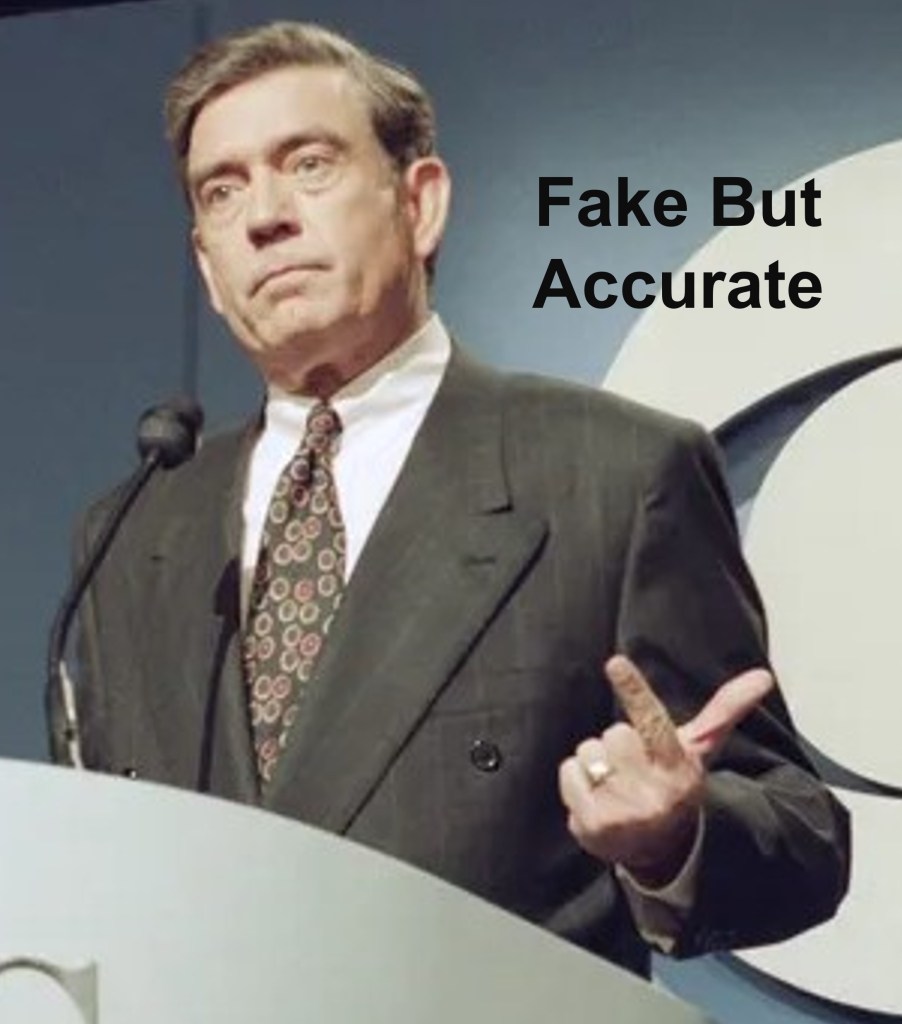
The documents used to support the story were quickly proven fabrications. The New York Times headline defending Rather’s reporting said ‘Memos on Bush Are Fake but Accurate, Typist Says’.

Fake but Accurate’ became the main defense of Rather/Mapes exposé leading to much critical derision and laughter.

The broadcast delved into whether the President had completed all his National Guard service requirements during the early 1970s. It was stated in the documents used to support the show’s story that Bush disobeyed a direct order to appear for a physical and that family friends squashed any investigation into his service.

The documents in question supposedly came from the files of Lt. Col. Jerry Killian, one of Bush’s Guard commanders. Killian died in 1984 so was unable to collaborate the documents’ contents when the story aired 20 years later. Killian’s typist claims she did not type the documents but said the fake documents accurately stated the issues related to Bush’s service. How a National Guard typist would know this wasn’t volunteered in the story.

The documents were quickly discovered to be fakes because the font, character spacing, and other computer generate text did not exist on 1970s era typewriters. The documents also appeared to have been generated on a word processor using Microsoft software. Microsoft word processing software was first released in 1983. It was also reported that Rather and Mapes were discussing the story with John Kerry’s campaign staff before the story aired which ran counter to all journalistic standards.

Mary Mapes was fired from CBS in January of 2005 and Rather was allowed to retire in March of 2005.

On the question of motive, Mapes had been researching the Bush National Guard story for 5 years before it was aired in 2004.

Source: Rather Relieved | Power Line (powerlineblog.com) by Hinderaker, 2004. A Look Back At The Controversy – CBS News by Chris Hawke, 2005. Graphic: Dan Rather, Marty Lederhandler, 1993—Caption added by author.

The Bears Are Fine

Bjorn Lomborg in the WSJ comments that The Washington Post, Al Gore, World Wildlife Fund, and others predicted in the early 2000s that the end was near for the polar bears due to melting Arctic sea-ice. Starvation and extinction was imminent.

Present estimates peg polar bear populations somewhere between 22-32,000. This is up substantially from a 1960s population estimate of 12,000.

The increase in population numbers is almost totally due to the end of hunting of the species with the loss of Arctic sea-ice having little discernible effect of the bears numbers.

Australia’s Great Barrier Reef is growing not shrinking. The Pacific atolls are also growing, not sinking into the ocean. And across the planet for every person that dies of heat 9 people die of cold.

Source: Polar Bears, Dead Coral and Other Climate Fictions – WSJ by Lomborg, 2024. Graphic: Photo of Polar Bears, Public Domain.

Alexander the Great

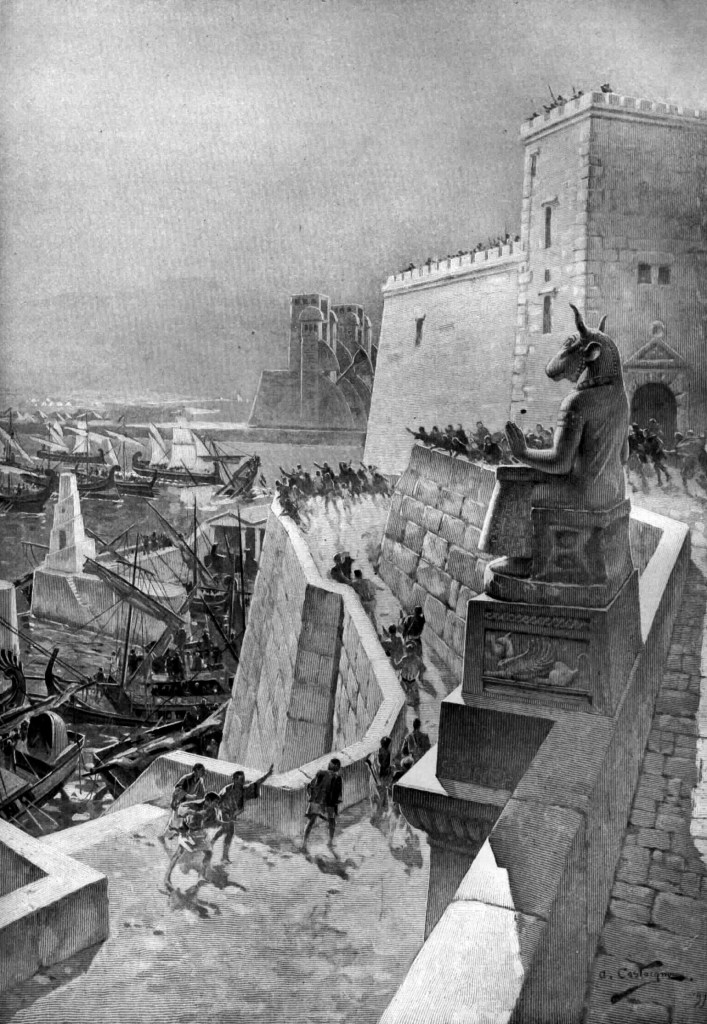
There is nothing impossible to him who will try.’ Alexander is believed to have said this during his siege of a fortress, possibly at Tyre or Gaza, both occurring in 332 BC.

A more direct translation from the original Greek changes the above quote to ‘For the courageous, nothing is unattainable.’ The first quote emphases determination while the more accurate second translation stresses courage.

The saying has been passed down through the ages but the exact where, when, and even if he said this has been lost to the winds of time.

Tyre was an island fortress about 0.6 miles off the Mediterranean coast in southern Lebanon. Alexander at the time lacked a navy to attack the fortress so he built a 3200’ long by 200’ wide causeway from the shore to the island which is still in existence to this day. After 4 months the land siege proved ineffective, causing Alexander to put together a navy. The combined naval and land siege allowed Alexander to capture the city.

During the siege of Gaza, shortly after Alexander’s victory over Tyre, the Macedonian army captured the city on their 4th assault of the city’s walls using the machines that were built to breach the walls of Tyre. Repercussions for the cities refusal to surrender were catastrophic with Alexander slaughtering all males and selling the women and children into slavery.

Source: Siege of Tyre by Uggerud, 2024, The Collector. Siege of Gaza by Hansley, Greece High Definition. Courage of Alexander, Memoria Press. Alexander the Great.org. Graphic: The Great Siege of Tyre by Andre Castaigne, 1898-99, Public Domain

X-Men Origins: Wolverine

I’m currently working my way through the 10 X-Men Wolverine flicks.

In the 2009 X-Men Origins: Wolverine, exhibiting twisted bureaucratic logic, the U.S. Army takes a seemingly immortal and invincible mutant and makes him into the more immortal and more invincible Wolverine. Not a logical plot line but it does make for an enjoyable movie.

This is the 4th X-Men film and the 1st solo Wolverine project of a planned trilogy.  

Genre:  Action—Fantasy—Sci-Fi

Directed by: Gavin Hood

Screenplay by: David Benioff, Skip Woods

Music by:  Harry Gregson-Williams

Cast: Hugh Jackman, Liev Schreiber, Ryan Reynolds

Film Locations:  Australia, Canada, New Zealand, U.S.

Els:  7.5/10

IMDb:  6.5/10

Rotten Tomatoes Critics:  38/100

Rotten Tomatoes Audience:  58/100

Metacritic Metascore:  75/100

Metacritic User Score:  8.0/10

Theaters: 1 May 2009

Runtime: 107 minutes

Budget:  $150 Million

Worldwide Box Office:  $373.1 Million

Source: IMDB, Rotten Tomatoes, Metacritic, Wikipedia. Graphic: Movie Poster by 20th Century Fox

Ben Marco Malbec 2019

Malbec from Uco Valley, Mendoza, Argentina

Purchase Price: $17.99

James Suckling 93, Robert Parker 92, Natalie Maclean 92, ElsBob 93

ABV 14.5%

Deep purple in color, aromas of blackberries, blueberries, and chocolate, oh my, medium-full bodied, more smooth than tannic, medium dry, and not very acidic. We had this with some mild cheese and slices of pepperoni. Terrific.

An excellent fine wine at a very reasonable price. A 93 rating usually goes for 2 to 3 times the price I paid. I initially tried this wine in 2021 and rated it a 91. It has improved significantly with age.

Bone Owens–Love Out of Lemons

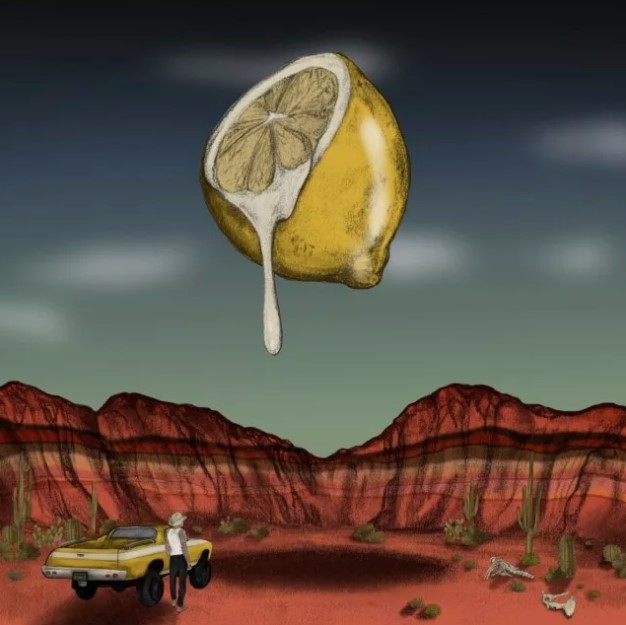
‘Love Out of Lemons’, Bone Owens second album released in July of 2024, is a rockin’ nod to yesteryear’s bands: Zeppelin, Bad Company, and Tom Petty, with an easy continuous trip to the present sounds of The Black Keys and The Record Company. Every song brings an old memory with a new twist.

In an interview with American Songwriter, he mentions how his songs come and progress—’I’m not that sit down and bang my head against the wall kind of songwriter. I will work on a song, and if there’s an idea that feels worthy, I’ll chase it down a bit. I give time for inspiration to come or something to fall from the ether. I never force it.’

Give a listen to 11 original Owen ear candy tracks establishing the bluesy rock melody and matching lyrics as the king that was and is.

Source: Apple Music. AllMusic. American Songwriter. Graphic: Love Out of Lemons album cover, Thirty Tigers copyright.

String a Bow and Thread 12 Axe Rings

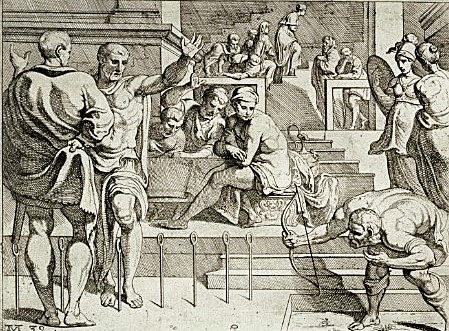
Ulysses upon leaving Troy traveled for 10 years before returning home to his wife Penelope only to find she doesn’t recognize him, and he has a house filled with suitors seeking his wife’s hand in marriage.

To prove he is the rightful husband and king he shoots an arrow through the rings of 12 axe heads. Upon completing the quest, he kills all suitors for his wife’s hand.

An Excerpt from Book 21 of Homer’s Odyssey:

So the great master drew the mighty bow,
And drew with ease. One hand aloft display’d
The bending horns, and one the string essay’d.
From his essaying hand the string, let fly,
Twang’d short and sharp like the shrill swallow’s cry.
A general horror ran through all the race,
Sunk was each heart, and pale was every face,
Signs from above ensued: the unfolding sky
In lightning burst; Jove thunder’d from on high.
Fired at the call of heaven’s almighty Lord,
He snatch’d the shaft that glitter’d on the board
(Fast by, the rest lay sleeping in the sheath,
But soon to fly the messengers of death).

Now sitting as he was, the cord he drew,
Through every ringlet levelling his view:
Then notch’d the shaft, released, and gave it wing;
The whizzing arrow vanished from the string,
Sung on direct, and threaded every ring.

Source: Bulfinch’s’ Mythology, 1867. Odyssey by Homer. Graphic: Ulysses by Theodore van Thulden, 1632, Public Domain.

Journalism–Fox Butterfield

Fox Butterfield was a New York Times reporter that wrote several articles in the 1990s expressing total bewilderment about the ‘paradox’ between putting criminals in prison and the subsequent drop in crime. It wasn’t until the year 2000 that Butterfield finally started to acknowledge that locking up the criminals was responsible for the drop in crime in our streets.

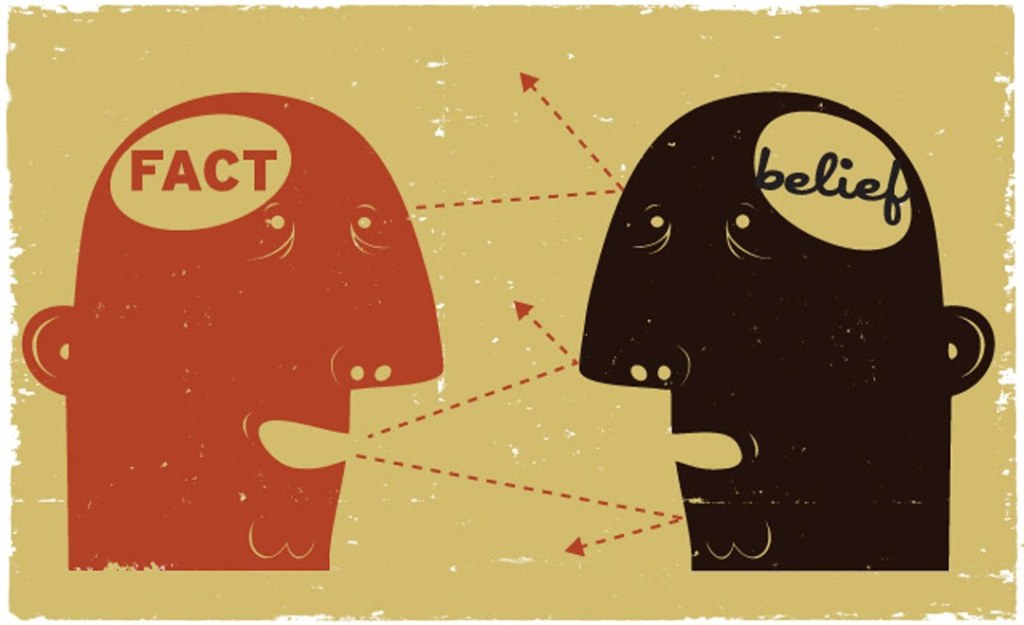
James Taranto with The Wall Street Journal invented the term ‘The Butterfield Effect’ for Fox Butterfield and people in general who can’t accept facts or data that run counter to their beliefs. Another term for the ‘Butterfield Effect’ is cognitive dissonance.

Source: The Fox Butterfield Follis, Washington Examiner, 2000. Graphic: Cognitive Dissonance, de Castro, Contemplative Studies, 2020

Predicting Black Swans in the Market–Not

Bloomberg’s Mark Gongloff postulates that the market’s next Black Swan event will be related to climate change like the Amazon rainforest’s dieback or the permafrost melts and releases all its stored methane and CO2. These events or any catastrophic climate-related event could cause the stock market to lose 40-50% of its valuation. Since we are at it, so could nuclear winter, a 6-mile-diameter asteroid hitting Wall Street or a super volcano blowing Wyoming to the Moon.

By definition, black swan events are not predictable. Some may seem inevitable in hindsight but predicting is difficult especially the future:)

To put a 40-50% climate induced market drops in context, during the great depression the market dropped 83%, 1937-38 just prior to WWII it was 84%, 1973-74 48%, dot.com bubble 49%, mortgage bubble 56.7%, and during covid 34-37%. So, been there, done that, lived through it.

This prediction is based on a study by EDHEC-Risk Climate Impact Institute in London. Gongloff fails to explain how the study reached its market conclusions or what the probability is of the climate events even happening. He just says that the sky is falling.

Gongloff states that a key finding of the study is that climate change damage isn’t priced into the market yet. Gads, this revelation comes from someone working for Bloomberg. The market can’t even price in tomorrow’s JOLTS report much less a possible 2 degree rise in temps by 2100.

‘What if’ scenarios are academically interesting, occasionally, but usually not informative, educational, or worth the resources that produced the study. If a business school could correctly predict Fed interest rate movement for this year rather than forecasting the end of the world in 50 years, I may sit up and listen. Until then–meh.

Source: ‘The Market’s Next Black Swan is Climate Change’ by Mark Gongloff, Bloomberg, 19 July 2024. Understanding Market Corrections by Wes Moss, 2018. Graphic: Black Swan, AI generated, 2024.

Dog Days of Summer

Now came the dog days—day after day of hot, still summer, when for hours at a time light seemed the only thing that moved…’ A narrative of peace from Richard Adams’ 1972 novel: ‘Watership Down’ during the interval when Hazel and his fellow rabbits were settling into their new home.

Some Greeks believed that the dog days of summer began when the Dog Star Sirius, thus the name, popped into the night sky on the 19th of July each year. Homer grimly stated that the appearance of the star ‘brought evil portent, …heat and fevers.’

The Old Farmer’s Almanac places the dog days from 3 July through August 11. Others put them from 23 July through 23 August.

Source: Watership Down by Richard Adams, 1972. Iliad by Homer. The Old Farmer’s Almanac. Graphic: Dog Days, AI generated, 2024.