Mondegreen Definition (mon-de-green):

- a word or phrase that results from a mishearing especially of something recited or sung. (Merriam-Webster)
- a word or phrase that is misinterpreted as another word or phrase, usually with an amusing result. (Collins)
- also known as oronyms
- the word originates with journalist Sylvia Wright, who wrote a column in the 1950s in which she recounted hearing the Scottish folksong The Bonny Earl of Morray. Wright misheard the lyric “Oh, they have slain the Earl o’ Morray and laid him on the green” and thought it was “Oh, they have slain the Earl o’ Morray and Lady Mondegreen.” (Merriam-Webster)
“In love, as in life, one misheard word can be tremendously important. If you tell someone you love them, for instance, you must be absolutely certain that they have replied ‘I love you back’ and not ‘I love your back’ before you continue the conversation.” (Lemony Snicket, Horseradish: Bitter Truths You Can’t Avoid. HarperCollins, 2007)
“The interesting thing about mondegreens is that the mis-hearings are generally less plausible than the intended lyrics.” (Steven Pinker, The Language Instinct: How the Mind Creates Language. William Morrow, 1994), but they are usually more interesting and amusing.
I was out for a walk in the neighborhood the other day, early October snow crunching beneath my sneakers, iPods keyed into a blues mix, when Tony Joe White’s first and only hit ‘Folk Sally Annie‘ started playing; a song I’ve heard a hundred times before, except for the first time I listened to the intro. In the intro Tony Joe White explains who ‘Folk Sally’ is and I learned, as I said, for the first time, that ‘Folk Sally‘ is a plant similar to a turnip green, ‘except it ain’t‘ and the po’r folk of Louisiana picked it in the wild for their dinner. At this point I realized what I had been hearing for decades wasn’t ‘Folk Sally Annie‘ but ‘Polk Salad Annie‘. Chorus below:
‘Polk salad Annie, polk salad Annie
Everybody said it was a shame
‘Cause her momma was a-workin’ on the chain gang
(A mean, vicious woman) Uh!‘
It just goes to show ya that even with ears wide open you may not be hearing reality. I remember listening to an FM station many years ago that did a three- or four-hour show consisting of call-in requests by listeners who couldn’t remember the title of the song, just a snippet of the lyrics, which they amusingly mis-quoted. These misheard lyrics are what are commonly known as mondegreens or oronyms. Words one hears but interpretes wrongly. It was a great show of great music and amusing stories of the misinterpreted.
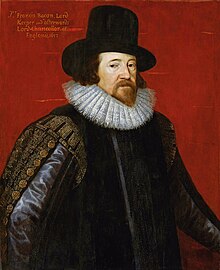
A story I ran across a few years ago, I no longer remember the names of those involved, relates a father’s advice to his 10-year-old son when he was leaving for grade school one morning. His father holds him back for a few seconds and tells him, “Remember son. ‘Knowledge is power. France is bacon‘.” With this consul he sends his son off to class. His son pondered this remarkable piece of advice all the way to school and most of the rest of that day. ‘Knowledge is power. France is bacon.’ The ‘knowledge is power‘ part he understood but he was totally perplexed by the ‘France is bacon‘ bit. What could that mean? Years later he stumbled across a quote in one of his high school textbooks which said, ‘knowledge is power‘. It was attributed to forteenth and fifteenth century English philospher Francis Bacon.
The brain is a remarkable organ. If it recieves something blurred or indistinct it will fill in the blanks or gaps and we are never the wiser, for a while anyway. Hopefully.
Truly Great Lyrical Mondegreens:
- “Every time you go away/you take a piece of meat with you” (for ” … take a piece of me with you,” by Paul Young)
- “There’s a bathroom on the right” (for “There’s a bad moon on the rise” by Creedence Clearwater Revival)
- “Excuse me while I kiss this guy” (for “Excuse me while I kiss the sky” by Jimi Hendrix)
- “The girl with colitis goes by” (for “the girl with kaleidoscope eyes” by the Beatles)
- “Dirty things done to sheep” (for “Dirty deeds done cheap” by AC/DC)
- “Bring me an iron lung” (for “Bring me a higher love” by Steve Winwood)
- “It doesn’t make a difference if we’re naked or not” (for “It doesn’t make a difference if we make it or not” by Bon Jovi)
- “She knows Ohio stinks” (for “She knows the highest stakes” by Dixie Chicks)
- “It’s too late, you’re gonna die” (for “It’s too late to apologize” by OneRepublic)
- “There’s no happy ending, no hand relief” (for “There’s no happy ending, no Henry Lee.” by Train)
- “I’m gonna take my horse to a hotel room” (for “I’m gonna take my horse to Old Town Road” by Lil Nas X)
Polk Salad Annie Original and Covers (Partial List):
- Tony Joe White. Album ‘Black and White‘. 1969
- Tony Joe White and Johnny Cash. Live – Johnny Cash Show. 1969(?)
- Tom Jones. Album ‘Tom‘. 1970
- James Burton. Album ‘The Guitar Sounds of James Burton‘. 1971
- Elvis Presely with James Burton on Guitar. YouTube. 1972
- Elvis Presely. Album ‘C.C. Rider‘. 1973
- Dan Aykroyd and Jim Belushi. Album ‘Have Love will Travel‘. 2003
- James Burton. Ford v Ferrari Remix. 2019
FootnoteA: Painting of Francis Bacon by Paul van Somer, 1617. Wikimedia.
References and Readings:
- Your Favorite Mondegreens. By Ianin Aschendale. Writing Forums. 2018
- Behind the Song: Tony Joe White, “Polk Salad Annie”. By Rick Moore. American Songwriter. 2019
- Definition and Examples of Mondegreens. By Richard Nordquist. ThoughtCo. 2020
- 40 Song Lyrics That We’ve Been Messing up This Whole Time. By Caroline Picard. 2020
- The Best Misheard Lyrics of All Time. By Jacob Uitti. American Songwriter. 2021
- 15 Most Commonly Misheard Song Lyrics… By Jenny. AllWomenStalk. No date
- What are Mondegreens? By Gary Martin. Phrases.org.uk. No date
- Mondegreen. Uncredited. Word Origins. 2021
- Mondegreen. Uncredited. Oxford English Dictionary. No date
- Mondegreen. Uncredited. Wikipedia. No date
- Mondegreens and Oronyms. Uncredited. Word Info. No date
- Polk Salad Annie. Uncredited. Wikipedia. No date




 elsToday