Summer of 1928

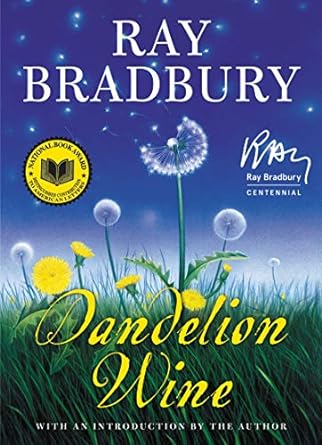
Dandelion Wine

By Ray Bradbury

William Morrow

Copyright: © 2006

Original Copyright: © 1957
AmazonPic
Oh, when I look back now
That summer seemed to last forever
And if I had the choice
Yeah, I'd always wanna be there
Those were the best days of my life

Song written by Bryan Adams/Jim Vallance - Summer of 69 - Reckless album - Released 1985

Bradbury Biography:

All education is self-discovery.” Bradbury

Ray Bradbury, 1920-2012, was an American treasure, an exceptionally talented and prolific writer in multiple genres that included science fiction, horror, and mystery but his passion lay in the field of fantasy. He felt that fantasy, by his definition, was “a depiction of the unreal“. He took inspiration and pleasure from the fantastical works of Poe, Wells, and Verne and spent a lifetime mining his imagination for the unreal. Fantasy was where he could not only “create myths for the future” but warn society of the dangers of technology and conformity. In his words: “to prevent the future.”

FootnoteA

Bradbury was born in Waukegan, Illinois, a small town of 20-30 thousand people, at the time, north of Chicago, and came of age there during the Great Depression. It was a time when the future was murky, and he said he needed his imagination to see through the gloom. That imagination was fruitful and varied.

His writing was packed full of social commentary, especially Fahrenheit 451, but more on that in a bit. He wrote about the unreal side of the present but with an eye to the future. His prescient vision alerted us 75 years ago about the evils that will come from a monoculture dispensed from the organs of mass media and technology. He was afraid that it would keep society passive and ignorant. And ignorance has come to pass.

Bradbury never drove a car, but he did ride in them, he did not board a plane, heights bothered him, until he was in his sixties, and he never used a computer. He thought the internet was useless, perfectly encapsulating a flaw, maybe the major flaw in science fiction: predicting the future is hard and mostly wrong. Machines didn’t interest him but when he wrote about them, he just made it up as he went.

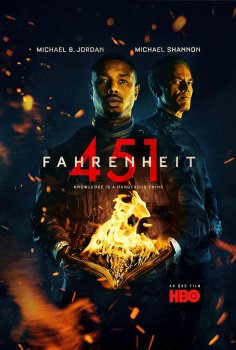
He initially corrected people when questioned about his “science fiction” writing, “I don’t write science fiction” he insisted. “I write fantasy. Fantasy is a depiction of the unreal.” In later interviews when referred to as a science fiction writer he just graciously accepted it and moved on. Science fiction he also said was “a depiction of the unreal but with an attempt to be faithful to reality.” He didn’t want to be faithful to reality. He stated that of all the stories he wrote, and it’s believed that there were more than a thousand of them, no one seems to be able to add them all up, Fahrenheit 451 is the only true science fiction he ever wrote. It not only has withstood the test of time as a classic piece of sci-fi literature, but it also was rendered into two motion pictures in 1966 and 2018. The former was only marginally bad with the latter being just flat out bad, proving the point that low budget sci-fi does not win any awards in Hollywood or with audiences.
FootnoteB

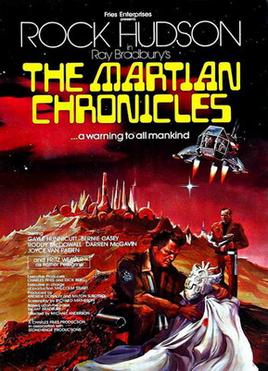
Bradbury made his mark in the literary world with The Martian Chronicles, a collection of loosely connected short stories released in 1950. The book chronicles the settlement of Mars, the home of Martians by Americans fleeing an Earth falling into a hellish abyss.

During the height of the second Red Scare beginning in 1947, Bradbury warned of government censorship with his fourth and possibly his greatest novel, Fahrenheit 451. The story initially appeared in book format in 1953 and was reprinted in the nascent publication Playboy in 1954. Fahrenheit 451 is the story of firemen not putting out fires but starting them. They burn books, and buildings with books to keep people ignorant and thus obedient. An obedient population was not a threat to the government.

Dandelion Wine:
FootnoteC

Dandelion Wine is Bradbury’s fifth novel and his most intimate creation. It is a loose collection of forty-nine semi-autobiographical short stories detailing a 12-year-old boy, Douglas Spaulding and his 10-year-old brother Tom, trying to stretch out the summer of 1928 into a never-ending triumph of pubescence experience in small town America.

In a 1974 introduction to Dandelion Wine, titled Just This Side of Byzantium…, Bradbury writes: “…Waukegan was Green Town was Byzantium with all the happiness that that means, with all the sadness that these names imply. The people there were gods and midgets and knew themselves mortal and so the midgets walked tall so as not to embarrass the gods and the gods crouched so as to make the small ones feel at home…Here is my (Bradbury’s) celebration, then, of death as well as life, dark as well as light, old as well as young, smart and dumb combined, sheer joy as well complete terror written by a boy who once hung upside down in trees, dressed in his bat costume with candy fangs in his mouth, who finally fell out of the trees when he was twelve and went and found a toy-dial typewriter and wrote his first ‘novel’.”

FootnoteD

About half of the chapters in the book were initially published, starting in 1946, as short stories in magazines such as Weird Tales (The Night), Charm (The Green Machine), and The Saturday Evening Post (The Happiness Machine). In 1957 all the stories were brought together into the book, Dandelion Wine. The title refers to Douglas’s grandfather making wine every summer from the petals of dandelions. Bradbury used the title as a metaphor for cramming all the joys and happenings of summer into one bottle. Or one book.

As a testament to the lasting appeal of the book, the 1971 crew of Apollo 15 named a lunar crater Dandelion. In 1986, as a testament to Bradbury’s lasting appeal as a writer, an asteroid was named after him called 9766 Bradbury.

And finally, in a 2010 interview with Universe Today a few years before his death, in reference to being buried on Mars, he said: “I don’t want to be the first live person to arrive there,” he said. “It’ll be too late. But I want to be the first dead person that gets there. I want to arrive in a Campbell’s soup can. Bury me on Mars in (a) thing called the Bradbury Abyss. They gotta name a place on Mars for me, and I will welcome that.” Maybe Elon Musk can help with this.
FootnoteE

Literary Criticism:

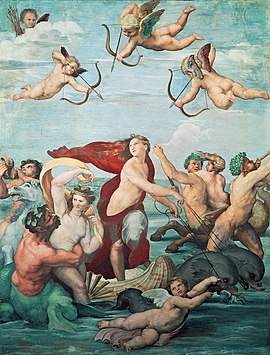
Ray Bradbury writes poetry as prose. Natural and chatty prose. Prose rich in explanation, metaphor, and image. Prose that is a joy to read, planting scenes in your mind that grow into a picture worthy of Raphael’s Triumph of Galatea.

Dandelion Wine is the extraordinary time in a boy’s life where innocence, friendship, and happiness occur without the weight of the substantial and ponderous adult years.

Read the snippet below from chapter 29 of Dandelion Wine, Summer’s Ice House and tell me you do not feel the chill.

Deep in winter they had looked for bits and pieces of summer and found it in furnace cellars or in bonfires on the edge of frozen skating ponds at night. Now, in summer, they went searching for some little bit, some piece of the forgotten winter...Summer’s Icehouse on a summer day! They said the words, laughing, and moved to peer into that tremendous cavern where in fifty, one-hundred, and two-hundred-pound chunks, the glaciers, the icebergs, the fallen but not forgotten snows of January…

Dandelion Wine is a masterpiece of prose, of imagination, and fantasy.

Bradbury Literary Awards:

  • World Fantasy Award for Life Achievement 1977
  • Prometheus Award for Fahrenheit 451 1984
  • Bram Stoker Award for Lifetime Achievement 1989
  • P.V. Helmerich Distinguished author Award 1994
  • Emmy Award for The Halloween Tree 1994
  • First Fandom Hall of Fame Award 1996
  • Science Fiction and Fantasy Hall of Fame Inductee 1999
  • Medal for Distinguished Contribution to American Letters 2000
  • Hollywood Walk of Fame Star 2002
  • National Medal of Arts 2004
  • Sir Arthur Clarke Award 2007
  • Specila Citation Pulitzer. 2007
  • Ordre des Arts et des Lettres 2007
  • J. Lloyd Eaton Lifetime Achievement Award 2008
  • Spike TV Scream Award 2010

Bradbury Bibliography (‘Novels’ Only):

References and Readings:

FootnoteA: Photo of Ray Bradbury. Lennox McLendon / AP. Date Unknown

FootnoteB: The Martian Chronicles. NBC TV Poster. circa 1980.

FootnoteC: Fahrenheit 451. HBO Movie Poster. 2018

FootnoteD: Douglas Spaulding in a Field of Dandelions with Bradbury in the Background. GPT-4 Generated. 2023

FootnoteE: The Triumph of Galatea. Fresco by Rapheal. circa 1512.

Mental

One Flew Over the Cockoo’s Nest

By Ken Kesey

Penguin Group

Copyright: © 2012

Original Copyright: © 1962

AmazonPic

Kesey Biography:

Since we don’t know where we’re going, we have to stick together in case someone gets there.” Kesey

FootnoteA

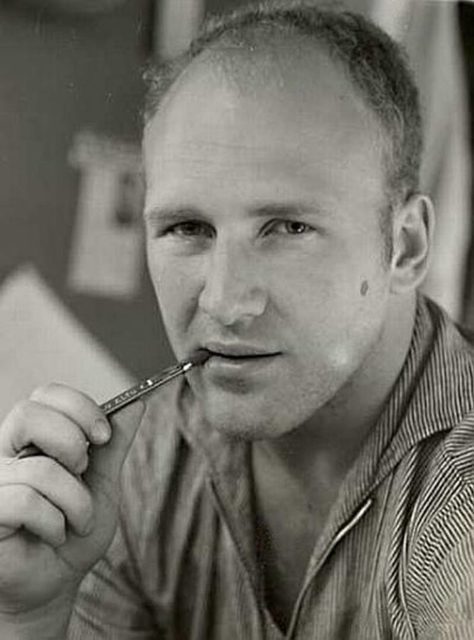
Ken Kesey, who died at the age of sixty-six in 2001, was a novelist, hippie, and beatnik, tuning into the counterculture movement of the sixties that renounced materialism, institutions, and the middle-class, while embracing LSD, free-sex, and carrots. Kesey, I believe, just embraced LSD, grass, and laughs.

After finishing college at the University of Oregon–go Ducks–he moved to California and enrolled in Stanford–go Tree??–to study creative writing from 1958 to 1961 while simultaneously settling into the counterculture lifestyle gripping the area and the nation.

In 1959 he volunteered for the CIA’s LSD mind experiments being run under the code name MKUltra. These experiments were conducted at a VA hospital in Menlo Park, just northwest of Stanford. At the same time in 1959 he accepted a position as an attendant in the hospital’s psych ward, working there while tripping on LSD. He began writing One Flew Over the Cuckoo’s Nest in 1959 or 60 (various sources give different dates). In 1962 Kesey published his masterpiece. The rest is history.

FootnoteB

Later, in 1964 Kesey and his band of Merry Pranksters, a group he and others formed in the late fifties, bought an old school bus, repainted it in the pop art and comic book style of Andy Warhol and Roy Lichtenstein respectively, and took off to survey and crash the Beatnik scene in New York City. While on the road to New York they handed out LSD in various forms, it wasn’t illegal until 1966, and held street party theater for the locals. The whole experience was recorded with microphones and cameras along with several books being written afterwards about the experience.

After returning to California in 1965 Kesey was arrested for marijuana possession. Fearing prison, he faked his suicide which didn’t really fool the police and escaped to Mexico. A few months later in 1966 he was captured and sent to an honor prison camp in Redwood City, California for six months where he cleared brush and kept a diary of his experience later publishing it as Kesey’s Jail Journal: Cut the M*********** Loose.

Upon release from prison, he gave up the bohemian lifestyle, returned to Oregon, and settled down to the life of a respectable middle-aged citizen with a little acid and weed still making recreational appearances.

FootnoteC

Defending his drug use he made the point, in an interview with Charley Rose in 1992, that doing drugs was a personal decision and if your neighbor incurred no harm, then no one need be concerned. A thoroughly libertarian position not terribly different than William Buckley’s view on pot. He also denied being a mindless drug addict stating in an interview with Terry Gross, “I’ve always been a reliable, straight-up-the-middle-of-the-road citizen that just happens to be an acidhead.

One Flew Over the Cuckoo’s Nest:

The story’s narrator, Chief Bromden, a 6’6″ tall member of a Columbia River Indian tribe, is a schizophrenic patient in an Oregon psychiatric hospital, passing himself off as a deaf, mute with an agreeable disposition. Bromden forms a bond of friendship with Randle McMurphy, a new psych patient who, rather than put in a few months in at a prison work farm, convinces his jailers that he is insane so he can get transferred to a no work sanitorium with better meals. McMurphy initially finds his situation much improved and installs himself as head crazy but quickly butts heads with Nurse Ratched the chief administrator for his floor. Nurse Ratched is a humorless soul sucking battle axe who quickly realizes that she is in a clash of Titans and wits with McMurphy where the winner takes all. As in Macbeth only one king, or Queen, shall live or as Shakespeare states, “if the assassination / Could trammel up the consequence”. In today’s vernacular, the Machiavellian “when you set out to kill the king, you must kill him” and damn the repercussions is more succinct.

Literary Criticism:

One Flew Over the Cuckoo’s Nest is one of the best American novels written in the latter half of the twentieth century easily standing with Steinbeck’s East of Eden and Of Mice and Men, Hemingway’s The Old Man and the Sea, Lee’s To Kill a Mockingbird, and Bradbury’s Fahrenheit 451. Except for Hemingway’s novella they all explore good and evil within the context of human nature and its effect on one’s soul. Kesey’s book pokes and prods the reader with almost farcical battles of weak minds against strong minds. Wills of strength versus the will of the state. Occasional good against consistent evil.

Every literary device and human character flaw known has been applied to this novel, simile, metaphor, personification, action, protagonist, antagonist, conflict, allusion, imagery, climax, male chauvinism, misogynism, sexuality, sexual repression, fear, hate, violence, intimidation, dominance; it is all here, a masterpiece of storytelling that maybe only Dickens was capable of duplicating.

In Aristophanes’ play The Birds he invented the term “cloud cuckoo land” as the name for his bird utopia but in reality, it was the home for the absurd. Whether Kesey intended to imitate Aristophanes social criticism and sarcasm inherent in The Birds is not known but they both found their subject matter bizarre and ridiculous.

Mental Health and the Cuckoo’s Nest:

One Flew Over the Cuckoo’s Nest, the book, the play, the movie, likely accelerated the deinstitutionalization of mental patients in the U.S. and the world. It was a process that had already begun in the mid-fifties with the introduction of the antipsychotic drug, chlorpromazine, allowing mental illness to be treated outside of a hospital setting. In the sixties and seventies President Kennedy and California Governor Reagan were champions of providing mental health services without walls. In hindsight it should have been easily anticipated the inevitable negative consequences of such policies. Homelessness and incarceration, rampant use of illicit drugs and crime, the general breakdown of societal norms when the mentally ill were allowed to take charge of their own care without supervision. Assuming logical outcomes from illogical inputs is well–illogical.

In Virgil’s Aeneid he wrote, “facilis descensus Averno (the descent to hell is easy)” or as Samuel Johnson updated the proverb by stating, “…hell is paved with good intentions”. Today we just say the “Road to hell is paved with good intentions” and hell is a dystopian wasteland.

Kesey Bibliography:

References and Readings:

FootnoteA: Photo of Ken Kesey. Maybe copyrighted. Copyright is ambiguous. Possilby Vintage News 2017

FootnoteB: Ken Kesey’s Merry Pranksters Bus

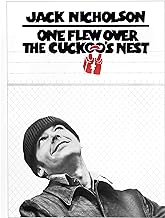
FootnoteC: One Flew Over the Cuckoo’s Nest Starring Jack Nicholson and Louise Fletcher. Amazon Picture

Politics Downstream of Culture

Profiles in Courage

Ghost Written by Ted Sorensen

Concept by John F. Kennedy

HarperCollins

Copyright: © 1984

Original Copyright: © 1956

AmazonPicture

Sorensen Biography:

FootnoteA

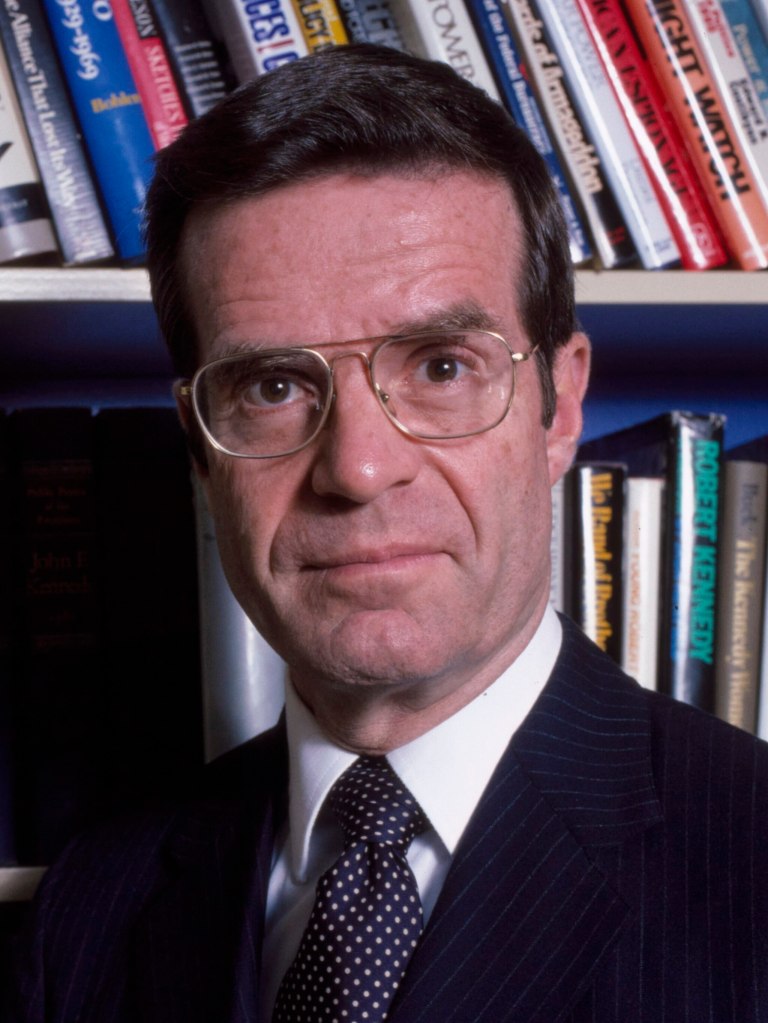
Ted Sorensen, died in 2010 at the age of eighty-two, was White House counsel and speechwriter for President Kennedy and speechwriter for Lyndon Johnson from 1961-1964. In the early days of Kennedy’s administration, he assisted in drafting the President’s inaugural speech in which the famous line, “Ask not what your country can do for you; ask what you can do for your country.”

Initially Sorensen was limited to domestic issues within the administration but after the April 1961 Bay of Pigs fiasco, a 24-hour failed attempt to overthrow Castro, which ostensibly Sorensen bitterly opposed, Kennedy asked him to help with foreign policy going forward.

Eighteen months later in October 1962, the Cuban Missile Crises gripped the nation and the world. The Soviets were staging nuclear missiles in Cuba just ninety miles from U.S. shores. The U.S. responded with a naval blockade of Cuba along with the threat of invading the island. Soviet First Secretary Khrushchev offered to remove the missiles if the U.S. promised not to invade Cuba. Khrushchev also added an additional condition less than 24 hours later, insisting that the U.S. also remove their missiles from Turkey. The President was inclined to accept the Khrushchev’s initial proposal, but the second condition took them by surprise. McGeorge Bundy, Kennedy’s national security advisor, suggested that the administration just ignore the second proposal and proceed with accepting the conditions from the first offer. Sorensen collaborated with the president and Robert Kennedy in drafting a letter agreeing to the Soviet leaders’ initial terms; missiles out of Cuba and the U.S. will not invade the island. Meanwhile, unbeknownst to most, Robert Kennedy was meeting with Soviet Ambassador Anatoly Dobrynin agreeing to also remove U.S. missiles from Turkey. This was a secret agreement that the Soviets agreed never to make public. Truth and lies. War averted.

Sorensen was also involved with Kennedy and the Vietnam War. Sorensen wrote in his memoir that the President was “determined not to lose Vietnam to communism” and that he “believed that only the South Vietnamese could win it.” Sorensen also wrote that Kennedy “never accepted the advice of those who urged him to send American combat troops to Vietnam” and that Kennedy did not believe in the Domino Theory. By 1962 the Kennedy administration had increased U.S. military personnel in Vietnam, from less than eight hundred under Eisenhower, to about 9,000 during his administration. Others have also said that Kennedy accepted without serious question the basic tenets of the Domino Theory. Sorensen also claimed that Kennedy had a secret plan to withdraw US advisers from Vietnam after the 1964 election although no one has ever been able to find any evidence to support this claim.

On 22 November 1963 Kennedy was assassinated in Dallas, Texas. Sorensen was riding in a car behind the president’s limousine when the shots were fired. Sorensen stayed on briefly after Kennedy’s death to assist the new president, Lyndon Johnson, as a speechwriter but left the White House in 1964.

Sorensen remained loyal to the Kennedy family, supporting Robert (Bobby) F. Kennedy’s presidential campaign in 1968 and attempting to provide damage control for Ted Kennedy’s Chappaquiddick drunk driving episode that resulted in the senseless death of Mary Jo Kopechne in 1969.

FootnoteB

Kennedy Biography:

“The greater our knowledge increases, the greater our ignorance unfolds.” JFK

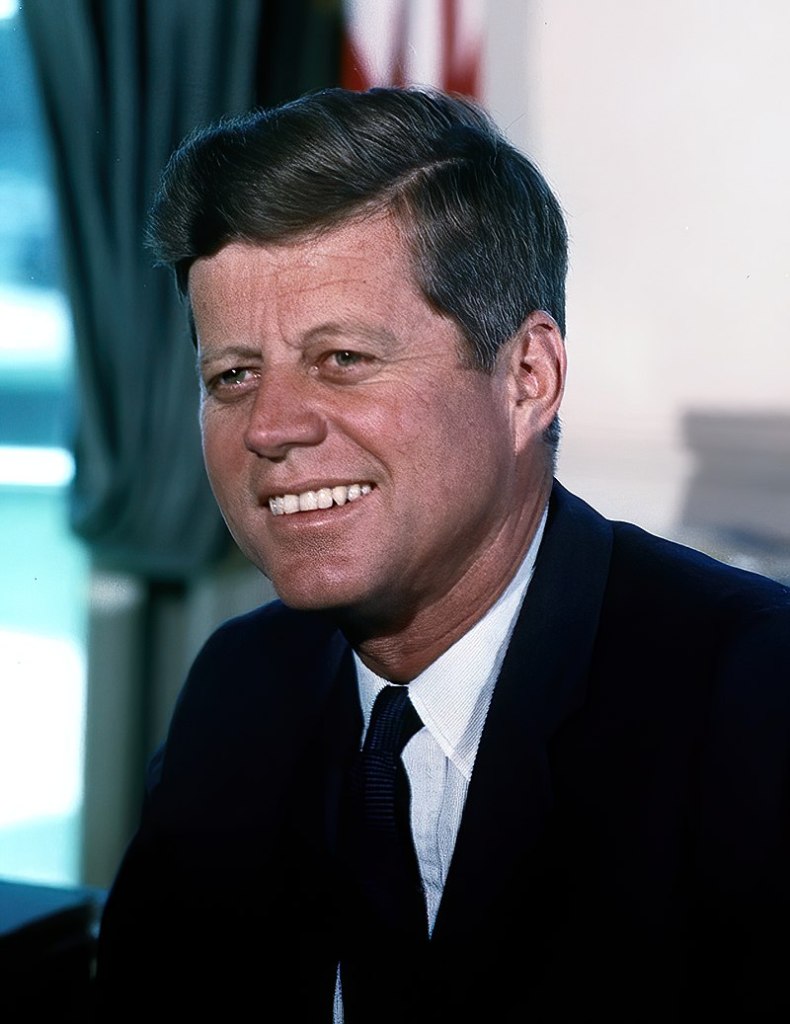
John Fitzgerald Kennedy, assassinated in 1963 at the age of forty-six, was the charismatic 35th president of the United States remembered as much for his initiatives, which were many as his accomplishments, which were few.

JFK, born into a wealthy New England family, the second oldest of nine siblings, educated at the best schools but he was a poor student academically, having interests only in history and girls. Near the end of his studies at Harvard he finally pulled himself together enough to author a commendatory analysis, as his senior thesis, of England’s lack of preparation for WWII. The thesis relied heavily on his father’s contacts and position as the U.S. ambassador to England. His thesis was soon published in book form, titled Why England Slept, and sold 80,000 copies in England and the U.S.

He joined the U.S. Navy after Harvard and commanded a torpedo boat in the South Pacific during WWII. His boat was split into two by a Japanese warship, killing two of his sailors and permanently injuring his back. He and his remaining sailors managed to swim to a nearby island and were rescued six days later.

In 1952 he ran for the U.S. senate from Massachusetts challenging the Republican incumbent Henry Cabot Lodge. Kennedy won the race and became a rising star in Democratic politics.

After the election to the senate, he married Jacqueline Bouvier in 1953. They had three children: Caroline, John Jr., and Patrick Kennedy.

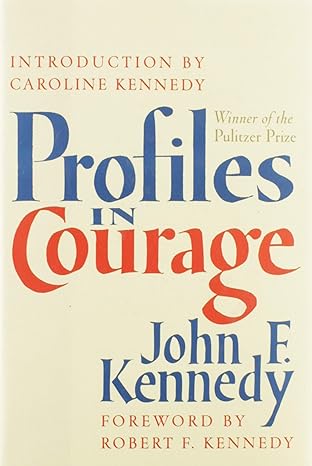
While recovering from back surgery in 1956, due to his WWII naval injury, he began his book, Profiles in Courage, with Ted Sorensen, which won him a Pulitzer in 1957.

After 8 undistinguished years in the senate, he ran for president in 1960 against Richard Nixon. He won, becoming the second youngest president ever elected. He served as president for three short years, being assassinated by Lee Harvey Oswald in Dallas, Texas on 22 November 1963. His domestic and foreign policy initiatives were significant but due to his limited time in office he saw few results or conclusions related to his governing vision. A few of his strategies, visions, and world events during his presidency are listed below:

  • Creation of the Peace Corps in 1961
  • Increased U.S. involvement in Vietnam 1961-1963
  • Bay of Pigs Invasion 1961
  • Soviet construction of the Berlin Wall in 1961
  • Cuban Missile Crises 1962
  • Desegregation of Mississippi colleges in 1962
  • Nuclear Test Ban Treaty with Great Britain and the Soviet Union 1963
  • Sent the Civil Rights Act to Congress in 1963 (passed into law in 1964)
  • Proposed sweeping tax cuts in 1963 (Revenue Act passed in 1964)

Profiles in Courage:

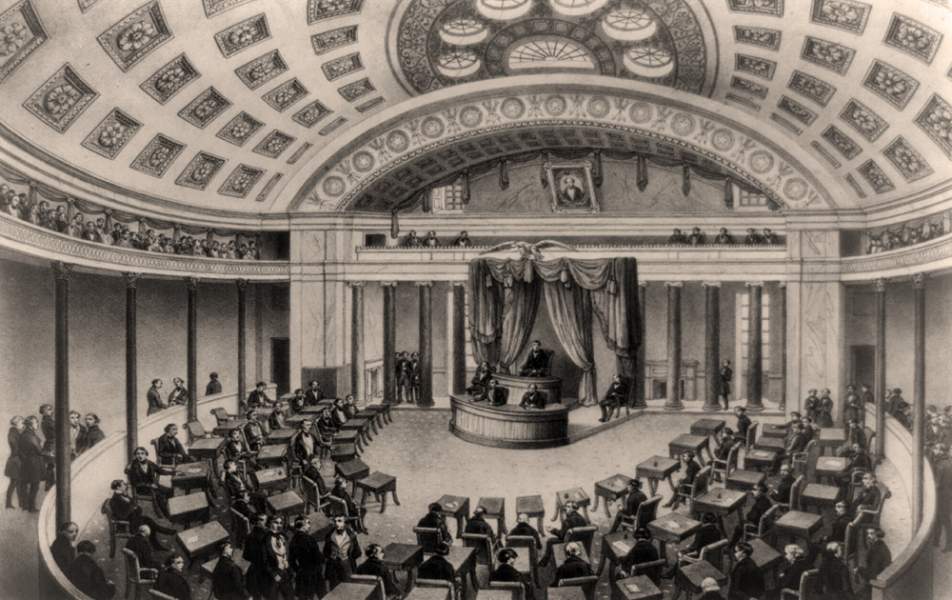
Profiles in Courage is a compilation of vignettes describing eight senators’ actions that bucked their party and sometimes popular public sentiment to help pass legislation. Each vignette is preceded by a short ‘Time and Place‘ chapter that sets the stage and mood of the country at the time.

  • Federalist John Quincy Adams, from Massachusetts, broke with his party and sided with the Republicans. The Republicans became better known as the Democrat-Republicans which eventually became just the Democrats. The Federalist party morphed into the Republicans with a slight stop-over as Whigs. Using today’s terms Adams broke with the Republicans and sided with the Democrats. Adams courage was for shutting down the Massachusetts economy by voting for the Embargo Act of 1807. The act attempted to punish the English for their impressment of American sailors and disrespecting American sovereignty. War with England occurred shortly after in 1812.
  • Federalist and Whig Daniel Webster, also from Massachusetts, spoke in favor of the Compromise of 1850. The Compromise of 1850 was five separate bills concerning slavery status in various states and the District of Columbia, California state admission to the Union, boundary disputes between the states, and assumption of Texas debt by the Federal government. The bills broke mainly along geographic lines, northern states versus southern states with party loyalty playing a secondary role. The Compromise of 1850 kicked the slavery issue down the road and postponed the civil war for ten years. At the time it was believed the compromise would settle the issue permanently. The consequence of voting in favor of the Compromise was to allow the north to grow stronger, economically and militarily, and the south to weaken.
  • Democrat Thomas Hart Benton, from Missouri, was a staunch anti-slavery politician but remained in the pro-slavery Democratic Party, hating Republicans more than slavery. This was called courageous.
  • Democratic-Republican (Democrat) Sam Houston, from Texas, voted against the Kansas–Nebraska Act of 1854, which would have allowed the voters of those two states to decide on the slavery question themselves effectively repealing the Missouri Compromise. Houston wanted to uphold the Missouri Compromise which would have banned slavery in Kansas and Nebraska. Texas was a pro-slavery state thus Houston’s vote was condemned as treasonous in his home state. Houston eventually left the Democrat Party.
  • Republican Edmund G. Ross, from Kansas, voted for acquittal in the Democrat Andrew Johnson’s impeachment trial. As a result of Ross’s vote, along with six other Republicans, Johnson’s presidency was saved, and the stature of the office was preserved. The charges against Johnson were insubstantial and without legal merit or in other words it was all about politics.
  • Democrat Lucius Lamar, from Mississippi, eulogized anti-slavery Republican Charles Sumner on the Senate floor and made other efforts to mend ties between the North and South during Reconstruction. Charles Sumner was a nominal Republican having thoroughly alienated his standing with presidents, Lincoln, and Grant. Lamar eventually convinced the voters of Mississippi that his tactics were correct, and they were wrong.
  • Republican George Norris, from Nebraska, opposed Republican Joseph Gurney Cannon’s autocratic power as Speaker of the House, spoke out against arming U.S. merchant ships during the United States’ neutral period in World War I, and supported the presidential campaign of Democrat Al Smith, the first Catholic to be a major party nominee.
  • Republican Robert A. Taft, from Ohio, criticized the post-WWII Nuremberg Trials that were trying Nazi war criminals under ex post facto laws. His whole argument revolved around fairness to the accused. Taft may have had the law on his side, but it was like a lawyer getting his guilty as sin, ax murdering client off Scott-free due to a technicality. Tone-deaf would be a better adjective to describe Taft rather than courageous.
FootnoteC

Literary Criticism:

I’ve always wanted to read this book. It just took a long time to get around to it. I heard and read glowing terms of its contents since I was in high school and the few snippets I had read were interesting. I should have left matters at that.

Profiles in Courage is a pedestrian book with little new to add to the history and biography of the eight senators covered. The analysis is light and generally one sided which can be summed up as voting for Democrats is courageous, voting against Democrats isn’t. Kennedy was awarded a Pulitzer for this book. It is always good to be born and raised on the right side of the tracks.

Authorship Note:

In 1957 Drew Pearson, journalist, stated on The Mike Wallace Interview show that “John F. Kennedy is the only man in history that I know who won a Pulitzer Prize for a book that was ghostwritten for him.” Pearson added that Ted Sorensen, Kennedy’s advisor, and speech writer authored the book. Joseph Kennedy’s, JFK’s father, response was to sue Pearson and ABC, the network broadcasting Mike Wallace’s show. ABC made a retraction and issued an apology.

Herbert Parmet, historian, and biographer, wrote in his 1983 book Jack: The Struggles of John F. Kennedy that Kennedy developed the concepts and provided direction for Profiles in Courage, but it was Sorensen who wrote the bulk of the book. The essays in the first and last chapters were likely written by John F. Kennedy.

Sorensen in his 2008 memoir, Counselor: A Life at the Edge of History stated that he helped write Profiles in Courage. Sorensen admits that he wrote “a first draft of most of the chapters” and “helped choose the words of many of its sentences“. He also wrote: “While in Washington, I received from Florida almost daily instructions and requests by letter and telephone – books to send, memoranda to draft, sources to check, materials to assemble, and Dictaphone drafts or revisions of early chapters“. 

Sorensen Bibliography:

Kennedy Bibliography:

References and Readings:

FootnoteA: Ted Sorensen. USA Government Photo. Bernard Gotfryd Photographer. 1983. Public Domain

FootnoteB: John F. Kennedy. Oval Office Photo. Cecil Stoughton Photographer. 1963. Public Domain

FootnoteC: The United Sates Senate Occupies its New Chamber… 1950. Library of Congress. Public Domain

Exploration 19: Ears Don’t Hear

Mondegreen Definition (mon-de-green):

  • a word or phrase that results from a mishearing especially of something recited or sung. (Merriam-Webster)
  • a word or phrase that is misinterpreted as another word or phrase, usually with an amusing result. (Collins)
  • also known as oronyms
  • the word originates with journalist Sylvia Wright, who wrote a column in the 1950s in which she recounted hearing the Scottish folksong The Bonny Earl of Morray. Wright misheard the lyric “Oh, they have slain the Earl o’ Morray and laid him on the green” and thought it was “Oh, they have slain the Earl o’ Morray and Lady Mondegreen.” (Merriam-Webster)

“In love, as in life, one misheard word can be tremendously important. If you tell someone you love them, for instance, you must be absolutely certain that they have replied ‘I love you back’ and not ‘I love your back’ before you continue the conversation.” (Lemony Snicket, Horseradish: Bitter Truths You Can’t Avoid. HarperCollins, 2007)

The interesting thing about mondegreens is that the mis-hearings are generally less plausible than the intended lyrics.” (Steven Pinker, The Language Instinct: How the Mind Creates Language. William Morrow, 1994), but they are usually more interesting and amusing.

I was out for a walk in the neighborhood the other day, early October snow crunching beneath my sneakers, iPods keyed into a blues mix, when Tony Joe White’s first and only hit ‘Folk Sally Annie‘ started playing; a song I’ve heard a hundred times before, except for the first time I listened to the intro. In the intro Tony Joe White explains who ‘Folk Sally’ is and I learned, as I said, for the first time, that ‘Folk Sally‘ is a plant similar to a turnip green, ‘except it ain’t‘ and the po’r folk of Louisiana picked it in the wild for their dinner. At this point I realized what I had been hearing for decades wasn’t ‘Folk Sally Annie‘ but ‘Polk Salad Annie‘. Chorus below:

Polk salad Annie, polk salad Annie
Everybody said it was a shame
‘Cause her momma was a-workin’ on the chain gang
(A mean, vicious woman) Uh!

It just goes to show ya that even with ears wide open you may not be hearing reality. I remember listening to an FM station many years ago that did a three- or four-hour show consisting of call-in requests by listeners who couldn’t remember the title of the song, just a snippet of the lyrics, which they amusingly mis-quoted. These misheard lyrics are what are commonly known as mondegreens or oronyms. Words one hears but interpretes wrongly. It was a great show of great music and amusing stories of the misinterpreted.

FootnoteA

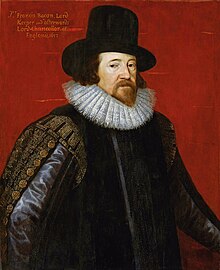
A story I ran across a few years ago, I no longer remember the names of those involved, relates a father’s advice to his 10-year-old son when he was leaving for grade school one morning. His father holds him back for a few seconds and tells him, “Remember son. ‘Knowledge is power. France is bacon‘.” With this consul he sends his son off to class. His son pondered this remarkable piece of advice all the way to school and most of the rest of that day. ‘Knowledge is power. France is bacon.’ The ‘knowledge is power‘ part he understood but he was totally perplexed by the ‘France is bacon‘ bit. What could that mean? Years later he stumbled across a quote in one of his high school textbooks which said, ‘knowledge is power‘. It was attributed to forteenth and fifteenth century English philospher Francis Bacon.

The brain is a remarkable organ. If it recieves something blurred or indistinct it will fill in the blanks or gaps and we are never the wiser, for a while anyway. Hopefully.

Truly Great Lyrical Mondegreens:

  • “Every time you go away/you take a piece of meat with you” (for ” … take a piece of me with you,” by Paul Young)
  • There’s a bathroom on the right” (for “There’s a bad moon on the rise” by Creedence Clearwater Revival)
  • Excuse me while I kiss this guy” (for “Excuse me while I kiss the sky” by Jimi Hendrix)
  • The girl with colitis goes by” (for “the girl with kaleidoscope eyes” by the Beatles)
  • Dirty things done to sheep” (for “Dirty deeds done cheap” by AC/DC)
  • Bring me an iron lung” (for “Bring me a higher love” by Steve Winwood)
  • It doesn’t make a difference if we’re naked or not” (for “It doesn’t make a difference if we make it or not” by Bon Jovi)
  • She knows Ohio stinks” (for “She knows the highest stakes” by Dixie Chicks)
  • It’s too late, you’re gonna die” (for “It’s too late to apologize” by OneRepublic)
  • There’s no happy ending, no hand relief” (for “There’s no happy ending, no Henry Lee.” by Train)
  • I’m gonna take my horse to a hotel room” (for “I’m gonna take my horse to Old Town Road” by Lil Nas X)

Polk Salad Annie Original and Covers (Partial List):

FootnoteA: Painting of Francis Bacon by Paul van Somer, 1617. Wikimedia.

References and Readings:

Painter of Love

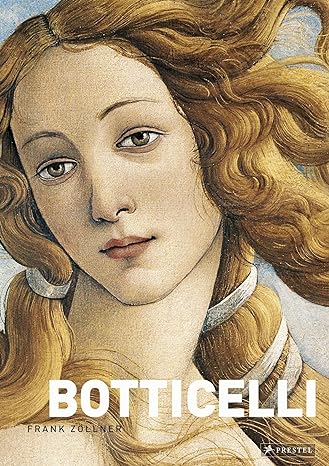
Botticelli

By Frank Zollner

Prestel

Copyright: © 2015

AmazonPicture

Zollner Biography:

FootnoteA

Frank Zollner, born 26 June 1956 in Bremen, Germany, is an art historian specializing in Renaissance painters, specifically Leonardo, but also Michelangelo, Rapheal, and Botticelli. He has been a professor of art history at Leipzig University since 1996.

As an expert in all matters Leonardo, he has been wrapped up in the authenticity of the multiple Mona Lisas that exist around world. The Mona Lisa actually painted by Leonardo that everyone appears to agree on is in the Louvre. Experts also agree that parts of the Isleworth Mona Lisa may have also been painted by Leonardo. Then there is the two Mona Lisas that are most like each other, the Louvre Mona Lisa, and the Prado Mona Lisa in Madrid. The Prado Mona Lisa is acknowledged to have been painted in Leonardo’s workshop but not necessarily by Leonardo himself. The two most famous paintings are the Louvre Mona Lisa and the Washington National Gallery’s Mona Lisa. The National Gallery Mona Lisa is believed to have been painted by one of Leonardo’s followers, possibly Salaì or Francesco Melzi. So, it would appear that there are a lot of Mona Lisa’s floating around but only one fully authentic and completely Leonardo.

Zöllner re-introduced the art world to the ancient concept of aesthetic hedonism. Aesthetic hedonism states that for art to have value one must experience emotional pleasure when viewing or experiencing it. The value related to aesthetic hedonism is derived from empirical observations and experiences. Philosophers, such as Hume and Kant, have argued that aesthetic pleasure is universal, reflecting the intellectual harmony within one’s mind. Plato and others, on the other hand, suggest that empiricism alone is not enough to render value to an object of art. Other subjective factors also need to be considered such as moral, social, or religious values.

Which brings us to an impertinent detour but much needed critique of modern art. Where is the beauty, the pleasure, or at a more essential and primeval level, where is the talent for what passes today as modern art? A deplorable example of modern art totally lacking in artistic talent or merit, unable to provide any visual pleasure, is Vienna’s newest fountain: WirWasser. A cultural devolution that is utterly sad and heartbreaking. Look at the picture of the fountain with the people responsible for that monstrosity. They are smiling. What is wrong with those people?

Botticelli Biography:

By throwing a sponge soaked with deffernet colors at at a wall one can make a spot in which a beautiful landscape can be seen“…Botticelli.

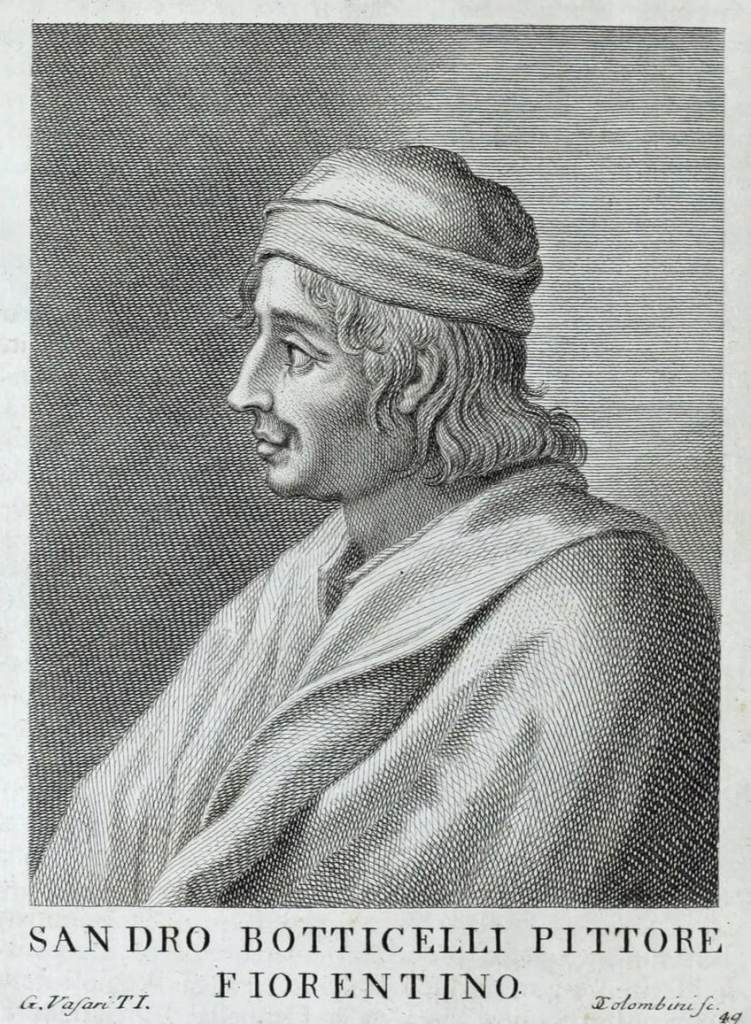
Sandro Botticelli, born Alessandro di Mariano di Vanni Filipep circa 1445, later given the moniker Botticelli by an older brother meaning ‘little barrel’ in Italian, is considered the greatest humanist painter of the Early Renaissance Era.

Botticelli’s art was always about dignity, about maintaining the grace and soulfulness of his subjects. His genus lies in capturing the emotional persona of people populating his paintings along with the technical ability to skillfully show perspective, accurately express anatomy, and the mastery of color and light.

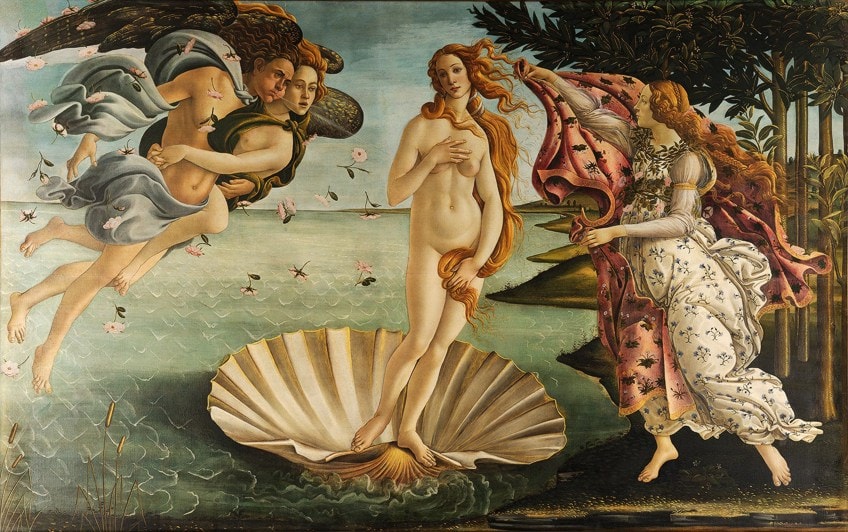
Botticelli died in Florence in 1510 at the age of 64 or 65. His complete oeuvre is unknown but at least 137 artworks have been attributed to him, including panel paintings, works on canvas, frescoes, and drawings for Dante’s Divine Comedy. Among his most famous and recognizable paintings are La Primavera (shown above) and the Birth of Venus (shown below), which today, are synonymous with perfection and Early Renaissance art.

The La Primavera, shown above, was originally in the possession of one of the younger Medicis and was given as a wedding present to Semiranmide Appiani who married Lorenzo di Pierfrancesco de’ Medici in 1482. The painting depicts, beginning on the far left continuing to far right, Mercury in winged shoes poking at the clouds with a wand, the Three Graces in the company of Mercury creating an atmosphere of beauty and what else, grace. The central figure is Venus. The floating cherub above Venus is Cupid, her son by Mars. To the right of Venus is Flora, goddess of flowers, springtime, and fertility. The woman to the right of Flora is Chloris, originally a virginal nymph who was transformed into Flora by the wind God Zephyr shown floating above ground on the far right. Zephyr raped Flora/Chloris but made amends by making her his wife.

Botticelli’s The Birth of Venus, referred to by some art critics, including Zollner, as the Arrival of Venus, shows the goddess of love on the shores of the island of Cythera. Botticelli based the painting on a poem by Greek poet Hesiod, describing Venus emerging from the sea, formed from the severed genitals of Uranus. Venus is standing on a giant scallop shell, blown by the wind god Zephyr and his companion Aura, a goddess of breeze, and welcomed by one of the Horae, likely a goddess of spring, who offers her a cloak.

Literary Criticism:

Zollner’s Botticelli is a masterpiece in scholarship and beauty. The reproductions of Botticelli’s art are crisp and clear, but the text brings it all together, biography, provenance, technique, and history. To follow a painting from brush to museum, as Zollner has, is itself a work of art and love.

FootnoteA: Frank Zollner. Welt newspaper 2021

Frank Zollner Art Book Bibliography (English):

References and Readings: