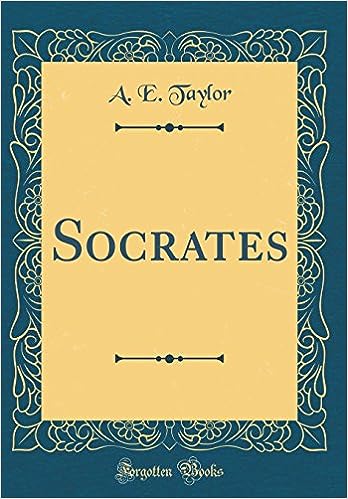
By A.E. Taylor
Published by Forgotten Books
Copyright: © 2017
Original Publication Date: 1933
Author Biography:
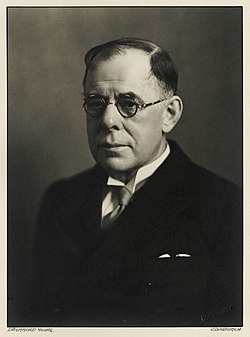
Alfred Edward Taylor was born in Oundle, England in 1869, and died in Edinburgh, Scotland in 1945. He was a professor, a Greek classicist, and a philosopher of metaphysics and ethics. He spent his adult life at the ancient Scottish Universities of St. Andrews and Edinburgh researching and teaching the spiritual; the immortal basis for morality and the philosophy of Plato. Plato was a student of Socrates and as such he was a concern to and within the orbit of Taylor.
Socrates’, leaving no written record, entire philosophical corpus and biography have reached us today primarily through the writings of two near contemporary Greeks: Plato and Xenophon. Taylor’s contribution to our present day understanding of Socrates was to argue that Plato’s four basic texts on Socrates: Euthyphro, Apology, Crito, and Phaedo, are accurate depictions of what Socrates said and did. Xenophon, who also wrote extensively about Socrates but later, Taylor argued, is less reliable. This may seem trivial, but this point has been and still is contested due to the immense stature of Socrates as one of the founders of Western philosophy in general and ethics in particular. The basic question among philosophers is whether Plato’s writings describing Socratic philosophy are accurate or are amalgamations of Socratic and Platonic thought? Who knows? The dispute will continue till the end of days so we will leave it as Taylor says.
Taylor’s studies within the philosophy of ethics and morality centered on what is right and good, whether the two were complementary and/or achievable. Taylor argued right and good or the moral practice of the individual is constrained and flawed without the aid of the supernatural: God. His thesis was that searching inward, within oneself for rebirth and betterment, for a moral compass, flows only in circles leading nowhere. To reach a higher level of morality or good requires looking outward to the spiritual through contemplation of the eternal good. Taylor argued that the will to reach for a better or eternal good is impetus for the eternal, the divine good to reach for you. Additionally, morality, Taylor surmises, plateaus in the human confines of a person’s physical life, requiring, unfortunately or fortunately depending on your perspective, death to continue the soul’s moral journey for better or worse.
Socrates:
Any biography of Socrates is going to be short. Almost all authoritative writings concerning his work, teachings, and life that have reached us in the 21st century consists of approximately two hundred written pages, in English, by Plato and about three hundred English written pages by Xenophon with the two containing significant overlap. Taylor’s biography, using Plato and Xenophon as primary sources, is no exception managing to encapsulate Socrates’ remarkable life into a quick read of 142 pages. Within these few pages concerning this most remarkable man everything has been disputed except for the Athenians putting him to death for being a royal pain in the rear, some have used the term gadfly. That is the one piece of his life that no one disagrees with. No one disputes that he was put to death in 399 BC, and it is likely that no one disputes that he was a royal pain in the posterior, a gadfly.
Socrates was born, circa 469 BC, grew up and lived in Athens until he was put to death in 399 BC at the age of seventy. He lived during the Golden Age of Athens (478-404 BC) and the overlapping Age of Pericles (461-429 BC) both now combined and known by the excessively non-descriptive non-demonym: Fifth Century Athens. (Why classical historians thought this was a useful, didactic change defies any sound, logical reasoning. Alas it was changed to avoid hurt feelings of Greeks and Athenians whose best years occurred two thousand seven hundred years ago. How you soothe pouting children should not be an instruction manual for sane adults.)
Socrates only left Athens to serve in military battles prior to and during the (second) Peloponnesian War. He was a hoplite in the Athenian army, a heavy infantry soldier outfitted with a shield, sword, and/or spear fighting in a phalanx or block-like formation. By all accounts he was a good and courageous soldier. His first recorded engagement, at the age of thirty-eight, was the battle and siege at Potidaea beginning in 432 BC. lasting until 429 BC. Potidaea was a Greek city-state, approximately 155 miles, as the crow flies, north of Athens, threatening to break free of Athenian control. This battle helped trigger the much larger and costlier Peloponnesian War beginning in 431 BC and lasting until 404 BC.
Socrates saved the life of Alcibiades, a gifted Athenian general and politician, but exceptionally duplicitous and erratic. Socrates heroic action should have garnered him the prize for valor, but Alcibiades was awarded it instead due to his higher birth and rank. A very powerful disincentive to the rank and file indeed.
Five and seven years later Socrates fought for Athens in the losing battles of Delium and Amphipolis, respectively, during the initial stages of the twenty-seven year-long Peloponnesian War. During the battle of Delium in 424 BC, Alcibiades saved Socrates’ life thus repaying Socrates’ valiant deed and cementing their life-long, but problematic, friendship.
Alcibiades recounts a story of Socrates during the engagement of Potidaea that bears on the philosopher’s power, or possibly prophetic power of thought. One morning Socrates, while contemplating an assumed perplexing problem became motionless, a state he remained in until the next morning when he said a prayer and walked away invigorated, amazing his fellow soldiers who had been watching him through the night. This story has him either being completely lost in thought, refusing to move to avoid breaking that train of thought, or as another occurrence of the ‘Sign’, voice, or daimonion that came to him, starting in his childhood and continuing throughout his adult life.
The ‘Sign’ was a voice usually described as an inner call, not to action, but to caution, a warning of future woes to come. Socrates mentioned at his trial that whenever the voice spoke to him it turned him away from something he was about to do. Some believe the ‘Sign’ was simply his subconscious speaking to him while others feel it was divine. A message from God.
To stretch a minor detail, Socrates almost never referred to the Gods, just God in the singular, a minor point yes, but a point all the same that the ‘Sign’ may have been religious vision or experience from the perspective of monotheism versus accepted Greek polytheism. At his trial he states, “It is to fulfill some function that I believe God has placed me in the city. I never cease to rouse each and every one of you, to persuade and reproach you all day long…” His ‘Sign’ did not speak to him during his trial leaving him to conclude that the sentence of death was something he should accept.
Socrates’ ‘religion’ began with his belief in the soul, and that it was immortal and unchanging. The soul existed before you were born and continued after your death. He believed the soul was your truth, your essence, your reality beyond your corporal self. He believed the soul must be looked after and kept in immaculate condition.
Socrates believed that to care for your soul required a focus on personal growth. Growth comes from the pursuit of wisdom and knowledge, the study of philosophy, to further one’s understanding of not only yourself but the world around you. The pursuit of wisdom through what became known as the Socratic method, questioning and logical reasoning started with yourself: ‘know thyself’ and expanded to include the universe beyond your own flesh. To seek wisdom and knowledge by examining your life was to seek truth. Seeking wisdom and knowledge for the sake of truth is what Socrates meant when he spoke his famous line at his trial in 399 BC, “The unexamined life is not worth living.” Without truth, life is not worth living. Without truth one risks living a lie.
Socrates examined and questioned everything and everyone. His thirst for knowledge and wisdom all flowed from his stated belief in his own ignorance, stating “as for me all I know is that I know nothing.” No one that knew Socrates believed this statement for a second. He was known as a sage, a philosopher, and shrewd one at that. His wisdom was even embraced by the Oracle of Delphi who said Socrates was the wisest person in Athens.
For Socrates, though, his statement professing to know nothing wasn’t an expression of humility or ignorance but a challenge. A challenge to question one’s beliefs and opinions concerning all things seen and unseen. Two plus two equals four, everything else is questionable. “All I know is that I know nothing” is an acknowledgement that the search for wisdom: truth, at a minimum is transitory, possibly imaginary, and thus one must never stop searching. This was not to say there were no truths available to the living, but the search could be difficult and deceptive.
Socrates’ quest for the truth manifested itself first through his rejection of fame, money, and power. The corollary of that rejection is he lived a life of poverty, neglected hygiene, and wore no shoes. No shoes whether with feet on burning stones or frosted rocks. Pain and discomfort did not seem to bother him.
Secondly his quest for the truth was through the spoken word, never written. Conversations with his fellow Athenians occurred throughout the city, the Lyceum and the Agora were his two favorite haunts where he questioned his victims, and they were victims, in his famous ‘Socratic Method’ style of inquisition. Below is a short description of Socratic torture from the–Explainer: Socrates and the Life Worth Living (link below):
- Socrates engages an interlocutor who appears to possess knowledge about an idea
- The interlocutor makes an attempt to define the idea in question
- Socrates asks a series of questions which test and unravel the interlocutor’s definition
- The interlocutor tries to reassemble their definition, but Socrates repeats step three
- Both parties arrive at a state of perplexity, or aporia (ed. a philosophical puzzle), in which neither can any further define the idea in question
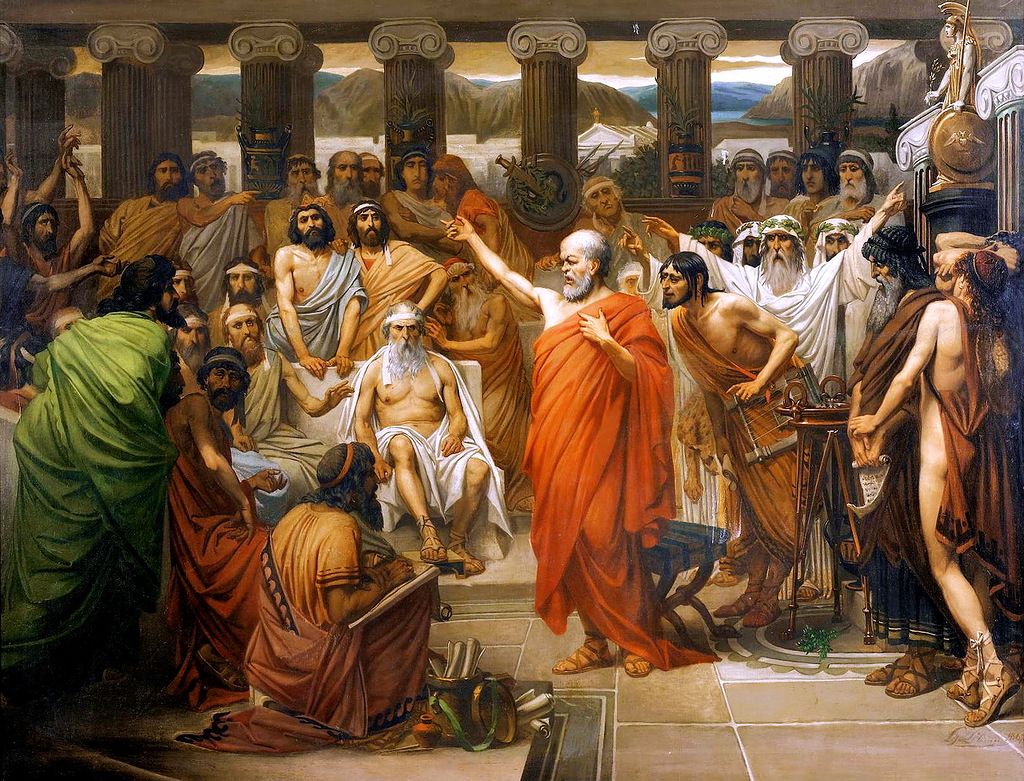
A humorous sketch illustrating his method from Plato’s ‘Euthyphro‘ picks up near the end of a discussion concerning the gods:
Euthyphro: Why you don’t suppose, Socrates, that the gods gain any advantage from what they get from us, do you?
Socrates: Well then, what would those gifts of ours to the gods be?
Euthyphro: What else than honor and praise, and, as I said before, gratitude?
Socrates: Then, Euthyphro, holiness is grateful to the gods, but not advantageous or precious to the gods?
Euthyphro: I think it is precious, above all things.
Socrates: Then again, it seems, holiness is that which is precious to the gods.
Euthyphro: Certainly.
Socrates: Then will you be surprised, since you say this, if your words do not remain fixed but walk about, and will you accuse me of being the Daedalus who makes them walk, when you are yourself much more skillful than Daedalus and make them go round in a circle? Or do you not see that our definition has come round to the point from which it started? For you remember, I suppose, that a while ago we found that holiness and what is dear to the gods were not the same, but different from each other; or do you not remember?
Socrates: Then don’t you see that now you say that what is precious to the gods is holy? And is not this what is dear to the gods?
Euthyphro: Certainly.
Socrates: Then either our agreement a while ago was wrong, or if that was right, we are wrong now.
Euthyphro: So it seems.
Socrates: Then we must begin again at the beginning and ask what holiness is. Since I shall not willingly give up until I learn. […]
Euthyphro: Some other time, Socrates. Now I am in a hurry, and it is time for me to go.
Socrates: Oh my friend, what are you doing? You go away and leave me cast down from the high hope I had that I should learn from you what is holy, and what is not, and should get rid of Meletus’s indictment by showing him
Socrates’ learnings in search of the truth have been passed down to us through Plato, Aristotle, Epicurus, Locke, and others, climaxing in Jefferson’s preamble to Western civilization’s crowning ode to self and country: the ‘Declaration of Independence‘, proclaiming the fundamental, natural rights of man: Life, Liberty and the pursuit of Happiness.
The phrase the ‘pursuit of Happiness’ has been thoroughly misconstrued to mean something foreign and vulgar to Jefferson’s original intent. The ‘pursuit of Happiness’ was not a grant to seek earthly enrichments and pleasures but a call to a higher state of being. Epicurus provided a definition of happiness that comes closest to the meaning of Jefferson, “the end of all our actions is to be free from pain and fear, and once this is obtained the tempest of the soul is quelled.” Life, Liberty, and the pursuit free from pain and fear. The ‘pursuit of Happiness’ sounds better.
Epicurus seeks a soul free of pain and fear. Socrates sought a pure soul. Both pursued it through the same means. Socrates and Epicurus’ greatest pleasure in life was the pursuit of wisdom and truth. Neither sought fame, money, or power nor feared death. Epicurus did not fear death because it was the end of the body and the soul. There was nothingness after death. No greater glory. No damnation. Just nothing. Socrates did not fear death because a pure and good soul went on to something better.
Socrates, then, lived a good life. A life in pursuit of truth. A death to continue his journey to a higher plane.
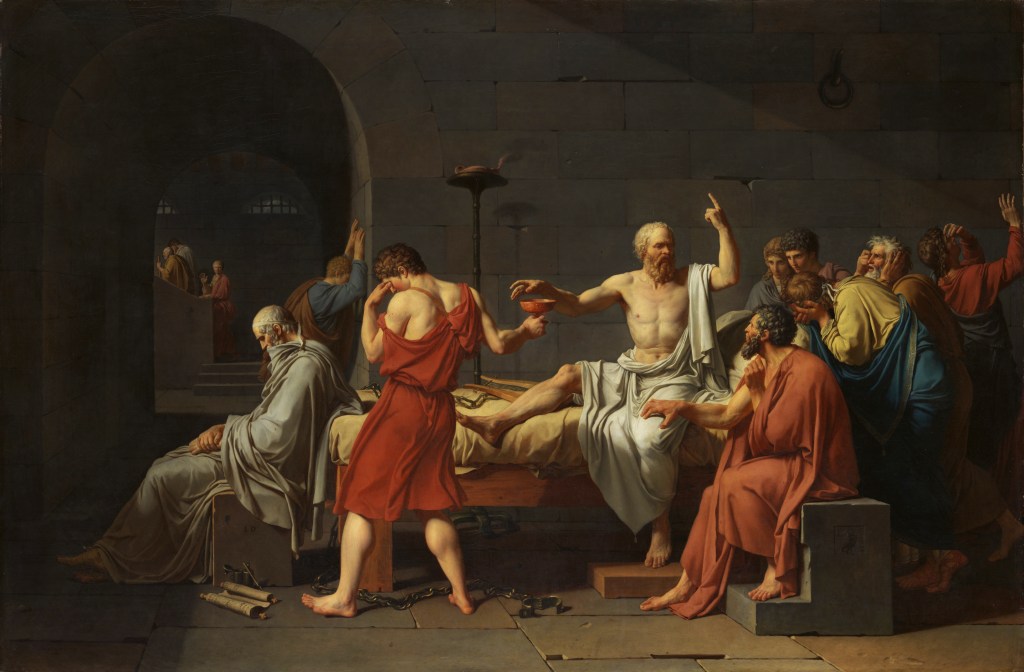
Socrates died, supposedly, for impiety and corruption of the youth. Both charges were difficult to square with reality, but they achieved the desired outcome: removing an inconvenient seeker of truth. Silencing the moral inquisitor, the examiner of the soul. Extinguishing the gadfly.
At the end of his trial Socrates’ soul was at peace but still he seeks truth: “Now the hour to part has come. I go to die, you go to live. Which of us goes to the better lot is known to no one, except God.”
Taylor’s Bibliography:
- The Problem of Conduct: A Study in the Phenomenology of Ethics. 1901
- Elements of Metaphysics. 1903
- Thomas Hobbes. 1908
- Plato. 1908
- Epicurus: 1911
- Varia Socratica. 1911
- Plato’s Biography of Socrates. 1917
- Aristotle. 1919
- The Mind of Plato. 1922
- Platonism and Its Influence. 1924
- Plato: The Man and His Work. 1926
- David Hume and the Miraculous. 1927
- Plato and the Authorship of the Epinomis. 1929
- Plato: Timaeus and Critias. 1929
- The Faith of a Moralist, Series I and II (Gifford Lectures). 1931
- Socrates 1933
- Philosophical Studies. 1934
- The Christian Hope of Immortality. 1938
- Does God Exist? 1945
References and Readings:
- Taylor, Alfred Edward. John Macquarrie. Encyclopeidia.com. 1967
- Conversations with Socrates. Xenophone. Translated by Waterfield and Tredennick. Penguin Classics. 1990
- Xenophon’ Socrates. By Leo Strauss. St. Augustines Press. 1998
- The Last Days of Socrates. By Plato. Translated by Tredennick and Tarrant. Easton Press. 2000
- Socrates: A Man for Our Times. By Paul Johnson. Viking. 2011
- Socrates’ Divine Sign: Religion, Practice and Value in Socratic Philosophy. By Nickolas Pappas. Notre Dame Philosophical Reviews. 2011
- Alcibiades. By Mark Cartwright. World History Encyclopedia. 2013
- Memorabilia. Oeconomicus. Symposium. Apology. By Xenophon. Translated by Henderson, Marchant, and Todd. Harvard University Press. 2013
- Crito. By Plato. Translated by Benjamin Jowett. CreateSpace Publishing. 2015
- Locke’s Moral Philosophy. By Patricia Sheridan. Stanford Encyclopedia of Philosophy. 2016
- Euthyphro. By Plato. Translated by Benjamin Jowett. CreateSpace Publishing. 2018
- Phaedo. By Plato. Translated by Benjamin Jowett. CreateSpace Publishing. 2020
- The Apology of Socrates. By Plato. Translated by James Harris. Independent publisher. 2021
- Epicurus. By David Konstan. Stanford Encyclopedia of Philosophy. 2022
- Explainer: Socrates and the Life Worth Living. By Oscar Davis. The Conversation. 2022
- Plato’s Apology: Socrates’ Defense at His Trial Before His Execution, Part 2. By Dr. Ron Gaudio. SocratesJourney.org. 2022
- Socrates. By Debra Nails and S. Sara Monoson. Stanford Encyclopedia of Philosophy. 2022
- “All I Know Is That I Know Nothing”: What Did Socrates Mean? By Viktoriya Sus. The Collector. 2023
- Socrates. By History.com Editors. History.com. 2023
- Socrates (469—399 B.C.E.). By James M. Ambury. Internet Encyclopedia of Philosophy. No date
- Alfred Edward Taylor. By Kelly Van Andel. Gifford Lectures. No date
- The Sophists (Ancient Greek). By George Duke. Internet Encyclopedia of Philosophy. No date
- Declaration of Independence: A Transcription. By Thomas Jefferson. National Archives. No Date.
- Socrates. By Richard Kraut. Britannica. No date
- Alfred Edward Taylor. Uncredited. Art & Popular Culture. No date
- The Pursuit of Happiness. Uncredited. Pursuit of Happiness. No date
- The Unexamined Life is Not Worth Living. Uncredited. Wikipedia. No date
- Alfred Edward Taylor. Uncredited. Wikipedia. No date
- Alfred Edward Taylor. Uncredited. Wikiwand. No date


 elsToday